
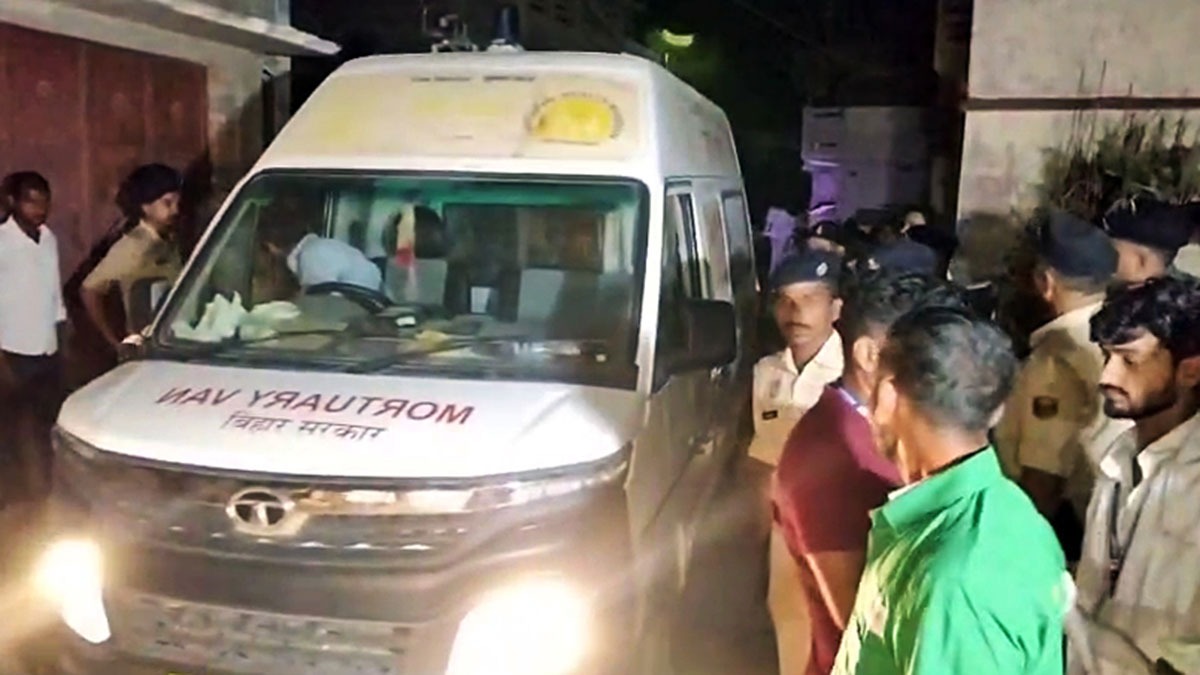
Five people, including children, died after an explosion on October 23 ripped through a house in Bihar’s Siwan district that was being used as an illegal firecracker factory.The blast in Alampur village is a grim reminder of the deadly price of a trade that gathers pace around Diwali, when making firecrackers becomes a source of income for some families even as the risks spill into the homes and lives of those around them.But the explosion was only the beginning of the story. When police came searching, villagers hid around two tonnes of firecrackers in nearby paddy fields. Nearly 50 police personnel spent eight hours searching for the concealed stock and recovered roughly 130 bags of explosives and firecracker materials from houses and surrounding fields.The scale of the recovery raises a disturbing question: how did a trade reportedly operating in Alampur for around two decades continue at such a scale, and why did its full extent emerge only after five people had died? Come Diwali and Bihar’s illegal firecracker trade comes into its own. For some families, making firecrackers is more than a seasonal business; it is a breadwinner passed down through generations, sustained by festive demand and the promise of quick earnings.The discovery raises a question that goes beyond the immediate cause of the blast: how has a trade that provides income to some families been allowed to expose entire neighbourhoods to the risk of catastrophe? Sources mention that firecrackers had been manufactured in several houses in Alampur for around two decades. If these accounts are borne out, the disaster points to a deeper failure—not simply to detect illegal production but to prevent a known danger from becoming fatal.The five people killed are 70-year-old Amruddin Miyan, his granddaughters Ishrat Siddiqui, 20, and Khushboo Siddiqui, 10, their eight-year-old neighbour Arshad Siddiqui, and Bhola, 35, who worked in the firecracker unit.The blast was powerful enough to collapse a part of the building onto the road. Explosions continued intermittently for nearly two hours, complicating rescue efforts. The casualties captured the full reach of the danger: the elderly householder, children and a worker were all exposed to the consequences of an operation carried out in a residential setting.The commercial logic behind the trade is straightforward. Demand for fireworks rises sharply around Diwali and other celebrations, creating a market for producers and traders who can supply crackers at competitive prices. In some areas, firecracker-making has become a traditional family occupation, providing supplementary income where formal employment opportunities are limited. But what may be regarded locally as an established livelihood can also become a source of danger when manufacturing and storage take place in ordinary houses, close to family members and neighbours.The risks do not end with the people handling the materials. A poorly stored stockpile can turn a residential building into a danger zone. Children may be living in the same rooms where crackers are assembled or stored; neighbours may have no idea how much material is kept next door. When an explosion occurs, the consequences can extend to adjoining buildings, roads and people who have no connection with the business. In Alampur, the deaths underlined how little control residents may have over the hazards around them.Siwan is not the first district in Bihar to confront such a disaster. In July, two men connected with the 2022 Bhagalpur explosion case were sentenced to 10 years’ rigorous imprisonment. The case demonstrated that major explosions can lead to criminal proceedings and punishment. But the recurrence of a similar tragedy in Siwan raises questions about whether preventive enforcement has been sustained between disasters.The legal framework governing explosives and fireworks is established. The Explosives Act of 1884 and the Explosives Rules of 2008 regulate the manufacture, storage, possession and sale of explosives and fireworks. Manufacturing and storage require the appropriate licences and compliance with prescribed conditions, including restrictions on premises and the quantities held. The purpose is to ensure that dangerous materials are handled in authorised and controlled locations rather than accumulated in residential buildings where an accident can have devastating consequences.In practice, enforcement is often most visible after a tragedy or in the run-up to Diwali, when the demand for fireworks attracts heightened official attention. Raids, seizures and suspensions may follow a major explosion, but the central challenge is to identify illegal units before they cause deaths.In Siwan, the Jamo Bazaar station house officer and a police chowkidar were suspended after the blast. The action raises a broader question about accountability. Were authorities aware of the activity in Alampur? Had previous incidents been reported? Were the premises or stocks ever inspected?The concealment of firecrackers before the police arrived adds another dimension to the investigation. The recovery of large quantities from houses and fields, alongside further seizures in nearby areas, makes it important to establish whether the materials belonged to separate household operators or were part of a wider supply chain. Investigators will need to trace manufacturers, suppliers, transporters, traders and buyers. The presence of large quantities of firecracker material does not, on its own, prove that the stock was intended for criminal or insurgent use; any such connection would have to be established through evidence.The enforcement challenge is not merely to seize what can be found after an explosion. District authorities need an updated picture of licenced manufacturers, storage facilities and traders, supported by regular inspections beyond the festive season. Reports of earlier explosions or hazardous storage should trigger timely checks. Where illegal manufacture is detected, action must address not only the material seized on a particular day but also the routes through which stocks are replenished and the market that keeps the trade profitable.There is also a difficult question of livelihoods. If firecracker-making has become a source of income for families in Alampur, a durable solution must distinguish between licenced operators who can meet safety requirements and illegal units that must be shut down. Enforcement may need to be accompanied by efforts to help affected households find lawful alternatives. But tradition and economic hardship cannot justify exposing children and neighbours to an avoidable danger. The cost of allowing the trade to continue is often borne by those who have the least control over it.The recovery of roughly 130 bags, the reported concealment of two tonnes of firecrackers and the deaths of five people should make Alampur a turning point for Bihar’s enforcement strategy. The investigation must establish who was responsible for the operation and how the material reached the village. The administration must also look beyond the immediate blast site to other homes, fields and storage points where the same risks may persist.When Diwali comes, the demand for firecrackers is predictable. What should not be predictable is another explosion, another group of bereaved families and another round of searches after the damage has been done.Subscribe to India Today Magazine- Ends
Bihar's Diwali dampener: 5 deaths and an illegal firecracker trade
Full Article
Original Source
Read the full article at Indiatoday →KhanList aggregates and links to publicly available news content. We do not host full articles from third-party sources. Always verify important information with original sources.