
Russia's parliament has approved a record defence budget for 2027-2029, allocating more than 50 trillion roubles (around $609 billion) to national defence over the three-year period.The spending marks the highest military allocation since the collapse of the Soviet Union and signals Moscow's continued focus on its war effort in Ukraine.The Russian State Duma passed the draft federal budget in its third and final reading.Under the plan, defence spending will account for around 35.2 per cent of Russia's total federal expenditure in 2027, highlighting the priority given to military needs as the conflict with Ukraine continues. According to the figures cited by the State Duma's Defence Committee, Russia will allocate 17.15 trillion roubles (approximately $208.8 billion) to defence in 2027.This is around 33 per cent higher than the 12.93 trillion roubles ($157.4 billion) earmarked for 2026 under the previous budget plan. The allocation is expected to decline slightly in the following two years but will remain significantly above current levels.Russia plans to spend 16.61 trillion roubles ($202.2 billion) on defence in 2028 and 16.30 trillion roubles ($198.4 billion) in 2029.RUSSIA'S MILITARY SPENDING TO CROSS $1.3 TRILLIONThe new budget represents a substantial increase over the previous three-year spending plan.Defence funding has been raised by approximately 3.58 trillion roubles ($43.6 billion) for 2027 and 3.56 trillion roubles ($43.3 billion) for 2028 compared with earlier allocations.The planned spending also adds to the enormous financial burden of Russia's full-scale invasion of Ukraine, which began in February 2022.According to calculations by Janis Klug, a researcher at the German Institute for International and Security Affairs (SWP), Russia had spent around 58.3 trillion roubles, or $710 billion at the exchange rates applicable at the time, on military needs since the start of the invasion.If the allocations for 2027-2029 are fully implemented, cumulative military spending since the invasion could exceed 108 trillion roubles, or approximately $1.31 trillion.The figures include both publicly disclosed and classified expenditure under the National Defence budget section. However, Russia's actual war-related spending could be higher, as some military expenses are covered through other budget heads.CIVILIAN SECTORS FACE FUNDING CUTSThe increase in defence spending is expected to coincide with reductions in allocations for several civilian sectors.According to The Moscow Times, compared with the allocations set for 2026 under the previous budget plan, funding for the national economy will decline by around 3 per cent. Spending on housing and utilities is expected to fall by 8 per cent, while healthcare funding will be reduced by 3 per cent.Social policy spending, which includes pension payments and other support measures, is also set to decrease by around 6 per cent.The cuts come as the government continues to direct a substantial share of public resources towards defence.The 2027 federal budget projects total expenditure of 48.74 trillion roubles (around $593.3 billion), of which more than a third will go towards national defence alone.RUSSIA PROJECTS BUDGET DEFICIT OF $66 BILLIONDespite the planned military expenditure, Russia is also facing a sizeable budget deficit. The federal budget deficit for 2027 is projected at 5.44 trillion roubles (approximately $66.2 billion), equivalent to 2.2 per cent of the country's gross domestic product (GDP).Government borrowing is expected to be the primary source of financing for the shortfall.The scale of military spending has also raised questions about the wider impact of the war on Russia's public finances.According to Klug's calculations, military requirements accounted for around 46 per cent of all federal government expenditure in the first quarter of 2026, amounting to 5.9 trillion roubles ($71.8 billion).- Ends
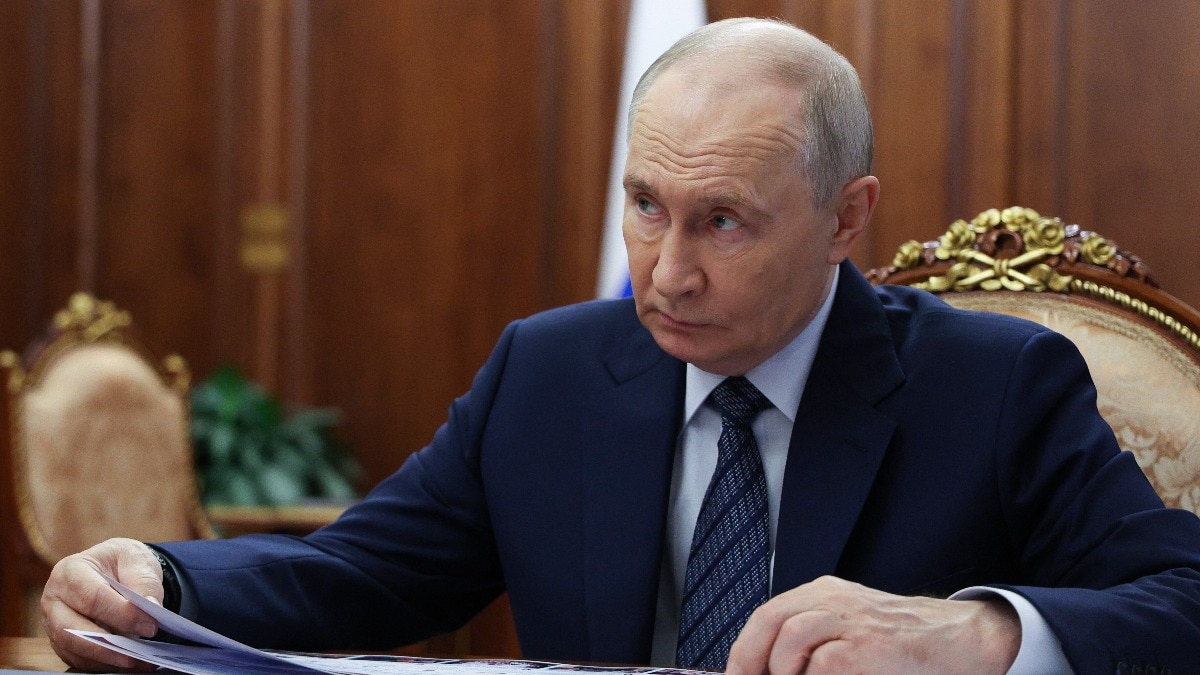
Biggest since Soviet era, Putin approves record $609 billion defence budget
Full Article
Original Source
Read the full article at Indiatoday →KhanList aggregates and links to publicly available news content. We do not host full articles from third-party sources. Always verify important information with original sources.