
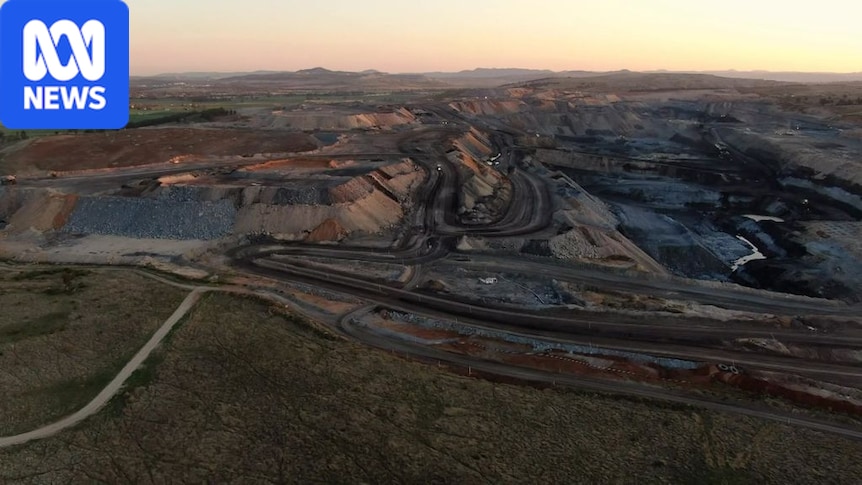
A High Court ruling that planning authorities needed to take overseas emissions into account when approving projects could spook investors, the industry fears.Yesterday, the High Court ruled in favour of a New South Wales community group which had been fighting the expansion of a coal mine in the Hunter Valley region.The court ruled the state's planning body had failed to consider the emissions of coal burnt overseas when approving the project.The High Court yesterday ruled in favour of a community group which fought to block an expansion of a coal mine in New South Wales. (Supplied: Zoe Lonergan)Speaking to the ABC, federal industry minister Tim Ayres was quick to downplay broader impacts, saying it was "squarely a NSW decision", which would be worked through by the state government.He stressed there would not be implications for either jobs or investment in the sector."It is a High Court decision, but it's absolutely confined to the provisions of the New South Wales Act and the way … the planning authority did their work," he told the ABC.Resources minister Madeline King agreed it was a "pretty technical ruling" which she believed would not impact other states unless their planning legislation contained similar provisions.Queensland Premier David Crisafulli says the state is "open for business" when it comes to investment in mining. (ABC News: Brendan Mounter)Premier says Queensland laws 'bulletproof'In Queensland, Australia's largest coal producing state, Premier David Crisafulli sought to allay industry fears, saying the state's "already bulletproof" laws would be amended if needed in response to the ruling."We have the best laws in the country, and we have the highest environmental standards and we are the most pro-mining government in the nation," he said.The state's peak industry association for the resources sector feels the ruling could have further-reaching impacts.Overseas emissions, known as 'scope three' emissions, are already considered by regulators, according to the Environmental Protection Act.Brisbane-based environmental activist Ellen Roberts welcomed the New South Wales ruling.She said it was important for decision makers to take these emissions into account because they impacted not only people overseas but people in Australia.But Queensland Resources Council chief executive Janette Hewson said she was concerned by any changes to the interpretation of laws and regulation because it increased risk in the sector.Janette Hewson is the chief executive of the Queensland Resources Council. (ABC News: Erin Byrnes)"We are very concerned that our international partners, whether they're investors or customers, will look at what's been happening in Australia," she said."This is just the tip of the iceberg in terms of the challenges our industry faces."'Shudder down everyone's spine'Those concerns were echoed by the Minerals Council of Australia — the group going as far as to say the ruling would send "shudder's down everyone's spine" in the industry.Its chief executive Tanya Constable described herself as "very concerned", and although she conceded the decision affected New South Wales, said it would set a "bad precedent" in other jurisdictions.The MCA's concerned the decision would spook investors, leading them to fund overseas projects rather than in Australia.Queensland senator Matt Canavan was even more scathing, imploring "all governments" to overturn the High Court's decision by passing laws through state or federal parliaments.He said it was "ridiculous" to have a situation where the viability of Australian mining projects, as well as jobs, were threatened because of emissions created overseas.Professor John Rolfe said it could be hypocritical for Australian mining projects to have to take overseas emissions into account. (Supplied: CQ University)Regional economic development expert John Rolfe at Central Queensland University agreed further applying that scope three standard could be "very disruptive" to the industry and the state's economy."It would scare off investors because it would increase costs," he explained."Industry are watching it really closely because if you look in Queensland, the coal industry is really important."
Biggest coal-producing state fears impact of High Court emissions decision
Full Article
Original Source
Read the full article at Abc →KhanList aggregates and links to publicly available news content. We do not host full articles from third-party sources. Always verify important information with original sources.