
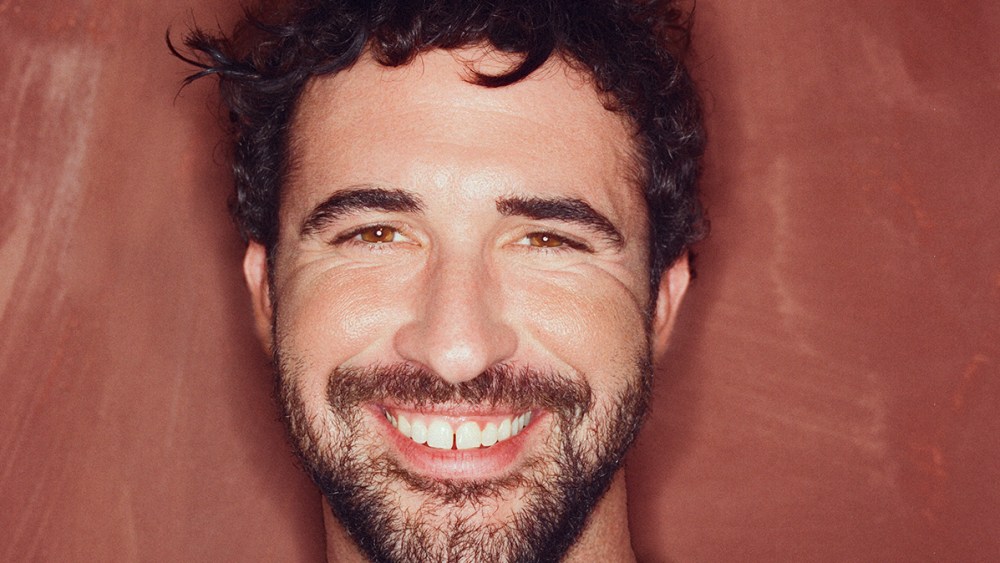
It’s 3 p.m. at the Sunset Tower Hotel, the purgatory hour between lunch and dinner at one of Hollywood’s favorite places to hammer out deals and gaze at stars. Jordan Firstman decides it’s late enough in the day for his first Aperol spritz, which leads to some reminiscing. It was a decade ago that über-producer Greg Berlanti invited the then-25-year-old Firstman to the Tower Bar to discuss the trajectory of his career. Berlanti, who became the showrunner of “Dawson’s Creek” at age 27, has served as a coach for more than one young queer creator, and Firstman had just sold a series to the cable channel Sundance TV, based on his romantic intergenerational short film “Call Your Father.” He was getting pushback from the network about casting a 50-year-old out gay actor in the lead. Max Montgomery for Variety “He wasn’t an unknown; he was a great working actor,” Firstman recalls, declining to give his name. “The studio was like, ‘We would love to cast a gay actor, but there’s just no one that even touches the level of fame we need to justify you doing the show at this budget.’” Firstman stabs Aperol-soaked ice with his straw, tensing at the memory. “I got to a place where I told them, ‘I’m not doing this if the actor isn’t gay.’ I was a little bit threatening, like, ‘You guys don’t want to look homophobic.’” Sundance TV ended up passing on the show, prompting Berlanti to attempt to rescue it for the nascent HBO Max. It would languish there for years, and then disappear altogether in that company’s revolving door of mergers and executive changes. My, how times have changed. Firstman, 35, does not resemble the typical filmmaker whose career launched into the stratosphere out of the Cannes Film Festival. His baggy jeans, chest-hugging polo and Oakley raver sunglasses lend themselves better to the hipster neighborhood of Silver Lake. (Not coincidentally, that’s the setting of Rachel Sennott’s HBO comedy “I Love L.A.,” on which he co-stars as a stylist and BFF to Sennott’s aspiring talent manager, Maia.) Impishness is Firstman’s trademark — he’s all easy crooked smiles and bouncing brown curls. That quality is what’s made his “Internet Gay” persona travel so readily — as evidenced by his more than 1 million followers on Instagram and TikTok. Yet in May, Firstman took the French Riviera by storm with “Club Kid” — his feature debut as a writer-director and first turn as a leading man on the big screen — where the project inspired a heated bidding war. Indie giant A24 beat out Focus Features, Searchlight, Netflix and Mubi for a global rights deal worth $17 million, instantly solidifying Firstman as a force to be reckoned with. “Club Kid” tells the story of nightlife promoter Peter (Firstman), who has blinked and lost 10 years of his life to hard partying (ketamine, cocaine and GHB are supporting characters in the film), a circuit of on-demand lovers and a deep indulgence in modern queer life in New York City. Depression and low self-esteem hover over Peter like buzzing drones, swatted away by late nights and early mornings and Uber Eats and laptop porn. That cycle is disrupted when 10-year-old Arlo (newcomer Reggie Absolom) shows up at the door of Peter’s SoHo apartment announcing he is his son. Both father and child are saved and tested in equal parts, as we learn that truly happy endings never come home with us from the club. The magic trick of “Club Kid” is Firstman’s ability to sell a broad, humorous story about the kind of love that fundamentally changes us — all while being firmly rooted in the digital, unapologetically gay culture that formed his artistic sensibilities. Firstman is the creative love child of Judd Apatow and Nicole Holofcener, delivered unto a Gen Z cohort who’ve become obsessed with watching movies in theaters. “It’s been amazing to see the kinds of people that relate to this film, but it really is a movie about growth,” says Firstman. “In Telluride, I watched a 75-year-old conservative man leave the theater in tears. Then we took it to the New York Film Festival, which I was very nervous to do, and showed it to the 35-year-olds who do drugs. I built the story to work on levels, with the top being a layer of warmth that feels like a hug. I explore some of my more transgressive ideas beneath the surface. If you don’t get it, there’s still a story that will make you laugh and feel something.” For those not familiar with Firstman, he’ll seem like an overnight sensation. To others, he’s a veteran comedic force for the chronically online. From the tiny town of Northport on the North Shore of Long Island, Firstman made the pilgrimage to Manhattan that countless hopeful queer people had before him. While building his social following with razor-sharp snark, Firstman worked in writers’ rooms for cult comedy series such as “The Other Two,” “Search Party” and “Big Mouth.” He also wrote a now-legendary sketch for Aubrey Plaza when she hosted the 2020 Independent Spirit Awards, highlighting gay representation among that year’s nominees that might not be obvious to the straight eye; it ended up becoming a tribute to an astonished Laura Dern, who tearfully stood up and cheered. Max Montgomery for Variety Starting out, Firstman didn’t dare dream of ascending the stairs to the Grand Palais or carving a path to the Oscars stage. “It was the era of the TV auteurs,” he says of his early idols. “Phoebe Waller-Bridge, Donald Glover, Lena Dunham: I had a voice and felt confident I could do that. They are storytellers. The directing part has always been scary to me, because I’m not as versed in images. I’m the person at the museum who has to ask why the painting is good. Words are the way I get my point across.” Firstman overcame that fear to shoot “Club Kid” in just 26 days last year. With a production budget just shy of $5 million, Firstman sacrificed his own fees as writer, director and star in exchange for two nonnegotiables: There had to be a pivotal location shoot in London, and the movie had to be shot on pricey film stock — a decision he defends with the weariness of a seasoned auteur. “That was vital; we shot on 35mm. We want prints of this movie made,” he says with a kind of reverence. Not for his own ego, but for his vision of how “Club Kid” needs to exist in the world of cinema. Two-time Oscar nominee and longtime Firstman mentor Richard LaGravenese (“The Fisher King,” “Behind the Candelabra”) isn’t surprised the debut director is calling his own shots. “What makes Jordan special is that, like any good artist, you don’t wait for an invitation,” LaGravenese says. “You create the space for yourself in the culture. He’s done it by sticking to who he is.” When I spoke with Firstman at Cannes after “Club Kid” exploded, he told me that the script began as a frothy experiment meant to evoke the dreamy wish-fulfillment films of the early aughts like “Uptown Girls,” starring Brittany Murphy, and “Big Daddy” from Adam Sandler. “That’s how I was pitching it, and once I started writing, it got a little ‘Kramer vs. Kramer,’” he said. The movie also had to be decidedly, gloriously gay. It’s not lost on Firstman that “Club Kid” sits alongside other 2026 releases that represent some of the most elevated queer stories that mainstream Hollywood has produced in years, with several of them sitting in the awards conversation with Firstman’s film: Javier Calvo and Javier Ambrossi’s “La Bola Negra,” Andrew Scott’s tearjerker “Elsinore,” Jane Schoenbrun’s “Teenage Sex and Death at Camp Miasma” and Lukas Dhont’s fellow Cannes player “Coward.” Queerness is integral to these movies, but not exclusively the point — they are portraits of soldiers propping up unjust wars, artists defying heteronormative conventions to find themselves and, in Firstman’s case, a fading party boy belatedly becoming an adult. Max Montgomery for Variety “I feel like there hasn’t been a defined generation of new filmmakers since the Safdie brothers era began,” Firstman says. “Los Javis and Jane and Lukas and I are all around the same age. Our collective is so queer, and people are responding, and the movies are doing well.” At the Tower Bar, we cave and order french fries to soak up the spritzes. Firstman is recognized by a musclebound music producer dining nearby with a woman of equitable attractiveness. “He’s hot,” Firstman says, “but he’s a really nice guy. And he has a great kid!” If Firstman is indeed part of a new wave of queer storytellers, some might say it took a minute for him to ingratiate himself to that community. Prior to his Cannes breakthrough, his brand was, well, messy. Firstman excels at highlighting the absurdity of celebrity and the pretension of coastal media types. Last year, he criticized the crossover sensation “Heated Rivalry” for what he called a narrow depiction of gay sex (he said that’s “not how gay people fuck,” and that the show eroticized two closeted athletes falling in love under deep cover). The show’s rabid fans descended, and Firstman made it right by deploying his online instincts and recruiting “Heated Rivalry” star Hudson Williams for a TikTok post satirizing the whole blowup. In the clip, Williams lip-synched Nicki Minaj’s 2015 MTV VMAs acceptance speech, in which she aggressively called out host Miley Cyrus for remarks she’d made about the rapper in an interview (“Miley, what’s good?”). Firstman played Cyrus, claiming she’d been taken out of context. This Minaj-Cyrus exchange also appears in “Club Kid,” as Firstman’s character sells drugs to a group of shrill gay guys locked in a bathroom stall. Much of the press tour for “Club Kid” has been a reframing of Firstman’s intentions, especially as it relates to his fellow queer people. “You really can’t try to steer the narrative within the gay community. But I’m speaking to them from my heart, and I feel confident in what I’m showing them. I’m also doing my best to be a good friend, and to protect my cast,” he says. “It’s been amazing seeing messages from people who say they feel seen by the movie — even the judgy-ass bitches in the nightlife community. They were like, ‘You did that.’” Josh Hutcherson, Firstman’s co-star on “I Love L.A.,” who describes him as his brother, says the filmmaker is “one of the most sensitive people I know. He has an abrasive and controversial mask he wears, and it’s very funny. His humor shakes up the right people. But he’s also got an amazing sensor for humanity.” That “Club Kid” leads with its heart might confound Firstman observers, but the movie’s sentimental value is why A24 made its big bet. Because on the other side of that LBTGQIA+ embrace is the rest of the moviegoing market, and the eight-figure check cut by the boutique studio means “Club Kid” must leg out at the box office through the holiday season and beyond to reach profitability, after opening in limited release this weekend. Firstman is personally involved in the marketing, recruiting famous DJs to spin at premiere parties in Paris, Rome, London and New York, while rolling out merchandise like “Club Kid” cropped T-shirts that resemble one his character wears in the film (“I Love Björk and Bareback,” it reads). Some of his peers have suffered the slings and arrows of failed crossovers. In 2022, Universal Pictures backed comedian Billy Eichner’s noble attempt to program a gay romantic comedy for wide audiences in the Apatow-produced “Bros.” That film grossed only $14 million worldwide on a $22 million budget, not accounting for the significant marketing cash the studio spent. While Firstman’s film is quite different, the projects may invite an inevitable comparison. Max Montgomery for Variety A24 and Firstman are betting on word-of-mouth, which also has its consequences. Conservative rage-baiters could latch on to “Club Kid” for its depiction of a child spun into the chaos of a druggy NYC underbelly. The film’s 100% Fresh Rotten Tomatoes score (based on 65 reviews), however, is a good indicator that audiences are receiving Firstman’s intended message. After all, the kid in “Club Kid” is often the one doing the child-rearing. “The world of this movie isn’t sensationalized: I don’t put a positive or negative lens on the party scene. I just try to show these people for their beauty and their flaws and their creativity,” says Firstman. “I wanted to explore what felt universal. A general millennial malaise, like, what are we doing? The pandemic was six years ago, and we still feel like we’re in our 20s — but we’re not. This has permeated our culture. So many friends of mine wanted to stop partying and didn’t know how.” But for a movie about generational sadness, “Club Kid” is riotously funny, filled with Easter eggs for meme lovers and culture queens. During a dance sequence, Firstman and a friend do choreography to the chant “No arms! No legs! No eyes!,” a reference to a 1998 micro-scandal caused by Claire Danes, who used those words to describe the people she saw in the Philippines while filming the prison drama “Brokedown Palace.” (When a character expresses confusion about the dance, Peter screams, “Google ‘Claire Danes Philippines!’”) One of the film’s best jokes was sacrificed for a leaner run time, Firstman laments. On his second day of daddy duty, Peter takes little Arlo to brunch at the glitterati staple Balthazar. He asks if his son, born and raised in the U.K., likes the spot because it was founded by another Brit (celebrity chef Keith McNally). Peter jokes that “James Corden isn’t even allowed in here anymore,” referencing a nasty 2022 beef between McNally and the late-night host over the latter’s alleged rudeness to the staff. “Who is James Corden?” the boy asks. Peter sighs with jealousy and tells the kid he’s so lucky not to know. Max Montgomery for Variety “If I want a bunch of gays to be screaming the Nicki Minaj speech, the gays will like that. But a straight guy will still get the message — you’re trapped in the bathroom with annoying gays,” Firstman says with a laugh. There’s also the script’s parade of memorable nicknames for drug use, with “Sniffany Haddish” as the moniker for cocaine. Want to mix that with ketamine? Then you’re having “a little Charlie, a little Kirk.” Administering your drugs in the rectum for faster results? That’s a “Benson Boof.” A millennial born on the tail end of his generation, Firstman grew up with the competitive noise of friends posting their best, most successful lives minute by minute on social media. As the sweet orange liquid in our glasses turns to slush, he says he’s grateful that fame and artistic praise didn’t come so fast or easy. Whatever fate the box office and the Oscars hold for “Club Kid” and Firstman, he’s leveled up as both an artist and a man. “Life gives you what it gives you when it does,” he says, imagining a world where that Sundance TV show had actually been made. “I don’t know where I’d be now. My voice and vision are more fully formed because of my experience.” At the last second, I try to tempt Firstman with another round, but he declines. After all, he’s on his way to the first L.A. screening of his film, to be moderated by “Anora” Oscar winner Sean Baker. He bids me farewell when, half in his car, Firstman springs out and runs back to the valet stand. “This is for you,” he says, handing me a lighter emblazoned with the words “Club Kid.” Location: Roleplay Design showroom; Styling: Chloe and Chenelle/A Frame Agency; Grooming: Kristen Shaw/A Frame Agency/St. Meto; Look 1 (Black Suit): Full look: Gucci; Look 2 (Blue Shirt): Full look: Tom Ford; Watch: Tiffany; Look 3 (Black Jacket with White Shirt): Jacket, shirt and tie: Dolce & Gabbana; Look 4 (Black Sweater): Sweater: Prada; Jeans: All Saints
Big Daddy: How Jordan Firstman Turned ‘Club Kid’ Into a Glorious, Gay, Oscar-Worthy Crowdpleaser
Full Article
Original Source
Read the full article at Variety →KhanList aggregates and links to publicly available news content. We do not host full articles from third-party sources. Always verify important information with original sources.