
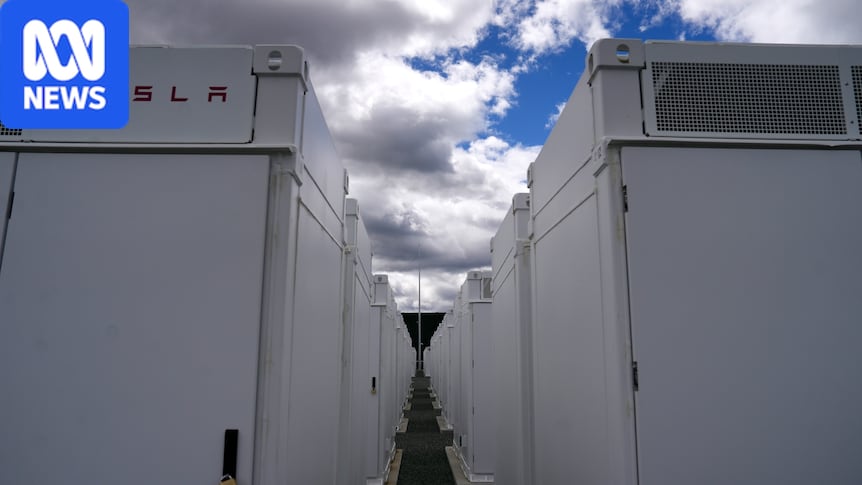
The largest battery energy storage system in Canberra's history is online, with the ACT government saying the batteries could power one-third of Canberra's electricity needs for two hours in times of peak demand.The Williamsdale site, south of Tuggeranong, has 136 Tesla Megapack 2 batteries and connects to the electricity grid, absorbing excess energy in times of low demand, before returning it to the grid when demand is high.The project is a partnership between the government and private company Eku Energy, which designed, built and owns the 250-megawatt capacity batteries.The timeline to complete the project blew out twice after its delivery was projected to be in 2025, then later extended to early in 2026, which was also not realised. ACT Chief Minister Andrew Barr (centre) says he believes the project will be cost-positive for the ACT government. (ABC News: Adam Shirley)ACT Chief Minister Andrew Barr said as part of the operating agreement, the government would pay Eku Energy a support charge of $368 million in instalments across 15 years.The government is then entitled to 50 per cent of the battery's net revenue, which it earns when energy is sold back to the grid.Mr Barr said he expected the project to become revenue-positive."So, the territory makes a contribution, then receives more in its share of the revenue," he said."We are building this technology for households, small business, for our hospitals, for our schools, for our universities, for all of the industrial output that occurs in Canberra ... data centres are part of that," Mr Barr said."That's why this is such a good project for the ACT."How does it work?The batteries are located in Williamsdale in the ACT's south. (ABC News: Adam Shirley)Eku Energy policy director Rachel Rundle explained that the battery system was connected to Evoenergy's infrastructure. "Essentially they're plugged into the electricity network," she said. "They are always on … [and] because they're always on, they soak up all of the excess energy that is in the network.Eku Energy policy director Rachel Rundle said she expected the system would sell energy back to the grid each day. (Supplied)"Lots of that excess energy comes from the great wind and solar resources that we have in Australia."It stores and holds onto that energy for a number of hours."And then when that demand picks up … say, on a hot evening night or when there's a lot of industrial processing, the battery discharges that energy back into the grid, helping meet that peak demand and reducing the strain on the network."Ms Rundle said it could quickly store up to 500-megawatt hours and then discharge that amount each day.Eku Energy chief operating officer Tom Best said there were no promises that the system would put downward pressure on Canberra household electricity bills. "It's an open market, so we can't influence the market outcomes, but by bidding the capacity during those periods of high demand, we may have an impact on pricing, but it's not something we can guarantee," Mr Best said.
Big batteries ready to power one-third of ACT for hours if needed
Full Article
Original Source
Read the full article at Abc →KhanList aggregates and links to publicly available news content. We do not host full articles from third-party sources. Always verify important information with original sources.