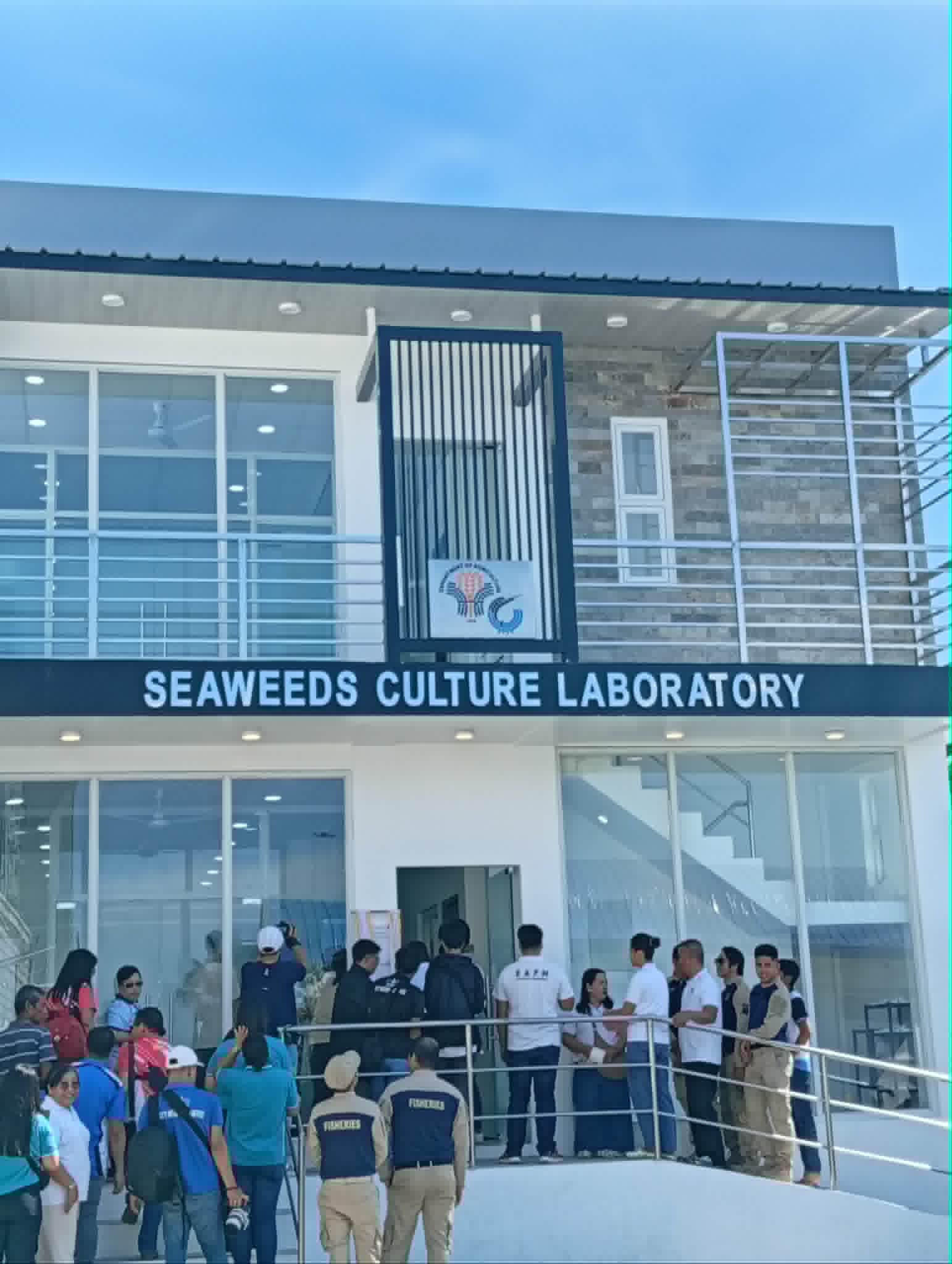
Various seaweed species are propagated at the Bureau of Fisheries and Aquatic Resources Region I’s new seaweed culture laboratory in Alaminos City. The facility aims to boost the production of quality planting materials and support the growing demand for seaweed in local and international markets. — Photo by Yolanda Sotelo ALAMINOS CITY — The Bureau of Fisheries and Aquatic Resources (BFAR) inaugurated on Thursday (July 16) a two-story, P5-million seaweed culture laboratory here to strengthen seaweed production in the Ilocos Region. Built under BFAR’s Enhanced Philippine Seaweeds Development Program, the facility is expected to produce up to 54 metric tons of seaweed propagules annually—a significant increase from the 0.8 metric ton yearly output of the agency’s previous laboratory in Alaminos City, which has been operating since 2010. Article continues after this advertisement BFAR Regional Director Remely Lachica said the laboratory houses a gene bank of healthy seaweed cultivars that are propagated in BFAR-operated nurseries in Alaminos City and the neighboring town of Anda. READ: Seaweed ‘puto’ offers new livelihood for La Union The propagules are later distributed to schools and fisherfolk for cultivation in sea farms. “The laboratory will ensure a continuous supply of quality cultivars for our fisherfolk engaged in seaweed farming,” Lachica said. Various seaweed species are propagated at the Bureau of Fisheries and Aquatic Resources Region I’s new seaweed culture laboratory in Alaminos City. The facility aims to boost the production of quality planting materials and support the growing demand for seaweed in local and international markets. — Photo by Yolanda Sotelo She noted that the increasing demand for seaweed in local and international markets provides coastal communities with an additional source of livelihood. Article continues after this advertisement Although the Ilocos Region is widely known for milkfish production, Lachica said it also has strong potential to contribute to the country’s growing seaweed industry. The laboratory propagates commercially important seaweed species, including Kappaphycus (tamsaw), Eucheuma (milyon-milyon), Caulerpa (arosep), Gracilaria, and Ulva, or sea lettuce. It has also begun culturing Codium species, locally known as popoklo, to study their growth under laboratory conditions. Article continues after this advertisement Dennis Togonon of the BFAR Central Office said seaweed remains one of the agency’s priority commodities, with the new laboratory expected to enhance the production of quality planting materials, support research and innovation, and strengthen the capabilities of seaweed farmers. He added that BFAR continues to invest in science and technology to improve productivity and ensure the long-term sustainability of the country’s seaweed industry. /das Your subscription could not be saved. Please try again. Your subscription has been successful.
BFAR opens P5-M seaweed laboratory in Pangasinan
Full Article
Original Source
Read the full article at Newsinfo →KhanList aggregates and links to publicly available news content. We do not host full articles from third-party sources. Always verify important information with original sources.