
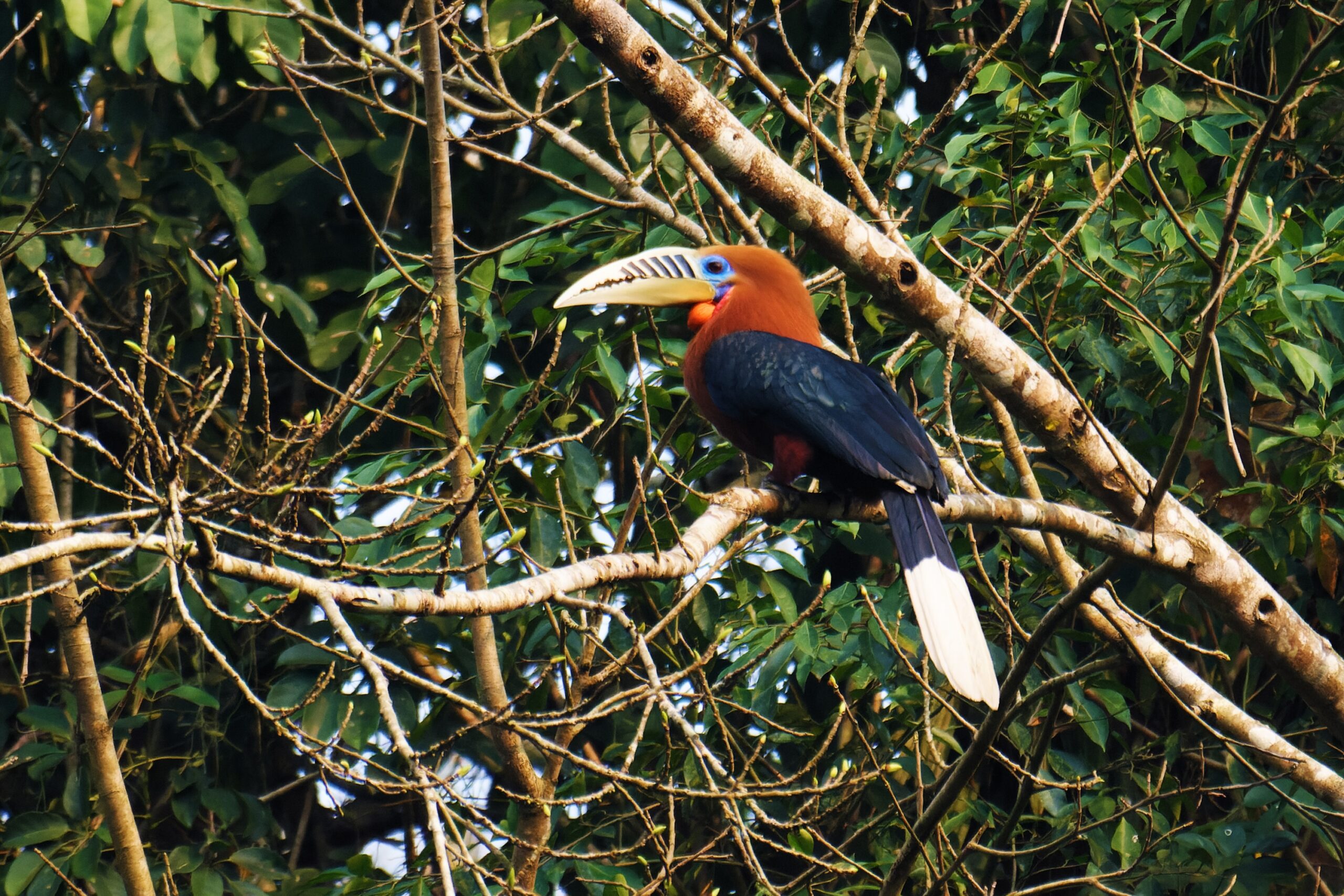
The Bezos Earth Fund and eight other organizations have pledged more than $500 million over five years to help rescue some of the world’s most threatened plants and animals, giving species recovery greater attention in global conservation funding. The Species Recovery Alliance, announced Oct. 16 at the United Nations biodiversity summit, or COP17, in Yerevan, Armenia, will coordinate funding and conservation efforts rather than establish a single pooled fund. Cristián Samper, managing director and leader of nature solutions at the Bezos Earth Fund, said the initiative grew out of concerns that efforts to expand protected areas were overshadowing the urgent needs of threatened species. “We’re forgetting some of the other targets, in particular, the Target 4 on recovery of endangered species,” he told Mongabay in an interview at COP17. Target 4 of the Kunming-Montreal Global Biodiversity Framework calls for urgent action to halt human-induced extinctions and help threatened species recover. Yet biodiversity continues to decline. WWF’s 2026 “Living Planet Report” found that populations of monitored vertebrate wildlife declined by an average of 73% between 1970 and 2022. Africa recorded an 80% decline. A new U.N. assessment also found that fewer than half of assessed biodiversity targets are on track. “Setting up protected areas and dealing with the other issues is not enough,” Samper said. Many threatened species, he added, require targeted interventions to recover. The Species Recovery Alliance includes Re:wild, Rainforest Trust, Fondation Segré, and five other organizations alongside the Bezos Earth Fund. Its members will coordinate investments and support recovery projects through conservation organizations and local partners. The announcement builds on the $200 million Phoenix Species Project, launched by the Bezos Earth Fund in August to support the recovery of 100 critically endangered species across 30 countries. But not all of the $500 million for the new initiative is new financing, with about a third of it “incremental, new money,” Samper said. The commitment also comes amid difficult negotiations over biodiversity finance. Under Target 19, governments agreed to mobilize at least $200 billion annually for biodiversity by 2030, including $30 billion in international financial flows to developing countries. “Philanthropy can play a catalytic role,” Samper said, but he argued that public financing, particularly domestic resources, would ultimately have to shoulder much of the responsibility. For the alliance, success will be measured by whether threatened species actually recover, using indicators developed by the IUCN, the global wildlife conservation authority. Samper acknowledged that results could take decades for some slow-breeding species. “We recognize not everything is going to work. Some of these species may go extinct,” he said. “But we’re hoping that by having the right focus, the right capacity, the political commitment, and some additional resources, that this will help turn things around.” Banner image: The rufous-necked hornbill is found in the dense forests of northeast India, with some of the highest numbers in Arunachal Pradesh state. Image by Shiv’s fotografia via Wikimedia Commons (CC BY 4.0). Credits Topics
Bezos Earth Fund and partners pledge $500m for threatened species recovery
Full Article
Original Source
Read the full article at News →KhanList aggregates and links to publicly available news content. We do not host full articles from third-party sources. Always verify important information with original sources.