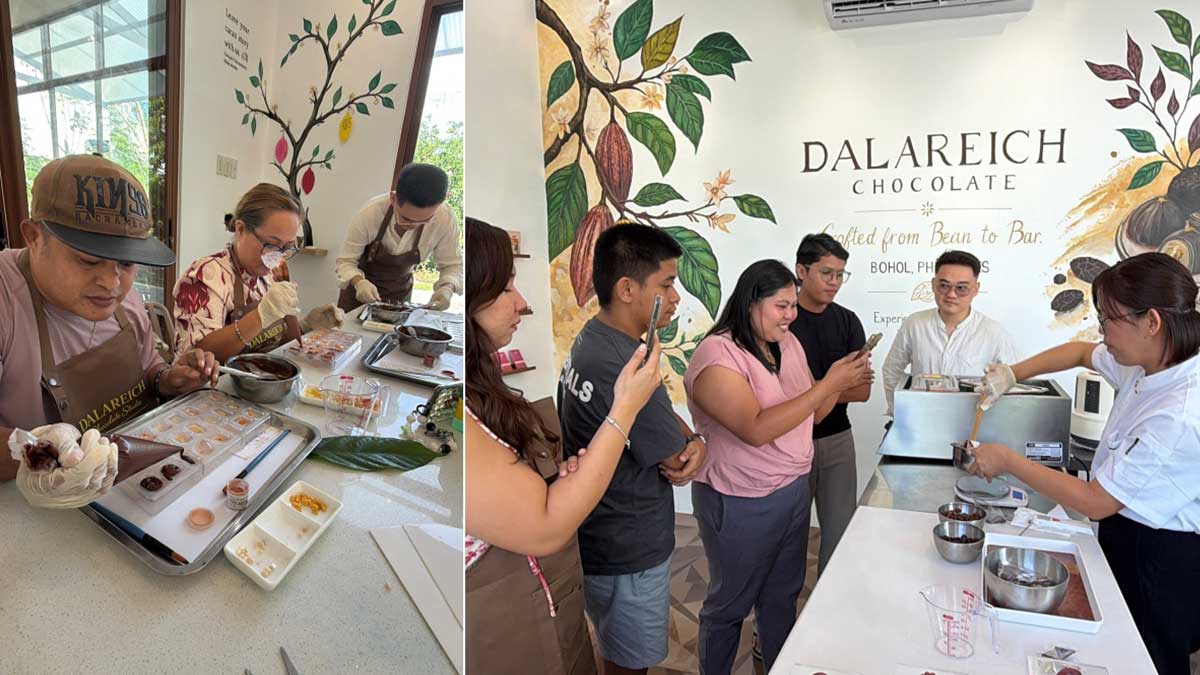
HANDS-ON, MELTS-IN-YOUR-MOUTH EXPERIENCE Visitors take part in the newly launched “Make Your Own Chocolate” workshop at Dalareich Chocolate Studio in Tagbilaran City, Bohol, where they become chocolatiers for a day, learning the art and science of transforming locally grown cacao from bean to bar. —PHOTOS BY LEO UDTOHAN TAGBILARAN CITY—Beyond the world-famous Chocolate Hills, Bohol is offering visitors another sweet attraction: the chance to make their own chocolate from locally grown cacao. At Dalareich Chocolate Studio in Barangay Booy in this city, visitors and tourists are invited to discover that journey firsthand. The newly launched “Make Your Own Chocolate” workshop offers an immersive experience where participants learn the art and science of chocolate making under the guidance of Bohol entrepreneur and chocolatier Dalareich Polot, widely known as the province’s “Chocolate Princess.” Article continues after this advertisement The first batch, which opened on July 4, welcomed 10 participants eager to transform cacao into handcrafted chocolate bars while gaining a deeper appreciation of the craftsmanship behind every piece. “Chocolate making is a science. There is a process to it,” Polot told participants, explaining that cacao beans develop distinct flavors depending on where they are grown. The workshop features three hands-on activities: Making traditional “tableya” wrapped in banana leaves, crafting personalized chocolate bars with different flavors and designs, and taking part in a professional chocolate-tasting session. For participant Twin Javier, a 34-year-old entrepreneur, the workshop was both enjoyable and educational. “The workshop experience is a blend of fun, excitement and random bits of knowledge that make it even sweeter,” she said. Article continues after this advertisement Another participant, Helen Castaño-Alagadmo, 49, said the experience gave her a newfound respect for the work behind every chocolate bar. Craftsmanship “We also realized that making chocolate is not as easy as it looks. Thank you for sharing your knowledge and giving us such a memorable experience,” she said. Article continues after this advertisement For many participants, the workshop became more than a culinary activity. It offered an opportunity to create their own chocolate while experiencing the entire production process—from cacao beans to finished bars—and to appreciate the skill, patience and craftsmanship involved. Polot, 38, who studied chocolate processing and food engineering at the Ghent University in Belgium through a scholarship, believes the Philippines has what it takes to become a global producer of premium craft chocolate. “The craft chocolate industry in the Philippines is still small, but we are doing our best to promote Filipino craft chocolate to the world market because we actually have some of the best cacao beans in the world,” she said. MASTER OF HER CRAFT Chocolatier Dalareich Polot, widely known as Bohol’s “Chocolate Princess,” founded Dalareich Chocolate House, Bohol’s first chocolate factory, in 2017 after expanding her family’s “tableya” business, showcasing the potential of locally grown cacao. According to Polot, the workshop also serves a bigger purpose: promoting cacao farming, preserving Bohol’s chocolate-making heritage and creating additional livelihood opportunities for local farmers. “I think it is a good thing that we can promote to tourists not just the Chocolate Hills, but also the experience of making your own chocolate on the island of the Chocolate Hills,” she said. Childhood passion Polot’s passion for chocolate traces its roots to her childhood. She grew up helping her parents make and sell tableya, the traditional Filipino chocolate tablets, to help support the family. Her mother, Elsa, worked as a street sweeper, while her father, Ricardo, was a tricycle driver. The modest family livelihood eventually grew into Dalareich Tableya. Polot established Dalareich Chocolate House in 2017, the first chocolate factory in Bohol, after expanding her family’s tableya business, which began in 1994. The facility allows visitors to observe the chocolate-making process while providing employment to housewives and working students. After studying chocolate processing and food engineering at the Ghent University in Belgium, Polot returned home determined to prove that Philippine cacao could compete on the world stage. Her efforts paid off in 2019 when Dalareich 100-percent Unsweetened Chocolate won the Gold Award at the prestigious Academy of Chocolate Awards in London, bringing international recognition to a chocolate brand born from a small family business in Bohol. Despite the accolades, Polot remains focused on helping local cacao farmers and preserving the province’s chocolate-making heritage. The company sources cacao beans from small farmers in the towns of Calape, Carmen, Pilar, Sierra Bullones and Jagna, paying higher prices for properly fermented and dried beans to help improve farmers’ incomes. CACAO TREATS Locally grown Bohol cacao is transformed into handcrafted chocolate products. Still, the country’s cacao supply remains inadequate. While the Philippines requires about 50,000 metric tons (MT) of cocoa each month, local production is only around 10,000 MT, forcing many chocolate makers to import beans, according to Polot. To help address the shortage, she launched the “Adopt-a-Cacao Tree” campaign, encouraging Boholanos to plant and nurture cacao trees while helping rehabilitate farms damaged by Typhoon “Odette” in 2021. Her work in reviving the cacao industry and empowering rural women farmers earned her the Goldman Sachs and Fortune Global Women Leaders Award in 2022, making her the first Filipina recipient of the recognition. Your subscription could not be saved. Please try again. Your subscription has been successful. From assisting her parents in making tableya as a young girl to producing internationally acclaimed chocolates, Polot’s journey mirrors the transformation of Bohol’s cacao industry—showing how a simple cacao bean, nurtured by hardworking farming families, can become a world-class product. INQ.
Beyond those famed hills, Bohol makes real chocolate
Full Article
📰 Original Source
Read full article at Newsinfo →KhanList aggregates and links to publicly available news content. We do not host full articles from third-party sources. Always verify important information with original sources.