
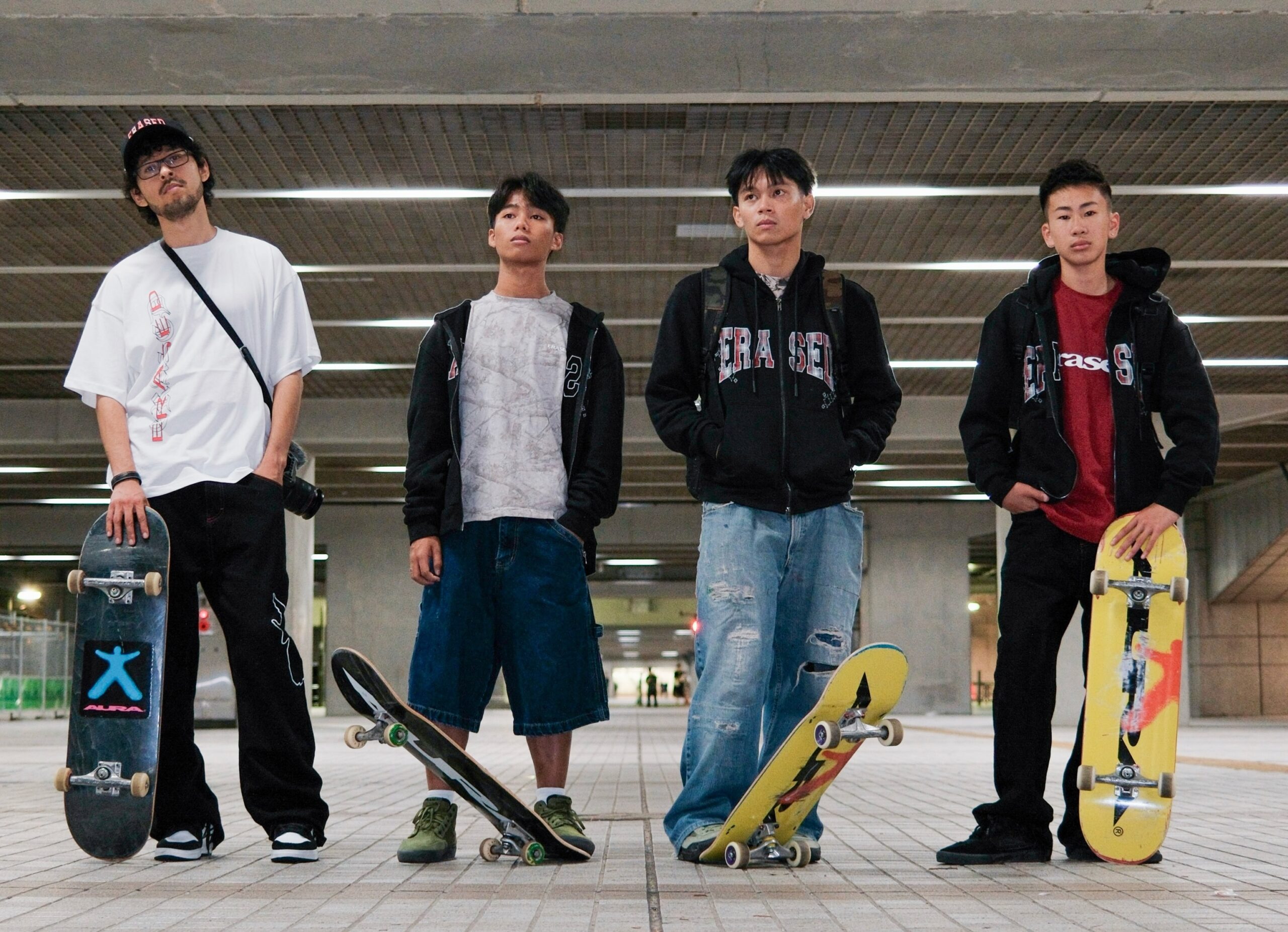
Banchi Jimena, a UPLB student and skate filmmaker, aims to change the perception of skaters in Los Baños, where there are limited spaces for skating and a declining skate scene. Both Banchi and fellow skater Jules face challenges in finding places to skate and connecting with other skaters, with Banchi reminiscing about a once-thriving community. Banchi advocates for the establishment of a skatepark in Los Baños to foster a supportive environment for skaters and to help dispel the stigma surrounding skateboarding as a sport. This is AI-generated. Read the article for full context. Report any errors. Tambay lang ‘yan (They’re just loitering). Banchi Jimena wants people to stop seeing skaters this way. Banchi, 22, is a University of the Philippines Los Baños (UPLB) student and skate filmmaker. Los Baños has no dedicated outdoor skatepark, according to local skaters. So he and his friends skate wherever they can on campus. One of their favorite spots is the rooftop of a parking garage near Christian School International. Others are hidden behind the Institute of Biological Sciences (IBS) building and the buildings around the College of Engineering and Agro-Industrial Technology (CEAT) in UPLB. Campus security has caught them several times. “Kilalang-kilala na kami (They know us very well by now),” he said. Jules, a UPLB student and beginner skater, ran into problems early. They had hoped to skate between classes as an eco-friendly way to get around. The roads turned out to be less suitable than they expected. Finding people to skate with is just as hard. Banchi has seen a livelier scene in town and wants to bring it back. Jules usually skates alone and is still looking for others to learn from. A town with nowhere to skate Skateboarding has gained national recognition through athletes like Olympian Margielyn Didal. Access to dedicated skating spaces, however, remains a concern for local communities. In Los Baños, skaters make do with spaces meant for other purposes. Finding other skaters is its own problem. “Patay talaga ‘yung scene dito sa LB kaya sa Manila ako lagi (The scene here in LB is really dead, so I’m always in Manila),” Banchi said. Before Banchi and Jules can skate, they first have to find somewhere to roll. Banchi sees the search for spots as part of the fun. He compares skating to traveling, with a good street spot as the destination. During his year off from school, his work took him to many places. He found new spots and made new friends along the way. “Nakakapag-travel ka, na-enjoy mo pa ‘yung ginagawa mo (You get to travel, and you enjoy what you’re doing too),” he said. Back in Los Baños, there are fewer options. Banchi said he has already explored most of the spots on campus. Jules also found fewer places to skate than they expected. They usually skate in a parking lot within walking distance of where they stay. They also stick to places where skating is not prohibited. Security is another concern. Banchi said guards treat skaters differently. Some understand skaters even if they don’t skate themselves. Others are only doing their job. In Los Baños, he said, guards have been less understanding. Luckily, Jules has not been asked to leave a spot so far. “Mahirap talaga. Pero kung skater ka, kumbaga, gagawa ka talaga ng paraan (It’s really hard. But if you’re a skater, you’ll really find a way),” Banchi said. Still, a spot is only half of it. The other half is having people to skate with. A scene that went quiet Banchi still remembers what the Los Baños scene used to be like. “Dati, buhay na buhay (It used to be so alive),” he said. Some of the skaters who anchored it can still be seen in front of CSI. Banchi looks up to them like older brothers. Most of them no longer skate. So when he spotted someone skateboarding in town while out on a walk not long ago, he was glad. “Nakakagulat na may nagi-skate pa pala dito (It’s surprising that people still skate here),” he said. A few skaters still gather in the bayan. Jules has noticed that they usually come out only on weekends or on random days. When they do, they seem busy, which makes them hard to approach. Jules ends up skating alone most of the time, learning without anyone around to guide them. “My biggest challenge is finding a community and learning properly,” they said. Banchi was not always sure he belonged either. When he started skating, he was the weakest in his group. He had always loved cameras, so he started filming his friends instead. “Para lang mabilang ako doon sa group (Just so I could be counted in that group),” he said. That was how his passion for filmmaking began. His full-length skate film, What The Sigma, was later named Skate Film of the Year 2025 at the first Silog Skate Awards, according to Silog Skate Magazine. Today, he believes what keeps skaters going is having a crew that believes you can do it. It is also why he wants to bring the scene back. “Gusto ko talaga buhayin ‘yung scene dito (I really want to bring the scene here back to life),” he said. Their stories show two sides of the same gap. Banchi remembers a scene worth saving. Jules is still waiting to find one. Still misunderstood Banchi wants to change how people see skaters. “Ayoko lang talagang ma-discriminate ‘yung mga skater (I just really don’t want skaters to be discriminated against),” he said. Jules also sees skaters as a “very stigmatized community, very misunderstood.” Within the community itself, there is debate over what skating should be. According to Banchi, some older skaters want younger ones to become competition skaters, partly so the sport looks more proper and gets judged less. He disagrees. Not every Filipino can afford a skateboard, he said, and he believes there are too few skateparks in the country. Pushing kids to become athletes also goes against what skating meant to those same older skaters when they were young, he added. Banchi sees skating as closer to art than sport. It is a lifestyle, something done freely, the way someone might draw. “Wala kasi dapat pressure pag nags-skate (There shouldn’t be any pressure when you skate),” he said. What a skatepark could change Banchi has thought about what a skatepark could do for Los Baños. Skaters from other places would start coming to town, he said, and the local skater population would grow. He believes a park would also give parents, including professors, a safer place than the streets to bring kids who want to skate. He points to the skatepark in Quezon City, which he said was built beside a pickleball court. Many passersby, he said, grew curious about why it was there. A park in Los Baños could spark the same curiosity, he added, and show young people there is more to sports than basketball. “Hindi lang basketball ang buhay (Life isn’t just about basketball),” he said. Jules sees a park as a way to change minds. Skateboarding is still a niche sport in the Philippines, they said. Placing a park in a busy area could clear up some of the stigma and misunderstanding around it. Until then, Banchi and his friends keep searching for spots around campus, while Jules practices wherever he can. Some people may still call them tambay. They keep skating anyway. Banchi’s advice to fellow students is to open their minds and unlock skills they never got to try as kids. “Enjoy mo lang ‘yung buhay mo (Just enjoy your life),” he said. – Rappler.com Arabella Grace Sta. Ana is a Rappler intern studying BA Philosophy at UP Los Baños.
Beyond the classroom, UPLB skaters carve out space in town with no skatepark
Full Article
Original Source
Read the full article at Rappler →KhanList aggregates and links to publicly available news content. We do not host full articles from third-party sources. Always verify important information with original sources.