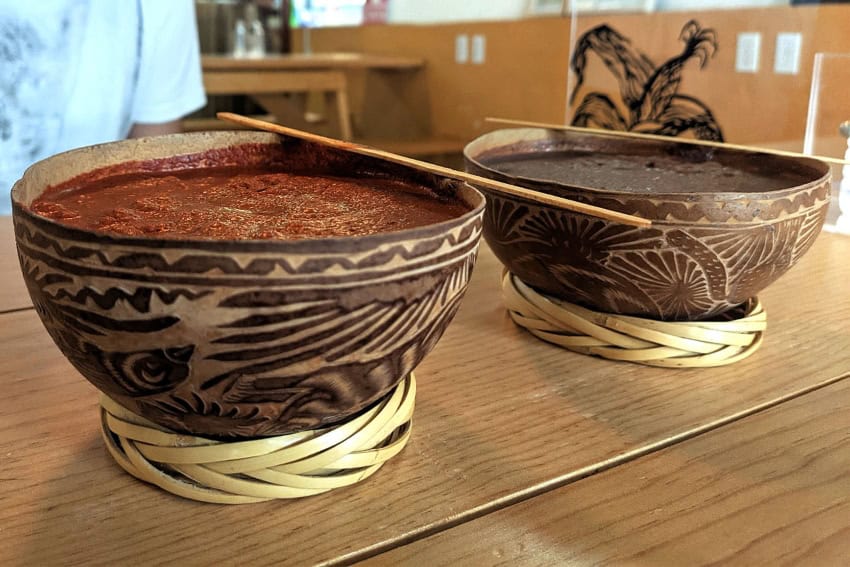
Beyond tequila and mezcal, Mexico hides a universe of traditional drinks that are little known outside of the regions where they originated. These beverages tend to have pre-Hispanic roots and are made from corn dough, featuring varied ingredients including cacao, wildflowers, fruits and more. Indeed, there’s a lot more than meets the eye in Mexico’s gastronomy scene. Here are some of the lesser-known Mexican beverages that you’ve probably never heard of. Pozol Hailing from Mexico’s Maya region, pozol is one of the country’s most celebrated pre-Hispanic non-alcoholic beverages, still enjoyed by many today. With a thick consistency and brownish color, this beverage was highly praised in pre-Hispanic times as a source of stamina for Indigenous travelers, providing nourishment and quenching thirst in the humid conditions of Mexico’s south. The drink is prepared by cooking corn with lime, rinsing it, and grinding it to create a dough, which is then whisked into water until fully dissolved. Nowadays, there are many varieties of pozol — all of them featuring an earthy flavor. The most popular types of pozol include brown pozol (with cacao), white pozol (without cacao), sweet potato pozol and sour pozol (with fermented corn). The beverage is served cold. Where to find it? Southern and southeastern Mexico, primarily in the markets of Chiapas, Tabasco, Veracruz, Oaxaca and the Yucatán Peninsula, including Yucatán and Quintana Roo. Tascalate Traditional in Chiapas, tascalate is made from toasted corn, cacao, chile and axiote, among other ingredients. (Pequeño mar/Wikimedia Commons) Originally made from toasted corn, cacao, chile and achiote, Indigenous communities in pre-Hispanic times associated tascalate with religious properties and love, believing it fostered the blossoming of affection. Following the Spanish conquistadors’ arrival in the region, new ingredients like cinnamon, annatto and piloncillo (unrefined cane sugar) were added to the mix, resulting in a sweet beverage, lightly spiced and smoky. The drink, whose name comes from the Náhuatl taxcalatl, meaning “tortilla water,” is traditionally made by toasting tortillas or corn, which are then ground into a fine powder before they’re mixed with cocoa, cinnamon, annatto and sugar. The resulting reddish-orange powder is then dissolved in water or milk, whisked to create a frothy texture, and served cold. Where to find it? Despite efforts to commercialize it beyond its borders, tascalate is only produced in the southern state of Chiapas, where it is sold in markets, traditional restaurants and public squares. Chone Originally from southern Mexico, chone is a thick, reddish and aromatic beverage primarily made from cooked corn and a wide variety of ingredients including guajillo chile, rosita de cacao (cacao flower), achiote, pixtle (mamey seeds) and piloncillo. Featuring sweet notes, a floral-vanilla aroma and the mild, smoky heat of the guajillo chile, chone is a celebratory drink reserved for special occasions like religious ceremonies and community gatherings. To prepare it, corn kernels are boiled in water, ground and mixed again with water to form a light dough. This dough is returned to the heat and is later strained through a cloth napkin to achieve a finer texture. Where to find it? Chone is only found in the state of Oaxaca, with a strong popularity in the communities of Santa María Atzompa, San Bartolo Coyotepec and Villa de Zaachila. Tepache Beat the heat with a refreshing glass of tepache, made from fermented pineapple rind. (X, formerly Twitter) The increasingly popular tepache is a lightly fermented and fizzy drink with a dominant flavor of ripe pineapple, piloncillo and spices that originated in pre-Hispanic times and was used as a medicinal elixir for the sick and frail. With sweet and sour notes, tepache is the only alcoholic beverage on this list — albeit with less than 2% alcohol. Indigenous communities from different parts of Mexico prepared it in the original way using tender corn, for which it was named tepatli, meaning “corn drink.” Nowadays, tepache is prepared with pineapple instead of corn, and thanks to its low alcohol content, it is thought more of as a refreshing beverage rather than an alcoholic drink. Tepache’s preparation is so easy that it can be made at home without any special equipment: The pineapple rinds are placed in water with sugar or piloncillo, and the mixture is left to ferment for around three to five days at room temperature. Following the fermentation process, the beverage is strained to remove the rinds and spices and is served with ice. Where to find it? Tepache’s growing popularity means it’s relatively easy to find across the country, including in grocery shops. Tejuino Tejuino is a traditional Mexican drink made from fermented corn, piloncillo, water, lime and salt. (Shutterstock) Tejuino is a slushy, sweet and tangy drink reminiscent of a very mild, refreshing and slightly fermented corn beer. Originally from western Mexico, tejuino is made with nixtamalized corn dough, piloncillo and water, and is served cold with lime, salt and ice. Even though it is a fermented beverage, it has nearly zero alcohol content, which is why this refreshing drink is enjoyed by children and adults alike. The base is nixtamalized corn dough that is diluted with water, cooked like a thick porridge and mixed with piloncillo before being left to ferment for 24 hours to several days, depending on the local tradition. This brownish drink is served with lime juice, coarse salt and ice or nieve de garrafa de limón (Mexican lime sorbet). Where to find it? In markets and public squares of the states of Jalisco, Nayarit and Colima. Gabriela Solis is a Mexican lawyer turned full-time writer. She was born and raised in Guadalajara and covers business, culture, lifestyle and travel for Mexico News Daily. You can follow her lifestyle blog Dunas y Palmeras.
Beyond mezcal and tequila: 5 traditional drinks with pre-Hispanic roots
Full Article
Original Source
Read the full article at Mexiconewsdaily →KhanList aggregates and links to publicly available news content. We do not host full articles from third-party sources. Always verify important information with original sources.