
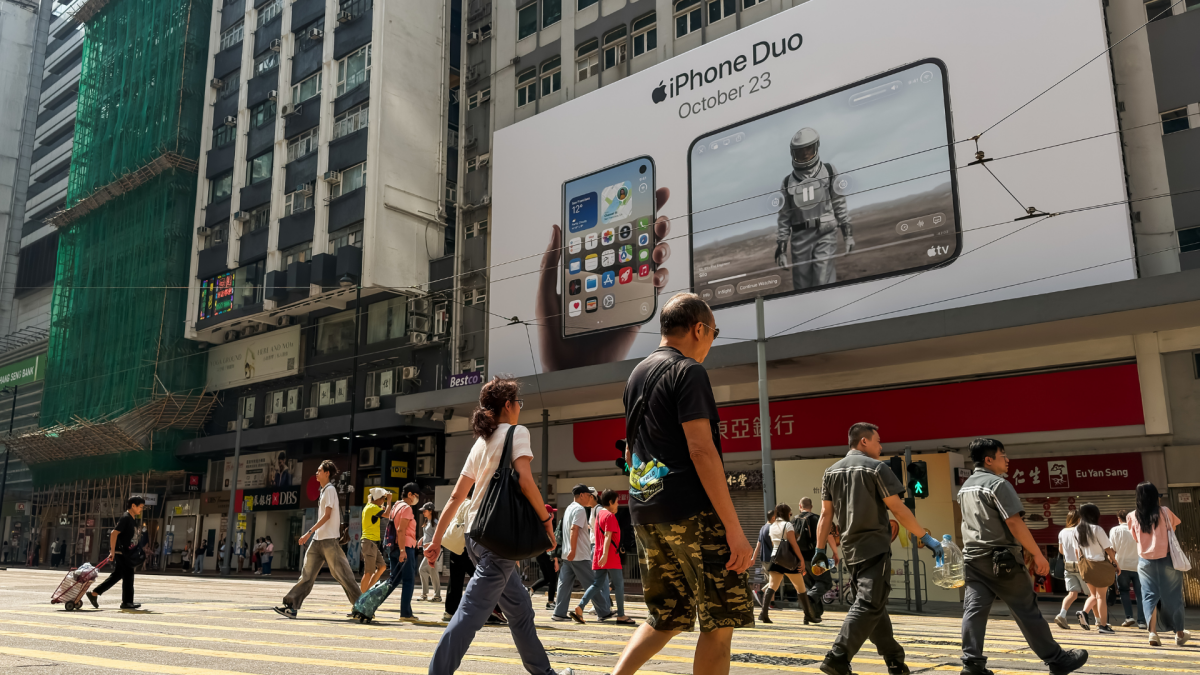
Emily Long Emily Long Freelance Writer ExperienceEmily Long is a freelance writer based in Salt Lake City. After graduating from Duke University, she spent several years reporting on the federal workforce for Government Executive, a publication of Atlantic Media Company, in Washington, D.C. She has nearly a decade of experience as a freelancer covering tech (including issues related to security, privacy, and streaming) as well as personal finance and travel. In addition to Lifehacker, her work has been featured on Wirecutter, Tom’s Guide, and ZDNET. Emily has also worked as a travel guide around the U.S. and as a content editor. She has a masters in social work and is a licensed therapist in Utah. Read Full Bio October 21, 2026 Add as a preferred source on Google Add as a preferred source on Google Credit: Cheng Xin, Getty Images News via Getty Images Key Takeaways Scammers are finding ways to take advantage of preorders for Apple's iPhone Duo. Malicious web portals and fraudulent charges using stolen credit cards are two of the schemes identified. Preorder through official platforms only, and keep an eye on your credit card statements for suspicious charges. Table of Contents iPhone Duo preorders officially launched last week to high demand, a quick sellout, and delayed delivery estimates. Naturally, scammers are finding ways to capitalize on the rush to obtain Apple's new foldable, so if you're in the market for a new device, be on the lookout for signs of compromise. Malware disguised as iPhone preorder portalsSoon after the iPhone Duo was announced, threat actors jumped into action, setting up fake preorder pages that looked like Apple's official website but were actually designed to deliver a malicious payloads to your device. As Malwarebytes outlined in late September, these pages promised a $500 voucher and AppleCare+ coverage in exchange for your contact information. But submitting the form isn't actually the scam. Rather, simply opening the page launches the attack, which uses the DarkSword exploit chain to bypass iPhone protections and gain access to cryptocurrency wallets, messages, contacts, emails, calendar entries, and location data. This scam began several weeks ago and seemed to specifically target iPhones running iOS 18.4 to 18.6.2. Apple has said that devices running the latest versions of iOS 15 to 26 are protected from the exploit, so if your iPhone is up to date, you are likely at minimal risk for this specific scheme. That said, beware of websites and social media posts that promise access to the iPhone Duo faster or cheaper than other sources, as this is almost certainly a scam designed to steal your information or install malware on your device. Official sources for preorders include Apple itself (through the official Apple website or Apple Store app) as well as major cell carriers. Fraudulent credit card charges for the iPhone DuoAnother scam to be on the lookout for involves fraudulent charges for an iPhone Duo you didn't order. News outlets in Hong Kong have reported that shoppers are seeing transactions from Apple appear on their bank and credit card statements—even when they haven't actually tried to buy the device since preorders went live. This may be the work of bad actors who have harvested credit card details via phishing or data leaks and are using them for fraudulent purchases. What do you think so far? While this specific scheme doesn't appear to be widespread (yet), you should check your financial statements and accounts regularly anyway given how vulnerable your data are to theft and fraud. If you see a charge you don't recognize or duplicate charges, report it to your bank or card issuer immediately using contact information from a trusted app or client portal. Calls from scammers spoofing trusted brandsScammers will also take the threat of fraudulent charges one step further: They may contact you directly about supposedly suspicious transactions and claim they can help resolve the issue if you provide personal information or account credentials. With the iPhone Duo specifically, bad actors may also call pretending to be Apple or a carrier and ask you to confirm information about your order, possibly to avoid having it canceled. As always, any communication that provokes fear and a sense of urgency should raise red flags. If you're not sure who you're talking to, hang up and call back directly to confirm. Lifehacker has been a go-to source of tech help and life advice since 2005. Our mission is to offer reliable tech help and credible, practical, science-based life advice to help you live better. Our Mission Our Team Newsletter © 2001-2026 Ziff Davis, LLC., A ZIFF DAVIS COMPANY. ALL RIGHTS RESERVED. Lifehacker is a federally registered trademark of Ziff Davis and may not be used by third parties without explicit permission. The display of third-party trademarks and trade names on this site does not necessarily indicate any affiliation or the endorsement of Lifehacker. If you click an affiliate link and buy a product or service, we may be paid a fee by that merchant.
Beware of These iPhone Duo Preorder Scams
Full Article
Original Source
Read the full article at Lifehacker →KhanList aggregates and links to publicly available news content. We do not host full articles from third-party sources. Always verify important information with original sources.