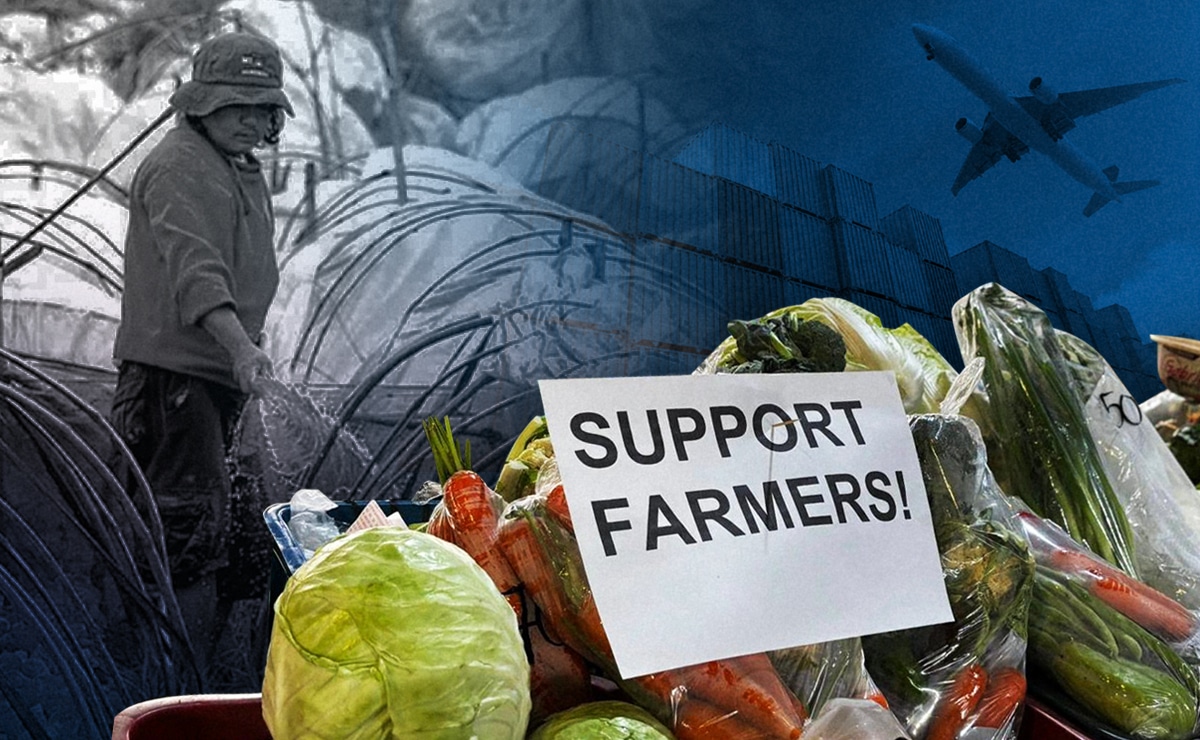
Composite image from INQUIRER files, Anakbayan Metro Baguio/APIT TAKO Farmers’ groups in the Cordillera are opposing the Department of Agriculture’s (DA) planned importation of 6,000 metric tons of carrots, saying the move would further hurt vegetable growers already struggling with falling farm-gate prices and rising production costs. The Kilusang Magbubukid ng Pilipinas (KMP) and its regional chapter, Alyansa Dagiti Pesante iti Kordiliera (APIT TAKO), said the planned imports come as gardeners and small vegetable producers in Benguet continue to grapple with low buying prices for their produce despite high retail prices in Metro Manila. “The planned importation comes at a time when gardeners and small vegetable producers are already struggling with collapsing farm-gate prices, rising production costs, and lacking government support amid the fuel crisis,” the groups said in a statement Thursday. Article continues after this advertisement “Sa totoo lang, hirap na hirap nang makabawi ang mga hardinero. Binabarat ang produkto nila sa trading posts habang mahal pa rin ang gastos sa abono, pesticide, at transportasyon. Napakataas pa rin ng presyo ng krudo at abono, tapos ang sagot ng gobyerno ay importasyon na naman,” APIT TAKO said. (Truthfully, gardeners are already struggling to recover. Their products are being bought cheaply at trading posts while the costs of fertilizer, pesticides and transportation remain high. Fuel and fertilizer prices are still extremely high, yet the government’s answer is once again importation.) Tight supply, high retail prices The DA earlier said it was studying a “strategic importation” of carrots to address tight supply and elevated prices in local markets. Agriculture Secretary Francisco Tiu Laurel Jr. said the imports would be allowed in “strategic locations” such as Metro Manila and Cebu until July. Tiu Laurel told the Philippine News Agency that 1,000 metric tons of carrots were already imported in April to “calibrate the market,” while another 2,500 metric tons each are expected in May and June. Tiu Laurel said retail prices of carrots in Metro Manila remained high at P80 to P190 a kilo despite the initial importation. Article continues after this advertisement On Thursday, Tiu Laurel also reiterated that the DA does not consider importation a standing policy. “We will not normalize imports. Importation is not our first resort—it is our last line of defense,” he said in a separate DA statement. Article continues after this advertisement “They will only be deployed when supply truly fails, prices spiral, and consumers are at risk. Our priority is simple: strengthen local agriculture first, and import only when absolutely unavoidable,” he added. READ: DA reaffirms imports as ‘last resort measure’ But the farmers’ groups said the continuing disparity between retail and farm-gate prices showed imports were not solving the problems faced by both consumers and producers. “Paulit-ulit na lang ang solusyon ng DA na mag-import kapag may problema sa presyo. Pero hindi naman nito naaayos ang kabuhayan ng magsasaka o napapababa ang presyo para sa mamimili,” KMP said. (The DA’s repeated solution whenever there is a pricing problem is importation. But this does not improve farmers’ livelihoods nor lower prices for consumers.) Farm-gate prices falling Data cited by KMP showed “big” carrots at the Benguet Agri-Pinoy Trading Center were being sold at only P50 to P60 a kilo, while “lumpia” carrots dropped to as low as P10 to P25 a kilo.Other vegetables have also seen sharp declines in farm-gate prices. Wonderball and Rareball cabbages were reportedly selling for only P3 to P7 a kilo as of May 10, while Chinese cabbage ranged from P12 to P18 a kilo. The groups also pointed to the now-viral image of a truckload of cabbages spelling out the word “SAYANG” at the La Trinidad Trading Post, which farmers said reflected the worsening crisis in Benguet’s vegetable industry. “The image reflected the frustration of gardeners reeling from rising fuel prices, soaring production costs, vegetable smuggling, and continued importation that pushes farm-gate prices further down,” the statement read. A truckload of cabbage spelling out the word “SAYANG” at the La Trinidad Trading Post symbolizes the worsening crisis faced by Benguet vegetable farmers amid rising fuel prices, soaring production costs, smuggling, and continued importation that depresses farmgate prices. Photo courtesy of Anakbayan Metro Baguio/APIT TAKO KMP and APIT TAKO also criticized the recent visit of President Ferdinand Marcos Jr. and Tiu Laurel to trading posts in Benguet, calling it a “publicity stunt.” “Pakitang tao lang pala ang pagpunta nina Tiu Laurel at Marcos Jr. sa Benguet. Nakinig kunwari sa hinaing ng mga magsasaka pero pagdating sa solusyon, importasyon pa rin ang pinili nila,” APIT TAKO said. (It turns out the visit of Tiu Laurel and Marcos Jr. to Benguet was merely for show. They pretended to listen to the grievances of farmers, but when it came to solutions, they still chose importation.) The groups noted that as early as September 2025, farmers’ organizations and vegetable traders had submitted a letter opposing planned vegetable imports, warning they would affect the November-to-January harvest season. “Despite these warnings, the Marcos administration continued pursuing import-dependent policies instead of strengthening local agriculture and supporting Benguet farmers already suffering from collapsing prices,” they said. Local officials question import plan Opposition to the planned carrot imports has also been echoed by local officials in Benguet. In a statement released May 7, Atok Councilor Kelly Denn Tomas urged the DA to defer and reconsider the importation plan, questioning the agency’s basis for bringing in additional carrots while local farmers continue to struggle with low prices. “Let the farmers understand, and please, understand the farmers,” Tomas said. “By the DA’s own admission, their previous importation failed to bring down the retail prices of carrots in Metro Manila, which remain stubbornly high at P80 to P190 per kilo,” she added. Tomas said the DA should first present data proving a genuine supply deficit before proceeding with importation. “If importing carrots last month failed to lower the retail price, it means importers and middlemen absorbed the profits while consumers and local farmers continued to suffer,” she said. She also questioned whether carrots should even be treated as an urgent commodity requiring imports. “Carrots are not a staple food like rice. We must ask the DA: Will Filipinos die if there is a temporary carrot shortage?” Tomas said. Tomas added that farmers, civil society groups and researchers should have been consulted before the decision was announced. “Importation should never be the default reflex. We are heavily questioning this move and ask the DA to answer these concerns before implementing a policy that will kill local livelihoods,” she said. “We are positive that when the DA really listens and not just hears, we can give farmers a fair price and give consumers affordable vegetables without relying on imports,” she added. Atok Mayor Franklin Smith likewise opposed the importation plan, warning it could further weaken Benguet’s vegetable industry. “We were surprised to learn about the planned importation of some 6,000 metric tons of carrots when there is sufficient supply of the crop being produced by our vegetable farmers from the different parts of the province,” Smith said in a report published by Manila Standard. “We cannot understand why such decision had been reached when our agriculture industry stakeholders were not actually consulted on the said matter,” he added. Alternatives to importation KMP and APIT TAKO said the government should focus instead on strengthening local production support systems, regulating the prices of farm inputs, subsidizing transport costs, and ensuring fair prices for farmers. “Kung talagang gusto nilang tulungan ang mga gardinero, suportahan nila ang direktang pagbebenta ng gulay, siguraduhin ang maayos na transportasyon, at pigilan ang pagsasamantala ng mga trader at kartel. Hindi iyong lalo pang babahain ng imported na gulay ang merkado,” KMP said. (If they truly want to help gardeners, they should support the direct selling of vegetables, ensure proper transportation, and stop the exploitation by traders and cartels. Not flood the market even more with imported vegetables.) The groups also cited local initiatives such as Atok’s “Project UBBO” and Benguet’s direct market linkage programs in Metro Manila as examples of alternatives to importation. “Tayo-tayo na lang talaga ang humahanap ng paraan para makaagapay sa lumalalang krisis. Disenteng presyo at tunay na suporta ang kailangan ng mga gardinero at hindi importasyon na lalo lang sisira sa kanilang kabuhayan,” APIT TAKO said. (We are left on our own to find ways to cope with the worsening crisis. What gardeners need are decent prices and genuine support, not importation that will only further destroy their livelihoods.) Your subscription could not be saved. Please try again. Your subscription has been successful. RELATED STORY: El Niño history shows pattern of short-term fixes
Benguet growers slam DA’s carrot import plan
Full Article
Original Source
Read the full article at Newsinfo →KhanList aggregates and links to publicly available news content. We do not host full articles from third-party sources. Always verify important information with original sources.