
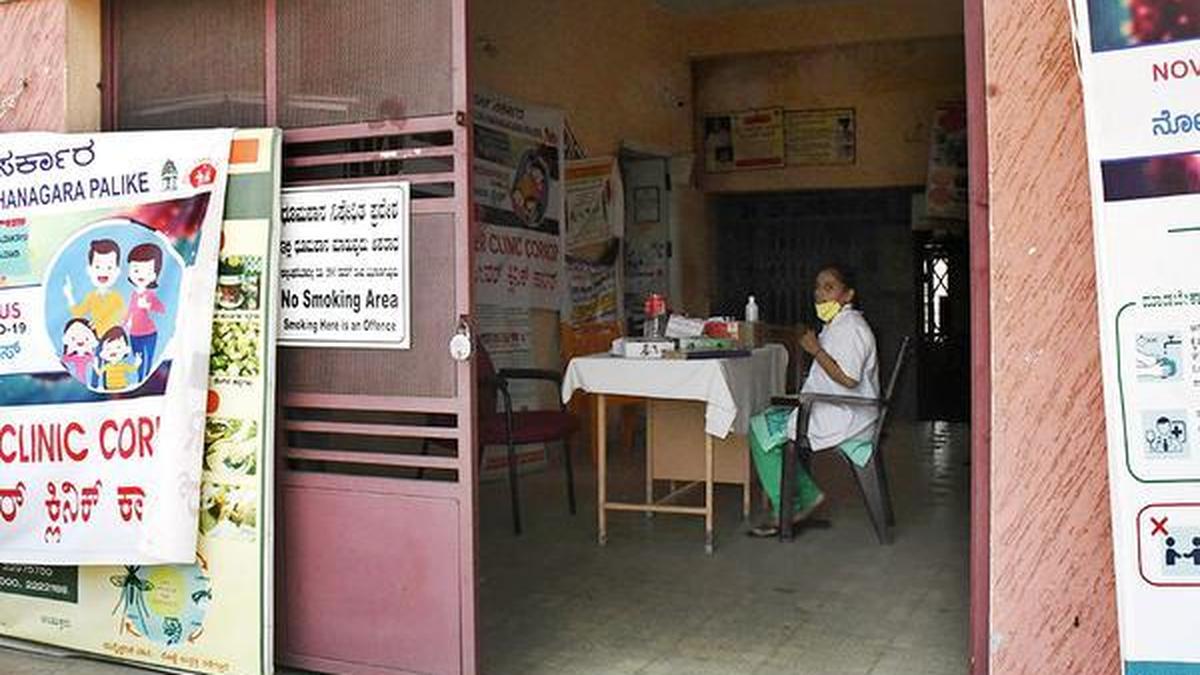
Let alone a primary healthcare centre or access to an Indira Canteen for an affordable meal, several facilities residents would expect to be situated closer to home, such as ward offices where they can report civic issues, are missing in the wards added to Bengaluru over the past year.The Greater Bengaluru Authority (GBA), which completed a year after replacing the Bruhat Bengaluru Mahanagara Palike (BBMP) with five city corporations, increased the number of wards from 198 to 369. But while 171 new wards were added to the civic map, there has been no corresponding expansion of facilities such as primary health centres (PHCs), Indira Canteens or even ward offices, the local touchpoints through which the five-corporation system was expected to bring civic services closer to residents.No land, human resourcesOfficials acknowledge that such facilities would eventually have to come up closer to residents, but say the lack of government land and human resources has made expansion difficult. K.V. Rajendra, West Corporation Commissioner, said the number of wards may have increased substantially, but the physical geography of the city has remained the same. “There are enough Indira Canteens and PHCs for the corporation. However, even if there is a need, we cannot have more because there is no government land available for such a facility. Hence, the emphasis is on maintaining and improving the existing facilities,” he said.The same problem, he argued, is affecting plans to set up ward offices. While the corporation intends to increase their number and appoint ward engineers so that issues such as khata-related work, civic grievances and other local-body matters can be reported and addressed locally, identifying land or buildings for the offices remains a hurdle. Across the five corporations, officials said there are plans to set up ward offices, but none of these plans has yet translated into offices on the ground. Apart from finding land for these facilities, filling vacant posts is another challenge, they say. Even the focus of the corporations’ maiden budgets, meanwhile, has largely been on maintaining and upgrading the existing network, with allocations for disease control, food quality and other improvements, but no clear ward-wise expansion of facilities to match the increase in wards. Gaps persistAlthough the lack of expansion remains a question, even the existing PHCs and Indira Canteens continue to have gaps in accessibility and functioning. Several PHCs remain difficult to locate, with shopkeepers and even residents in neighbouring areas sometimes unaware of their location or whether they are functioning. Some are also not readily available on online maps. For patients who do reach them, long waiting times, limited operating hours and inadequate availability of medicines are among the common complaints. While PHCs are officially supposed to function from 9 a.m. to 4.30 p.m., at several facilities visited by The Hindu in Sultanpalya in R.T. Nagar, Vasanth Nagar and Rajajinagar, most staff had left by 4 p.m. Patients said the timings should either be extended or, at the very least, staff should remain until the official closing time. Officials at these PHCs said the availability of medicines had improved, but shortages remained. Staff shortage is another challenge, they said. “The shortage becomes particularly apparent when patient footfall increases during seasonal changes like the rainy season. During such periods, the staff have to attend to a larger number of patients while also ensuring that pregnant women, senior citizens and others who cannot wait for long are attended to promptly, making the shortage more difficult to manage,” an official said. Some PHCs and Indira Canteens, however, have seen visible improvements. For instance, PHCs in Agrahara and Amruthahalli have been painted with heat-reflective paint to reduce indoor temperatures and improve comfort for patients. The experience at Indira Canteens, however, also varies considerably by location. While canteens such as those at Airport and J.C. Nagar, Vasanth Nagar, are maintained well, others, particularly those with lower footfall, are not run as efficiently or maintained as regularly, consumers said.“A facility intended to improve food security by providing an affordable and dignified meal may naturally have lower footfall in some locations, but that does not necessarily make the need for the facility any less important,” said Thousif Aziz, an auto driver, pointing to an Indira Canteen in Majestic. The canteen, he said, is hemmed in by a heap of garbage on one side and a bus stand on the other, leaving little space around it. (This is the second in a series of reports evaluating the restructuring of Bengaluru governance with the GBA and five corporations, a year after the reform.)
Bengaluru’s new wards run on an old service network
Full Article
Original Source
Read the full article at Thehindu →KhanList aggregates and links to publicly available news content. We do not host full articles from third-party sources. Always verify important information with original sources.