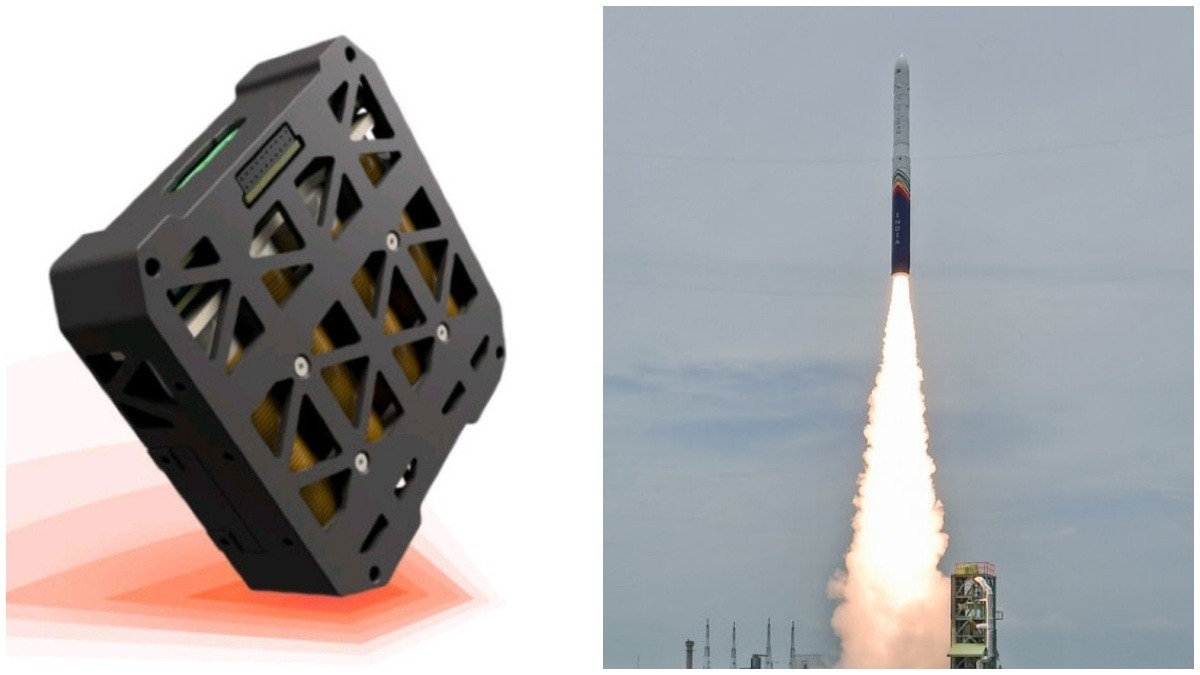
TakeMe2Space's PowerBank-50 powered a payload aboard Skyroot Aerospace's Vikram-1 mission in orbit. The flight test gives Indian satellite makers a domestic alternative to imported battery systems.PowerBank-50 stores more than 50 watt-hours of energy. (Photo: X/TakeMe2Space)Indian space startup TakeMe2Space has successfully demonstrated the country's first indigenously developed satellite battery in orbit, marking a significant milestone for India's growing private space ecosystem.The company's PowerBank-50 successfully powered a payload aboard Skyroot Aerospace's Vikram-1 'Aagaman' mission, becoming the first India-made satellite battery to be flight-proven in space.The 50 Wh battery pack was integrated with Cosmoserve Space's payload aboard the Orbital Experimentation Module (OAM) and operated successfully in a 450-km low-Earth orbit.The achievement gives Indian satellite manufacturers access to a domestically built power system, reducing dependence on expensive imported components. "PowerBank-50 is officially space-proven," TakeMe2Space announced after the successful mission, adding that the battery earned its first mission patch aboard Vikram-1, India's first privately developed orbital launch vehicle.Until now, Indian satellite builders largely relied on imported space-qualified battery systems that often came with high costs and long procurement timelines. The Bengaluru-based startup says its battery is available off the shelf at Rs 1,04,900, significantly cheaper than comparable international alternatives.WHAT IS POWERBANK-50? Despite weighing just 380 grams, roughly the weight of a smartphone, and being about the size of a paperback book, PowerBank-50 stores more than 50 watt-hours of energy.It incorporates some of the highest energy-density cells available for small satellites and features an intelligent battery management system capable of monitoring performance, balancing cells and transmitting battery health data to operators on the ground.Designed for the harsh conditions of space, the battery also includes a built-in thermal management system that keeps it operational during the extreme cold of orbit.Multiple PowerBank-50 units can be stacked together to power CubeSats and microsatellites, with an operational life of up to five years in low-Earth orbit.The successful in-orbit validation is another milestone for TakeMe2Space, which is developing next-generation orbital computing infrastructure.The company aims to build space-based computing platforms and orbital data centres capable of processing and analysing data directly in space, reducing the need to transmit vast amounts of information back to Earth.- EndsPublished By: Sibu Kumar TripathiPublished On: Jul 31, 2026 13:29 IST
Bengaluru startup tests India's first power bank to charge satellites in space
Full Article
Original Source
Read the full article at Indiatoday →KhanList aggregates and links to publicly available news content. We do not host full articles from third-party sources. Always verify important information with original sources.