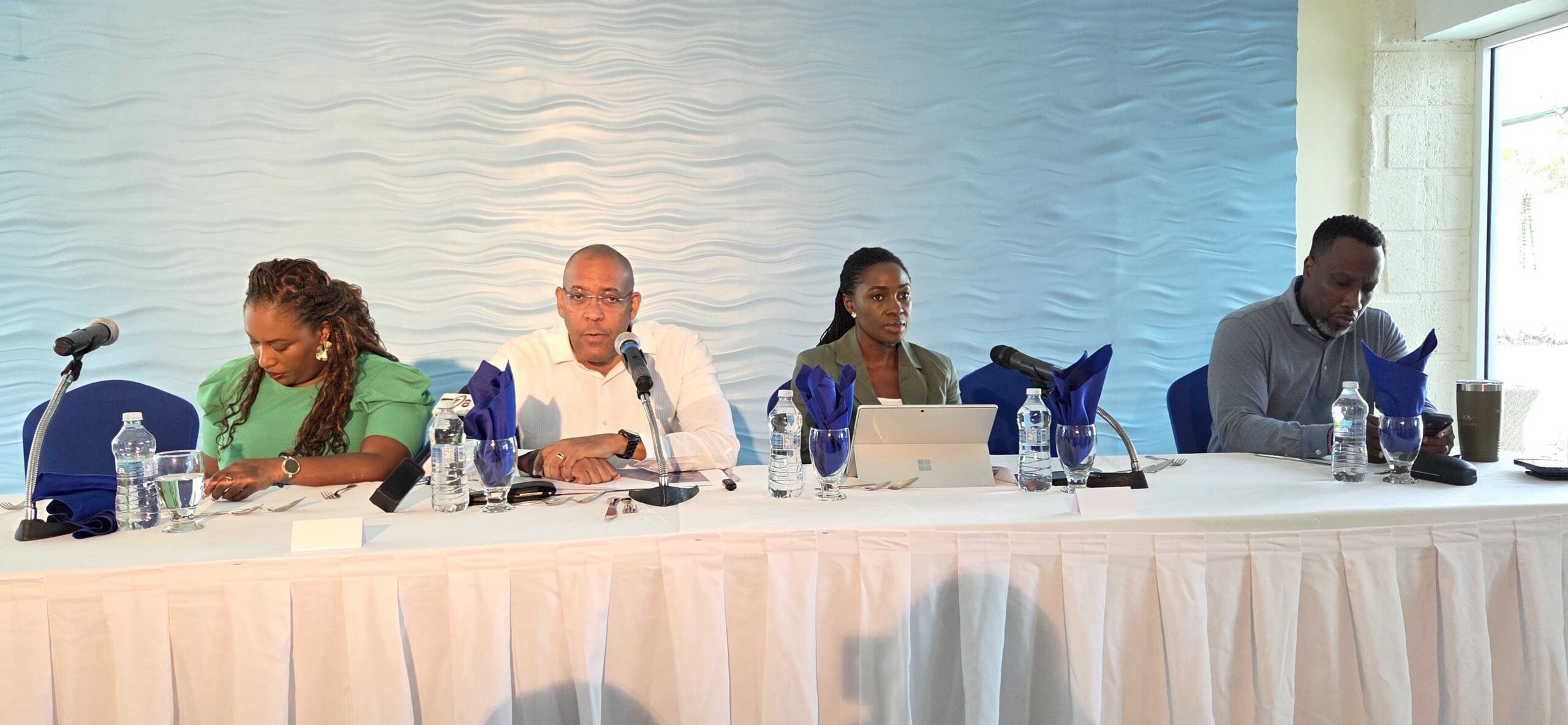
A new regime requiring companies to disclose their true owners will test Barbados’ ability to meet international anti-money laundering standards, as officials warned that failure to comply could expose the country to financial sanctions and reputational damage. The officials urged compliance with a Beneficial Ownership Register which is designed to enhance national corporate transparency, combat illicit financial flows, and protect the island’s international standing. The initiative, led by the Ministry of Energy, Business Development and Commerce alongside Business Barbados, establishes a central, secure repository for records identifying the ultimate human beneficiaries who own or control corporate entities across the country. Director of the Business Compliance Division within the ministry, Sangene Watkins Diang, told journalists at a breakfast briefing that the new legal framework is the result of a strategic partnership with the corporate registry to design an effective operational mechanism. Watkins Diang said: “As a corporate registry for companies, Business Barbados is often the first point of contact for businesses entering the formal economy and can rightly be regarded as the cradle of incorporated business activity in Barbados. “Its role in this initiative has extended beyond stakeholder engagement. They have been a valuable partner in the development and implementation of the beneficial ownership register, bringing practical insight, operational expertise, and a strong commitment to ensuring that the system is both effective and accessible.” You Might Be Interested In Head of business facilitation and advisory services at Business Barbados, Wainelle Alleyne-Jones, joined ministry officials in reinforcing the commitment to guide firms through the transition. Under the new legislation, any individual holding at least 20 per cent of shares, voting rights, or partnership interests — or exercising veto control over a board of directors — must be formally registered as a beneficial owner. The legislative reform follows the passage of the Beneficial Ownership Bill through the House of Assembly, moving the jurisdiction towards full alignment with global standards set by the Financial Action Task Force and the Caribbean Financial Action Task Force. The bill now goes to the Senate for final passage before being signed into law by President Jeffrey Bostic. Authorities noted that international financial monitors now evaluate jurisdictions not merely on statutory provisions, but on demonstrated effectiveness and actionable records. Watkins Diang explained that the framework seeks to prevent complex corporate structures from being exploited for money laundering, terror financing, drug trafficking, or arms proliferation. By establishing a verified central database, law enforcement and lawful regulatory authorities can swiftly verify corporate controllers when legitimate international or domestic inquiries arise. To assist smaller commercial operators, the legislation establishes a specialised Business Compliance Team tasked with supporting micro, small and medium-sized enterprises, legally categorised as domestic threshold enterprises. Given the resource and administrative constraints facing small businesses, the unit will actively assist owners in vetting, correcting and filing their beneficial ownership documentation without incurring excessive legal expense, she said. Officials stressed that the central database is private and strictly protected. Access will be limited exclusively to authorised regulatory bodies, law enforcement agencies, court orders or official international treaty requests, ensuring that proprietary commercial data remains fully shielded from public or competitive intrusion. The government faces a deadline of June next year to demonstrate the operational effectiveness of the framework to international peer review panels. Officials stressed that maintaining full compliance across the entire business community is essential to avoiding severe international sanctions, such as de-risking by global financial institutions or losing correspondent banking relationships. With Barbados having removed itself from foreign grey lists through recent legislative and diplomatic interventions, officials reiterated that every registered company — regardless of size — holds a responsibility to protect the national economy from reputational damage. Watkins Diang appealed directly to the media and business support organisations to ensure the message reaches every commercial enterprise across the island. “I urge you, the media, to help us, to assist us in getting the message out there to companies, that their compliance is required and also to help them to understand what it is that the beneficial ownership register is seeking to do to enhance transparency and ultimately protect Barbados.”
Beneficial ownership register to ‘meet global transparency standards’
Full Article
Original Source
Read the full article at Barbadostoday →KhanList aggregates and links to publicly available news content. We do not host full articles from third-party sources. Always verify important information with original sources.