
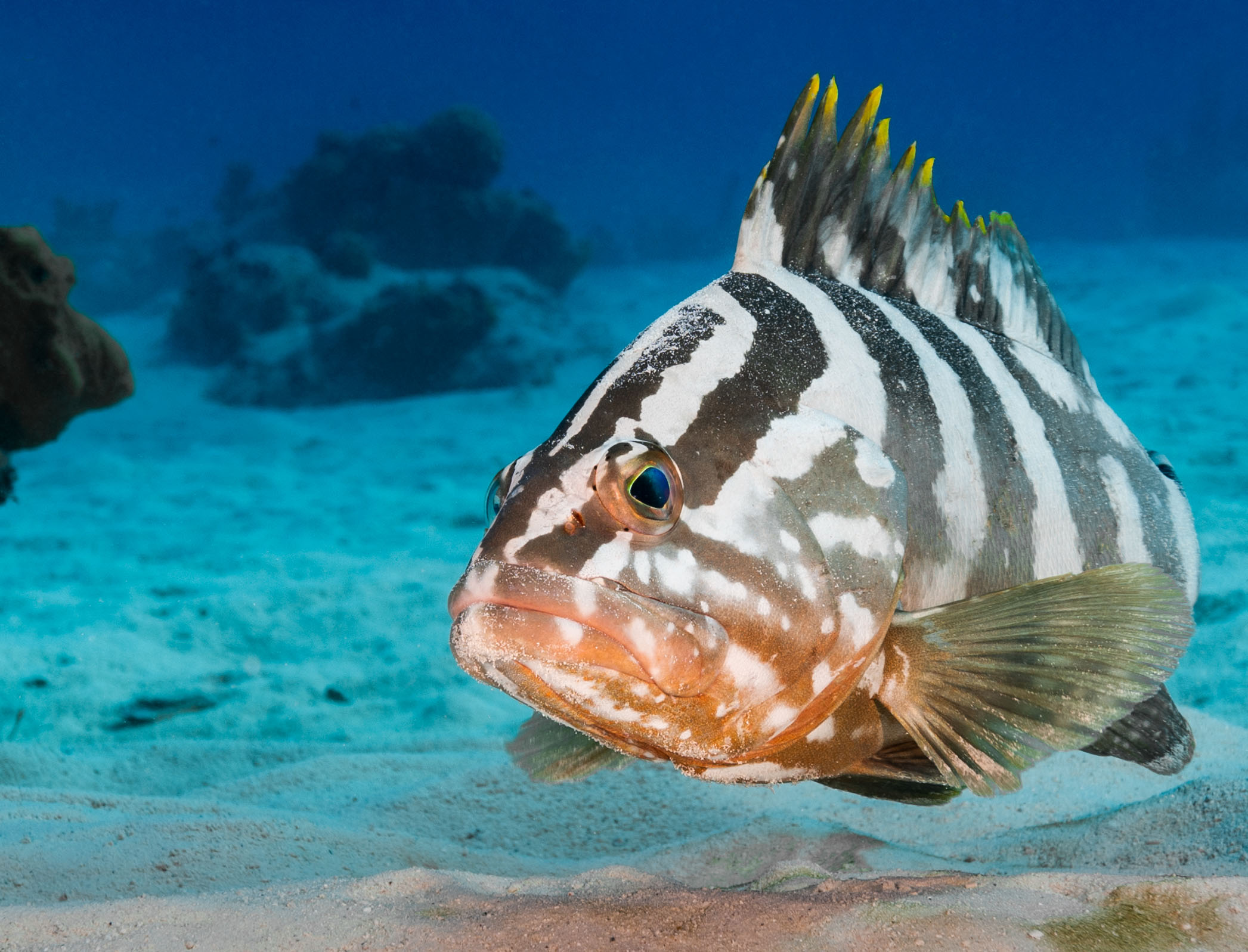
In 2021, Belize made a series of time-bound marine conservation commitments as part of a landmark debt-for-nature deal known as the Belize Blue Bond.To complete milestone 6 of the deal, out of eight milestones in total, Belize is finalizing a national marine spatial plan that proposes three new marine protected areas in its deep offshore waters.Officials say the zones were chosen after a gap analysis showed Belize’s nearshore coral reef and seagrass habitats are already well represented in its protected-area network, while deepwater features are not.Many local fishers welcome the new protected areas, which sit well beyond the waters where they work. However, experts say they are unlikely to yield the conservation benefits Belize urgently needs to revive its declining commercial fish stocks. Belize is turning to its deep waters to fulfill its pledge to protect 30% of its ocean and achieve the sixth milestone of its Blue Bond agreement. A draft marine spatial plan submitted on Sept. 8 for government approval proposes closing the final gap to 30% by establishing three offshore marine protected areas (MPAs). Officials say the choice serves two ends at once: protecting distinctive deepwater features the country has never fully safeguarded, and steering clear of the coastal grounds fishers depend on. The decision to protect offshore areas emerged from previously agreed criteria for establishing marine protected areas, according to Samir Rosado, who led the plan’s development as head of marine spatial planning at the government’s Coastal Zone Management Authority & Institute (CZMAI). “These criteria contain social as well as ecological considerations for the identification of the areas,” Rosado told Mongabay in an email. “Overwhelmingly, stakeholders expressed their absolute reluctance to increase protections in nearshore areas as they believe this space was already saturated. A gap analysis was done on the representation of ecosystems within the existing MPA network, and it confirmed this.” With more than 50% of Belize’s corals and nearly 40% of its seagrass already within MPAs, he said the underrepresented features of Belize’s MPA network were in the deep. For local fishers who pushed back hard against earlier proposals to close traditional inshore fishing grounds instead, the new zones, sitting well beyond the waters where they work, are welcome. However, experts say this decision is unlikely to yield the conservation benefits Belize urgently needs to revive its declining commercial fish stocks. A seagrass meadow at Lighthouse Reef Atoll, Belize. Nearly 40% of the country’s seagrass habitats were already within marine protected areas, so officials chose to propose new protected areas around underrepresented features in deeper waters. Image © Greg Asner. The Belize Blue Bond The development of the marine spatial plan, called the Belize Sustainable Ocean Plan (BSOP), was prescribed in a series of marine conservation commitments Belize made as part of a novel debt-for-nature deal. In November 2021, Belize bought back $553 million of its sovereign debt at a discount, financed through a $364 million loan. Of that loan, $301 million paid off the old debt, $39 million covered liquidity reserves and transaction costs, and $23.5 million established an endowment for long-term conservation funding. At the time, the deal, known as the Belize Blue Bond and spearheaded by U.S.-based NGO The Nature Conservancy (TNC), was the largest known debt-for-nature conservation swap. It has since served as a model for swaps in other countries. Belize reports progress on its conservation commitments — eight time-bound milestones — to a Delaware, U.S.-based subsidiary of TNC, Belize Blue Investment Company LLC. If the nation fails to achieve a milestone by the agreed date, it will incur financial penalties — but so far it has not. Belize met its first two milestones by May 2022: It gazetted 20.5% of its ocean as “biodiversity protection zones,” creating seven new deep-sea, no-take “replenishment” zones spanning 6,690 square kilometers (2,583 square miles) and lifting the share under the strictest protection from 4.5% to 11.6%. It also designated the remaining public lands within the Belize Barrier Reef Reserve System as strict mangrove reserves. To meet milestone 3, the government launched its updated marine spatial planning process in October 2022, headed by CZMAI and overseen by a multistakeholder committee that includes TNC. A public validation session for Belize’s proposed new marine spatial plan, the Belize Sustainable Ocean Plan, in Belize City. Image courtesy of CZMAI. In November 2024, Belize achieved milestone 4, reaching roughly 25% protection of its ocean. To accomplish this, the government added medium-protection zones at Lighthouse Reef, Glover’s Reef, and Bacalar Chico, which established partial fishing closures near reefs and atolls that fishers had used freely for generations. This drew pushback from the fishing community. At the time, fishers said the consultations and the initial decision were rushed, poorly organized, and not properly informed. Moreover, a 2025 investigative report in Climate Spotlight revealed that marine protected areas managed by both the government and nonprofits persistently cite a lack of resources, namely finance and staff, to adequately enforce their regulations. A revised coastal zone management law followed in 2025 to meet milestone 5. The approved marine spatial plan, milestone 6, is now due in November 2026. This step requires the government to complete, enact, gazette, and implement the plan to achieve 30% protection. Two further milestones, both on managing the marine protected areas, must still be met before the deal’s eighth year, 2029. Map shows new marine protected areas (light green) proposed in the Belize Sustainable Ocean Plan. Image courtesy of CZMAI. The new offshore protected areas To meet milestone 6, the draft BSOP proposes three new MPAs that together comprise about 1,652 km2 (638 mi2) to reach the 30% protection target. The smallest, at 128 km2 (49 mi2), called the Sapodilla Caye Zone IV Expansion at Corona Reef, has the strongest conservation case. Off the coast of southern Belize’s Toledo district, the area holds a healthy coral complex that hosts a multispecies spawning aggregation for commercially important fish. The portion the draft BSOP proposes protecting is the only sliver of the area that isn’t already in an MPA. It contains deep waters punctuated by abyssal hills, features that can provide habitat for marine life. The zone is under real threat from transboundary fishing, given its position near Belize’s maritime borders. The largest area, at 1,220 km2 (471 mi2), is dubbed High Protection for Biodiversity Zone 8. It’s a block of open sea in the center of Belize’s exclusive economic zone that has never been actively protected or subject to consistent enforcement, and it is, by most accounts, very lightly fished. It would protect such features as abyssal hills, plateaus, and basins. The third new MPA the draft BSOP proposes is called High Protection for Biodiversity Zone 3 Expansion, or the so-called Deep Sea Zone, and spans 316 km2 (122 mi2), expanding an existing MPA. It also has never seen either significant fishing or enforcement. This area houses canyons, escarpments, and abyssal mountains and hills. It sits northeast of Lighthouse Reef Atoll, and extends to Belize’s maritime border. If these three new deep-sea protected areas are enacted as proposed, the protected 30% of Belize’s ocean will break down to about 16.3% high protection and 13.7% medium protection status, exceeding the Blue Bond’s requirement that at least 15% of Belize’s ocean falls under the strictest protection category. Coral and other marine life at Lighthouse Reef Atoll, Belize, an area that’s already protected. Image © Greg Asner. The plan drew some early pushback from fishers during public consultations CZMAI held in coastal communities before finalizing the draft BSOP. Speaking at a public consultation in the town of Placencia in Stann Creek district in June, which drew more than 200 participants, one fisher said, “Take care of what you already have first,” referring to the country’s existing MPAs. “Then the fishers would come and say you are benefiting us now — but until then, I do not see the need to take any more.” However, some experts warned that more, not less, protection is needed to reverse Belize’s declining fish stocks. “Protecting these deep waters is essential for conservation of fisheries resources, but not sufficient to achieve sustainability without strong action to reduce overfishing in shallower waters,” Andrew Rosenberg, a seasoned fisheries scientist with experience assessing Belize’s fish stocks and the former deputy director of the U.S. National Marine Fisheries Service, told Mongabay via text message. “The deep-water MPAs may provide refuge for some stocks but not all, particularly for larger spawners. But the pressure of overfishing in Belizean nearshore areas, including from illegal and unlicensed fishing, must be ended for the key commercial stocks to recover. And to buffer against likely changes due to global warming,” Rosenberg said. On track for milestone 6 CZMAI handed off the draft BSOP to the cabinet of ministers on Sept. 8 for approval..From there, it will pass to the House of Representatives and the Senate for further approvals, then the MPAs it introduces will be gazetted, and CZMAI will prepare the package for submission to TNC’s Belize Blue Investment Company by the Nov. 4 deadline, according to Rosado. The government is on track to meet its milestone 6 commitment on time, Beverly Wade, CEO of Belize’s Ministry of Blue Economy, told Mongabay by email. “The Government of Belize remains fully committed to meeting the November 4 delivery date for the Belize Sustainable Ocean Plan, in keeping with its obligations under the Blue Bond Agreement,” Wade said. “Of course, as with any major policy and legislative process, there can be unforeseen circumstances. The agreement does provide certain flexibilities where required, but the Government’s focus remains on delivery, compliance, and ensuring that the BSOP reflects a credible, consultative, and legally sound framework,” she said. The Belize Fund for a Sustainable Future was created under the Blue Bond deal to receive and disburse conservation finance, fund government marine programs, and provide grants to nonprofits and community organizations under a nongovernment-majority board. As part of its commitments under the Blue Bond deal, the Belize government agreed to pay $4.2 million per year for 20 years to the Belize Fund. At the end of that 20-year period, the endowment established through the loan will transfer into the Belize Fund; it’s forecast to be worth more than $90 million by then. To date, the fund has committed $13.4 million to marine conservation initiatives. The fund’s executive director, Leandra Cho-Ricketts, told Mongabay in an interview that outcomes and impacts will take years to show. She added that while a significant portion of the fund’s disbursements so far have gone to initiatives that safeguard biodiversity, the fund recognizes the importance of supporting fisherfolk and all users of the marine space, who will ultimately benefit from a healthy and well-protected marine environment. Asked whether the financing is adequate to the 30% protection commitment, she said no. “It does not cover all the needs on the ground, but it does provide an important baseline to support co-management efforts and the actions the government needs to meet its commitments,” she said. Reaching 30% on paper is not the finish line. Gazetting zones as protected on a map is one thing; managing them out on the water is another, and that distinction is written into the remaining Blue Bond milestones. To meet milestone 7, by 2027 the government must apply to have at least three MPAs certified under the IUCN Green List of protected sites, defined as achieving “ongoing results for people and nature in a fair and effective way.” Milestone 8, the final one, comes due in 2029. It will test the deep-sea decision and the country’s enforcement capacity directly. By then, the Blue Bond agreement requires Belize to have approved and signed management plans for every one of its biodiversity protection zones — including the distant, deepwater areas it has never managed before, and which the plan itself concedes are now lightly protected and hard to reach. Wade said the administration is determined to meet those obligations. “The goal is not only to reach 30% protection, but to ensure that protected areas are effectively managed, financed, monitored, and able to continue delivering benefits for biodiversity, fisheries, coastal communities, and the broader Belizean economy over the long term.” Banner image: A Nassau grouper (Epinephelus striatus), a commercially important fish, was once abundant, but its numbers have dwindled in Belize and throughout the Caribbean, and it’s now critically endangered. Image courtesy of Connor Holland/Ocean Image Bank. Restoration, protection aim to save Belize’s coral reef from extreme heat and disease Belize’s blue reputation vs. reef reality: Marine conservation wins, and what’s missing (commentary) FEEDBACK: Use this form to send a message to the editor of this post. If you want to post a public comment, you can do that at the bottom of the page. Credits Topics
Belize looks to the deep sea to complete its 30% ocean protection pledge
Full Article
Original Source
Read the full article at News →KhanList aggregates and links to publicly available news content. We do not host full articles from third-party sources. Always verify important information with original sources.