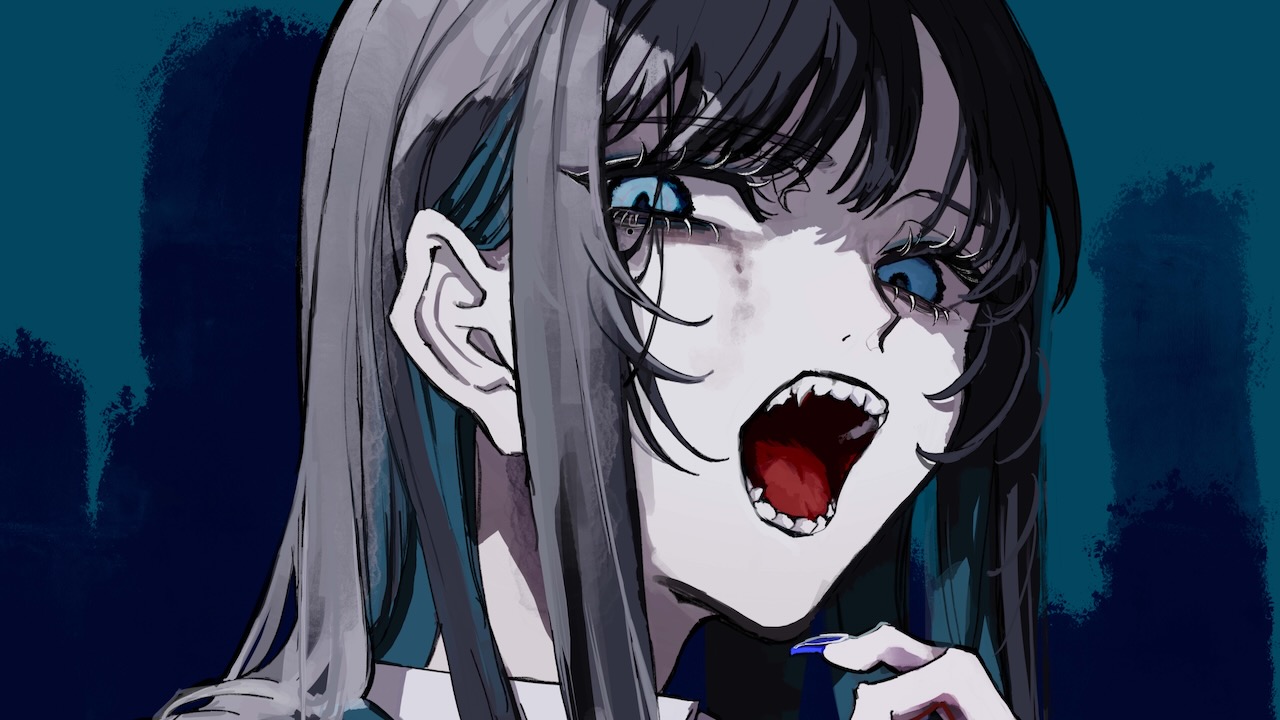
Ado, Japan’s most globally streamed artist, brings her powerhouse vocals to Lollapalooza for the first time. And while she’s had a number of projects come out this year none have pulled back the curtain on the elusive star like her biographic novel “Vivarium: Ado and I” and its companion single, “Vivarium.” Earlier this year, Spotify named Ado the No. 1 most–streamed Japanese artist. This feat is one of many firsts the mysterious 23-year-old Utaite singer has achieved since her 2020 single “Usseewa” her viral hit from Kyōgen, her major label debut album. But well before the mainstream music industry discovered her, Ado built up her own community within the utaite subculture. Utaite, (pronounced oo-tah-ee-teh), refers to amateur singers who cover songs from anime, vocaloid (music created with voice synthesizer software) YouTube and Niconico, Japan’s video sharing platform. Many utaite singers keep their identity private, using avatars and anime characters as a public face. As Ado transitioned to greater renown she has kept many aspects from her utaite days intact, most famously, remaining anonymous. Part of what makes her stand apart is an incredible vocal range. As a singer, she is fearless in attack. Vocaloid and anime songs are notoriously difficult to cover, often featuring fast-paced rock instrumentation and emotional intensity. Beginning around age fourteen, from her childhood bedroom in Tokyo, she adapted her vocal range to fit a song’s demands. With an ability to go from a whispering lilt to a screaming belt in a matter of seconds and everything in between, listening to her can spark an intense emotional experience, and her fans have proved eager to experience those vocals offline. On her Ado World Tour 2025 “Hibana,” she played 35 dates across five continents to over 500,000 fans and sold out two arenas in the US (including Crypto Arena in Los Angeles and Prudential Center in Newark). Performing with a live band, inside a large cage structure only her silhouette is visible. In addition to albums, she releases a steady stream of singles, special merchandise collections and collaborations. The latest: “Love me forever!” is a collaboration with veteran producer Tsunku which features on the Rhythm Heaven: Miracle Stars soundtrack for Nintendo Switch. The Nintendo Switch incidentally was Ado’s childhood gateway into music. Specialized merchandise has increasingly been part of her diversified approach and in celebration of her Lollapalooza debut on Sunday, she’s released Ado x Pusheen available at her Lollapalooza Official Aftershow on Friday and a special pop-up at Rotofugi a few miles away from the festival grounds. Perhaps though, out of all her projects, “Vivarium: Ado and I” written by novelist Narumi Komatsu and its companion single “Vivarium” reveals the inner life and in the artwork of the artist. For the first time she is seen both in still photos and the song’s video. “I’m not a singer-songwriter per se,” she told CONSEQUENCE earlier this year via Zoom through an interpreter. “I’m more of a singer. So, to be able to write a song, you really have to go in depth. And also this song comes together with my biographical novel. I wanted to embody [the novel] in the song, but there’s only a limited amount of melody…so that was the main struggle.” At the time of our conversation she was preparing to headline Zipangu, a new festival held in Pasadena, California that centered Japanese musicians across rock, hip-hop and pop and is now available on Amazon Prime. Entering the festival circuit brings her closer to the collaboration and community with other artists she craves. And while her Lollapalooza show brings wider recognition, exposing her to an audience outside of her core, Zipangu was a chance to shine a light on the depth of Japanese talent, something she wants to continue to do. “Going on my world tour meant that I met so many different people and different territories all over the world, and because Zipangu was a festival featuring all Japanese artists I wanted to be a part of that,” she added. Collaboration is key to her process. Production and songwriting is left to collaborators, while she remains in control of creative direction. “I’m not a singer-songwriter per se. I’m more of a singer. So, to be able to write a song, you really have to go in depth,” she explains. Ideas lend themselves to themes and lyrics. However, “Vivarium” was a bit different. “I wrote about my past up until now,” she explained. “Right now I’m twenty-three years old. So my past self up until the present are the two versions of me incorporated in the song. The previous song I wrote was about myself but it dealt more with the past and the future and compared to “Vivarium” it dealt more with the struggles I had. “Vivarium” came together with my biographical novel,” she continued. “I wanted to embody [the novel] in the song, but there’s only a limited amount of melody…I had to put it all into one piece so that was the main struggle. I tend to write what I’m thinking about in poems a lot; not for anybody to see…I have a “stock” of these kinds of poems with lyrics. They’re not all about myself, they’re more about thoughts that I have or maybe conversations I have had with other people.” Opening up more of her personal life was made easier with the relationship she built up with Komatsu. “I was a fan of her work and so when we were discussing who would be perfect and my management suggested her name I immediately said ‘yes please.’ As we spoke over long periods of time, it was really hard to put into words— but this was actually the first time that I had the opportunity to tell somebody in depth about everything from when I was born up until who I am right now.” “And it’s not that she just listened,” she said of the novelist. “She also had observations and asked questions about each incident. She asked questions like ‘Did that make you sad as a child?’ or ‘Were you angry at that moment?’ Everything I held dear in my heart alone, she was there to share it with and that really made me happy.” In part, it’s this kind of push and pull between mystery and intimacy that make Ado irresistible to fans. It doesn’t come natural for her to reveal her innermost feelings, she knows how important it is from time to time, to pull the curtain back. “Talking honestly about everything that I went through, I’ve gone through— all the happy things and all the hard things—without hiding anything, emotions that I bottled up inside myself… because I’m not the type to reveal my emotions to other people,” she confided. “When Norumi asked questions…she was a catalyst for me to reflect back on my feelings thatI had kept bottled up inside, and it was like opening a drawer from the past and realizing that I actually had these emotions.”
Behind the Silhouette: Ado’s Journey to Lollapalooza
Full Article
Original Source
Read the full article at Consequence →KhanList aggregates and links to publicly available news content. We do not host full articles from third-party sources. Always verify important information with original sources.