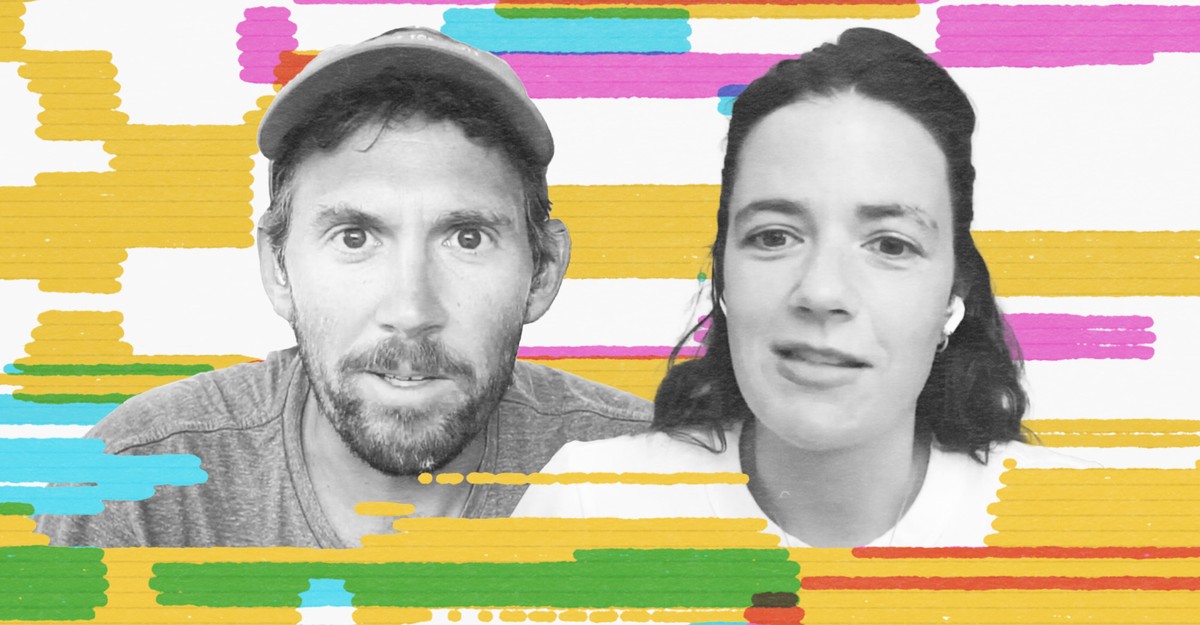
Subscribe here: Apple Podcasts | Spotify | YouTube | Pocket CastsSilicon Valley has long been a place of tech innovation and optimism. When Claire Stapleton moved there to work in communications at Google in 2007, she was bright eyed and optimistic about the company’s mission. In those days, she describes the executives as acting like “benevolent kings.” But over the course of the next decade, Google grew and changed. It arguably succeeded in its initial mission of organizing the world’s information, and it has grown an enormously profitable ads business. But it’s also had to face tough questions about data privacy and government contracts, and courts have declared parts of its business a monopoly. In this episode of Galaxy Brain, Charlie Warzel talks to Stapleton about her journey at Google—from the early days of ball pits and gourmet food to the growing disillusionment that eventually led to her leading an employee walkout in 2018, and leaving the following year.The following is a transcript of the episode:Claire Stapleton: I do think that inevitably having so much money and power, it creates a form of brain rot. Like, I just don’t think that you exist on the planet in a normal way at all. And I can’t really account for how quickly the mask slipped with the tech CEOs who were seemingly so offended by Trump at the beginning, and now are on the MAGA train as hardcore as anyone else. But it’s genuinely surprising, because they were much more interested in positioning themselves as sort of like benevolent kings of the universe before. And now, it’s just—the vibe has completely shifted.[Music]Charlie Warzel: I’m Charlie Warzel, and this is Galaxy Brain, a show where today we’re going to talk about what happened to Google. At the risk of sounding ancient, I still remember an internet before Google. Like a lot of people, I’d been burned by plugging keywords into other old search engines and getting these weird, just barely relevant results. It’s as if the computer didn’t understand what I wanted.Before Google, there were all kinds of tactics that you had to use. It was almost this language that you had to speak to get what you wanted. And Google changed all of that. It felt, as the best technology does, like magic. And I probably don’t need to outline what happened next. How Google dominated search, how it became an advertising giant, how it printed money, and became arguably the foundational online company of the 21st century.Their mission statement was to organize the world’s information. And honestly, it’s hard to disagree that they at least in part accomplished that goal—Search, Maps, Gmail, Books, Photos. They branched into phones, into workplace software. They bought YouTube when it was still a fledgling video site. They became a behemoth, and they got so big and so rich that they started trying what they called “moonshot projects,” like self-driving cars, drone delivery services, and trying to cure death.In some ways, the story of Google is the story of the commercial internet. Or maybe more specifically, it is the story of what we often refer to as Big Tech. Google famously started in a garage with just two people: Larry Page and Sergey Brin. The company built something ingenious with search, and it quickly developed this quirky, upbeat, benevolent California-company ideology, all built around a very specific credo. Don’t be evil. And then it grew. And grew.It had to adapt to the realities of having money and influence and real power. It had to make unpopular decisions, like partnering with the military or changing permissions on how it collected data on users. Its search dominance grew from this success story to a monopoly. It faced criticism. It became a target of the late-2010s tech clash. It got hauled in front of Congress, sued by the FTC.Claire Stapleton was there for this hinge point in Google’s history. She joined the company in 2007, and she worked on a team that helped shape Google’s image internally with its own employees. Over the next 12 years, she worked across the organization, in executive comms and at YouTube. She watched all this change happen, and eventually she grew frustrated by it.In 2018, she was one of the leaders and organizers of Google’s Walk Out for Real Change. This was a landmark moment in this burgeoning tech-labor movement. Her involvement, she alleges, ultimately led to her having to leave the company in 2019. And so now Stapleton has written a memoir. It’s titled, very fittingly, Don’t Be Evil, and it’s about her time inside Google. I wanted to talk to her about Google’s transformation.What happens after a tech company succeeds in its initial mission? And so, Claire Stapleton joins me now to talk about it all.Claire, welcome to Galaxy Brain.Claire Stapleton: Thank you so much for having me. This is a thrill.Warzel: So you joined Google in 2007, if I’m right—a time that for Google but also for the internet feels almost unrecognizable for today. So my first question here is: What was Google like when you joined?Stapleton: Yeah, I think it’s like such a time capsule in so many ways. And 2007 was like, there was this feverish rush to capture college talent in a way that they sort of never did again. They were doing large-scale college recruiting to just bring in people fresh into the workforce. It was hardly a start-up, but it still had this sort of fresh energy of, you know—American innovation, and yet not yet corporate. It was not yet at all really considered to be sort of like some scary behemoth, or Should we be wondering about all the power and money that’s sort of flowing into this company? It was on the cover of Fortune magazine—“best place to work”—a couple of years running at that point. It just felt like: Wow, they not just, like, reinvented the corporation, but it was sort of this Willy Wonka, brand-new kind of model of a corporation.Certainly I’m sure people were not totally bought into it, but as a young person entering the workforce—and of course for the record, 2008, the recession would happen the next year. So it was sort of like this very limited window to come into this sort of tech boom feeling like the world was ours, I guess.Warzel: No; I remember it. At the time there was this idea of like, my gosh, you go to work, and it’s like beanbags and parties and like ping-pong tables. And that was the Silicon Valley vibe, the ethos overall. But there was this feeling—like, the Willy Wonka thing really tracks for me. Because I was like, What goes on there? Like, the internet happens in that building or in that series of buildings. Describe the atmosphere, the campus, the people, the free food, the optimism, all of that.Stapleton: It was like this continuation of college. Which was really bizarre, because you were also sort of transitioning into the hierarchy of a fairly normal corporate environment, frankly. I mean, there were plenty of executives and some corp speak and all sorts of rules that governed being a young person there. But they really did encourage socializing and staying on the campus. It felt very lush.When I was moving out from the East Coast from college to the Bay Area, and they encouraged the people to live in these sort of like new developments, in group apartments. I was giving campus tours almost immediately after getting there. So yeah; I was very deep in the bones of sort of like: Here’s all the thoughtfully sourced natural materials, as well as here are all the sensory touches. I mean now I think there’s—probably people would roll their eyes a bit more to it. But also I think it was sort of like a celebration of neurodivergence in that way, like: Here’s the ball pit, here’s like the yoga balls, here’s the ways that the engineers can sort of get their ya-yas out in between their coding sessions or whatever.So I think there were certain things that were very considered. It’s like how you can have some amazing person designing a children’s playground. It was like they had all these great minds thinking about: How do you foster innovation and collaboration and, you know, of course soak the most productivity out of people? Get them to give, you know, 110 percent. But it was quite thoughtful.And then, separately, there was so much rhetoric pumping through which was also quite thoughtful. Because I think at the time they said a lot that, you know—you really have to have people sort of hooked into the mission so they feel a stake in it. So they sort of come up with their most creative ideas. So it’s like: We want to capture and harness the amazingness of humans. All of the kind of talking points which I know, because I was giving the campus tour, talking about how amazing the campus was.Warzel: Did those perks feel to you at the time as earnest perks? Like: This is so great that we can get laundry done, that we can basically live our entire lives inside this little ecosystem here that is work? Or did it feel a little bit like: We’re being trapped in a system, so all we do is work?Stapleton: Part of my job—I was working in PR at the beginning, and they were giving me kind of lower-priority journalists to take through. And in those days it was a lot of foreign journalists, because the American press had covered the campus a lot. So, you get a lot of journalists from Europe, and they were much more skeptical. So I was aware of this whole thing where they were like: This is totally just an idea, a plot, to keep the workers here 24/7. This is very Big Brother, you know. And so I think, internally or externally, I’d be combating that. Like, wow, the cynical person; of course this is completely virtuous.There was always a really thoughtful talking point to counter that. Because, you know, who does want to go home when you’re exhausted at the end of the day and do your laundry? It’s nice to not have to drive off campus to get lunch. It’s like, right there and whatever. So I mean, I think that I was able to sort of see that there were some aspects that were kind of about keeping people there, and keeping them super engaged.But only much, much later was I able to actually analyze the emotional effects and also the kind of difficult golden-handcuffs effects—where then people feel uncomfortable speaking out in any sort of difficult situation with management, because you’re so grateful and you sort of feel spoiled. And all these other things where you could see how it degrades a healthy kind of back-and-forth in office culture.But you know, I felt really lucky to have this job, and I think there, at the time, it was like everyone’s so impressed by it. It’s just like the way it is in life; you know, when people are telling you, “What a lucky girl you are to have this job.” The reality of it, you know, as I trace in the book—it was always a bit more complicated.Warzel: So you write about—you were involved in the internal marketing for Google, right? Selling the story of Google to itself. And you write about in many ways that you became the voice of Google. So how did that happen? And then for those of us who might be blissfully unaware, what is the voice of Google?Stapleton: With Google’s sort of obsession with its own culture, there was a lot of lore, internal lore. So, you know, there were—the executives would kind of become characters in the TV show, because there was so much internal communications. Larry and Sergey hosting the weekly meeting kinda felt like a revival; you know, like all the executives would kind of get up there.And you know, there was a meme message board that was launched, sort of just a few years after I got there. There was so much internal chatter. So I think the company culture created its own little characters. So when I first got there, one of the first things I was ever assigned to do was work on TGIF [a weekly meeting]. The internal communications team wrote the script for Larry and Sergey.Warzel: Who are the founders of Google, for people who don’t know.Stapleton: The founders of Google, yeah. I think they’re like, Ben and Jerry. It’s like they’re kind of these folksy American characters, though now they’re, you know, seen [as] much more nefarious. But they were huge celebrities internally—but they were really accessible. And so they would broadcast the TGIF video, you know, to the far-flung locations in Mountain View, and you know, call these kind of growing satellite offices around the world. So one of the first tasks I had, a few months in, was sending around the logistical information for this meeting. Like, how to tune in to this meeting. And so, you know, it was like a very straight email at first. And I just sort of, as it went with this huge growing company, I had a lot of leeway. You know, a lot of leash. So sort of started, you know, kinda slowly getting a little, putting a little more personality in it.Which I think, you know, for better or for worse, kinda hit the vibe of Google at that time. Which was kind of geeky, kind of like riffing on the rhetorical talking points of the time and the products and the new things. It’s just like how, you know, someone that sends like the emails for your kids’ school has amazing name recognition. That’s like, I don’t want to oversell—but it was kinda like that. It’s like, you can’t not know who Claire Stapleton is, because I’m sending this email like every single week for five years. I mean, it was kind of amazing that it went on for so long. And I think back, you know, very fondly of it.Warzel: So part of this book, as I see it, is really about what happens when a company evolves into a corporation, right? When company culture becomes more bureaucratic and a little bit less human. And you describe some of the features of Google’s corporate culture. These sort of endless performance reviews. But also something that really stuck out for me is the corporate idea of radical accountability. What was radical accountability inside Google, and what effect did it have on the culture of the place?Stapleton: They put all the new-comms hires, and I think like broader swaths of the new hires that came out of college into a training program. Which was run by a guy named Fred Kofman, whom Sheryl Sandberg has sort of credited with profoundly altering her life. He’s sort of like a Valley executive-coach guy. But it was theoretically about how to live your values in a career, how to be courageous in the world. It sort of sounded very tonally in tune with everything else about Google. You know: Here you are; be an owner. You know, like this is a place to really contribute to the world, to help change the world. But actually, really what the training was about was something called radical accountability—which was that, as a young person in the corporation, you should really never blame your circumstances. You know, a classic example would be: You come into a meeting, and you’re a few minutes late. You shouldn’t say, Traffic made me late. You say, I should have left earlier because of traffic. You know, it’s sort of like presenting yourself that way in a corporation makes you a very attractive young hire. That’s basically what they were saying to us.One of the other lines was that you should strive to be a player at all times, never a victim. You know—victims are bad, like, you’re a taker. Nothing is ever the system’s fault, the hierarchy’s fault. And so I found this amazing Gchat that I’d sent to my brother when I went to this training, being like: Today I found out that if my team is dysfunctional, it’s my fault. And I was joking about it. I was able to kind of have the, you know, distance from it to be like: This is a little slightly whack that they’re like telling people who are like 22years old that, you know, don’t expect to change anything around you, because your life is what you make of it. And like, If you want to be a rock star, then, you know, you better not be kind of criticizing anything about the corporation.And even though I was sort of criticizing at the time, I found that it was very pernicious. You know, it’s pernicious ideology for me personally, because as I, you know, wended my way through different roles in the company and found myself in situations that were pretty messed up. I think I was sort of like: Be a player, not a victim; be a player, not a victim. You know, move on, one foot in front of the other, your life is what you make of it. But there’s real limits to that when you run up against the company doing things that you really disagree with. Or things start to sort of like pile up, as they did in me.Warzel: You talk about Larry Page as the ultimate techno-optimist, right? The ultimate, like: We can solve anything through innovation and hard work. The wanting to cure death, the Project Calico, with the infamous TIME cover there. And then these phrases he had, this: “Have a healthy disregard for the impossible,” or “Computers should do the hard work so humans can get back to doing what humans do best: learning, living, loving.” It’s very live, laugh, love coded there. Because not a lot of people get a front-row seat for this type of person.I am curious; from your perspective, how much of that techno-optimism felt really genuine from your vantage point? How much did you feel that these people really believed that?Stapleton: I think I did. I was sort of still going with the tide. And Larry came in pretty hot with this. He used to say that if we only had two million Googlers, think of all the good we can do. Because again, we’re continuing here from: Here we are, this sort of rarefied species of, you know, world-changers with all these resources. And we need to solve the world’s biggest problems. He was really, like, putting the whole Google-mission thing on steroids at this time. I think two things were true. Like, at the same time that I was sort of saying, This sounds kind of hokey; it sounds kind of unreal—it also seemed inevitable that yes, Google will, you know, solve these things. And that sounds great. I look forward to Google, you know, curing death. Or whatever it was like. Even though, yeah, looking back it was sort of like—wow, some of the actual progress Google was making was quite banal.And Larry Page's role as the CEO would be that, you know, everyone has not only amazing world changing problems to work on, but that they feel that they are seen and sort of nourished as human beings within the company. And I think that even though in interpersonally to see s him sort of on the stage at TJIF, he was not the warmest and fuzziest person, but he seemed to have like a very strong kind of moralistic streak about how companies should operate and how they should really, you know, take care of their employees. So it would have been really hard for me, even with a little bit of cringing at the rhetoric, to think like, this guy's totally full of it. It was—it actually sounded like to some extent quite refreshing because I think he was even putting a little bit more bones behind the kind of freewheeling fun campus stuff of yesteryear.Warzel: This might sound naive on my part, but you talk a lot about everyone being really bought into this idea of helping build the future. What future did you personally think you were building, that Google was building? Like, what did that look like in your mind’s eye? Was it really vague, and just kind of like: It’s gonna be better because of all this? Or did you have your own ideology about it?Stapleton: Where things started to kind of slowly break down for me, over time, is what is actually my contribution. Not only can I not exactly see the world that Larry Page is proposing with the sort of army of Googlers, you know, kind of flipping everything on its head. But here I am, writing like internal comms, you know, or doing ghostwriting for, you know, an executive who’s like kind of an a-hole. Who’s like, you know, selling ads, because I was working on the ads business for a while. Which is really, that’s actually what the company was doing. Like it was, you know, building an online-advertising juggernaut. It was a little sad when I was like, you know, kind of going through the book or process the last year or two. And thinking: No shade, but, like, what did Google actually ever do in any of the categories of things that Larry was talking about?Warzel: Well, not to not to not to defend Larry and Sergey here. But as a devil’s advocate, I think what’s fascinating about a company like Google and some of these tech companies is that the initial thing actually is wildly impressive, right? Organizing the world’s information; like you can make a strong case at Google, that was the mission statement. Google did that, right? Like, they built something incredibly powerful; changed the way that everyone accessed information. These things were very powerful. I think it’s easy to—and not that you’re doing this—but it’s very easy for everyone to say, yeah, like what did they do, right? And then you look at like, you know—like, Gmail was a revelation when it came out.Stapleton: Yeah. Google Maps, yeah.Warzel: Google Maps has changed the way people get around. These products are huge. Like the photos, the cloud storage, the things that they have done. Even the ad business. And the juggernaut, you know, propelled a lot of people into having sustainable business models on the internet, early on. So I totally actually understand that feeling.But there is something that’s fascinating about the vagueness of it. You said in an interview previously that during the Google tenure you had that feeling that there was like a meaninglessness to the work, sometimes, that you were tasked with doing. I’m curious; what specifically felt meaningless?Stapleton: Yeah, okay, so I never once felt that in my early, kind of internal-comms journey. But then I spent another five years at Google in the marketing department of YouTube. And this is where all that’s coming from. Because the Google marketing team, specifically was, you know, hiring like gangbusters. Not just internal full-time Googlers, but also we had a whole cottage industry of agencies. And what we were doing was brand marketing for YouTube. Some of it would cycle through as we’re trying to improve our relationship with women or creators of color. So there’d be specific initiatives.But really, we were like a social-media operation that was massive. I mean, it was just like, you know, millions of dollars for every campaign. I mean, we had multimillion-dollar budgets with all these agencies. And what we were doing was producing like a couple tweets a day, right? So imagine like, you know, 30 or 35 people at YouTube working on the Twitter account. So that kind of stuff. And so my husband’s an architect, which has its frustrations in different ways, but like: You’re building a house brick by brick. And here I am, it’s just like, kind of it was a bullshit job. I like going to the gym every day. And it was just like, everybody’s there. Just like, you know, gravy train. I would have these existential moments where I’m like: Okay, what is YouTube doing? YouTube is, you know, connecting the world through video. And we had all these vague goals about being part of the cultural conversation.But all this is to say—was tremendous resources, human resources, money. You know, sweat; the urgency of it, all the time, for what was like forgettable tweets. I mean, no offense to the people who still work on this stuff. It’s, you know—I’m sure people find meaning in their jobs in all these different ways. But I personally found that really hard. I think particularly because I’d, you know, been weaned on this sort of “your work should feel like it matters.” By that point, I was just like—I look around, and I’m seeing bloat. And seeing like, you know, as my former manager’s big character of the book said: You don’t get a gold star for coming in under budget. Which is what she said to me, trying to justify us doing some, like, ridiculous creator event in L.A.; which—it didn’t matter. I mean it’s all these things like making, you know, YouTube-branded cupcakes. People will be shocked where the money goes.Warzel: The cupcake budget. I would love to see the cupcake. Please leak me the cupcake budget, if you haven’t already. No; this is what I wanted to get into, because you describe Google as becoming bloated and inefficient. And in many ways, this is fascinating because it’s a criticism that’s shared across ideologies, right? Back in 2024, Mike Solana, this Peter Thiel–orbit guy who has a website as well and blogs, has argued that Google got bloated and stagnant as a result of being “overly woke,” right? But then, there are other arguments that have nothing to do with, you know, the liberal-minded nature of this. Just that there was bloat and stagnation. What happened, in your mind, to Google in this time period? This 2010-to-2018 period, where that stagnation was really occurring?Stapleton: I think it was a couple things, and a lot of it was organizational psychology. I think it’s probably this weird, wonky strain of the be a player, not a victim thing—where you end up with incredible kind of corporate game players, who are able to kind of play the court politics. I think what happens between 2010 on, as the political landscape is changing, the social-media landscape is changing, I think the executives are feeling like they’re losing their grip.So with my zone of social media, or from social-media marketing, it was sort of like, all the kids. You know, Gen Z is all on TikTok or Instagram, and YouTube’s gonna lose this audience unless we could make any number of arguments there, right? There’d be different teams working on smartwatches at the same time. Like, that’s kind of vaguely demoralizing. It’s also inefficient.But again, the smartwatches thing. Like—Well, this is in the air, and like Apple’s coming along. And we need to be in this, because otherwise we’re gonna lose. Google Plus was also motivated by, you know: We’re gonna lose being people’s portal to the web, because Facebook. There’s gonna be a Facebook browser, and then, you know, we’re screwed. Or whatever.So I think that Google’s domain ended up bleeding—you know, it’s like all the internet’s domains kind of bled together, where social media becomes dominant. You know, search is still huge, but then AI comes along. And it’s really hard to keep it all sort of organized with a vision, because it’s just so unwieldy. And then in that unwieldiness, I think you end up reading a lot of different toxic work cultures, or opportunistic kind of leaders come in, and all these other things. But yeah—I constantly hear from people that it just has not been a happy place to work for a long time. Despite the tremendous resources and still impressive workplaces, and everything else. Or offices, that is.Warzel: It feels like a victim of its own success, right? When you grow in that way, when you have unlimited money; “you’re not gonna get any points for coming in under budget.” And people spend, and people build out those things. But at the same time, you have to be in this defensive crouch, right? That’s what it feels like from the outside; there were these initial world-beating products, and after a while you just start guarding them. But at the same time, you are growing. But if you’re guarding and you’re growing at the same time, it just turns into this really odd—and it sounds like, just like totally unwieldy—bureaucracy that nobody really knows what anyone else is doing. Which gives them the ability to do things that maybe other people wouldn’t want them to do. Or it’s not organized in any way.Stapleton: Yeah; there’s a lot of anxiety, and not enough constraints, probably. Like, just the unlimited money of it. People could always argue for more money. And what does that all lead to?Warzel: And so this all kind of leads to the 2017, 2018 timeframe. And you’re best known for helping to organize Google’s famous 2018 walkout, which is in response to a number of issues inside the company. Including what you and others alleged was a culture that had problems with sexual harassment and discrimination. And in the case of one executive, Andy Rubin, a very lucrative exit package after allegations of sexual impropriety that he, we should note, still denies. But I want to understand more how you ended up playing such an important role here. Because that’s not there; there's this way that you describe yourself in the book as being a real, you know, cheerleader for this company, and feeling really in line with the type of messaging. And kind of like plugging into the system. And yet you ended up playing this crucially important role in this dissent. How do you feel like you got there?Stapleton: For me, the lead-up was the radical experience of having a kid, and coming back from maternity leave with sort of like bleary—you know, fresh eyes. But my work at that time at YouTube was so focused on cheerleading the virtues. I was plagued with always having a cheerleader role. Like, no matter what my kind of technical title was, it was like: We’re putting Claire, and like, the new thing we’re gonna trumpet and be enthusiastic about. It’s like a paid enthusiast, right? Mercenary.So I think that kind of job—which requires a lot of sort of inner conviction, because if you really think that that’s not true, or that’s a lie, or you’re selling something that’s false, then it’s really hard to do that job. So I just usually was able to kind of manufacture enough, you know, enthusiasm to do these jobs. Did this big get-out-the-vote campaign, which was sort of understood to be about helping, you know, get out the vote for the youth. But then also, YouTube’s creator class was becoming really complicated. And the dark underbelly of YouTube was sort of coming to the fore, where a lot of the biggest creators on the platform were kind of, you know, pushing the Overton window. Or becoming this sort of—it was becoming very popular to be a provocateur, like PewDiePie becoming, you know, anti-PC and all these other things.Not to put a value judgment on the sort of like, you know, gamers of the platform. But more that, simultaneously being told to run an International Women’s Day campaign, when every time we post something about that online, people are like, Why do you never take any action to protect women on your own platform? It’s like, you sort of want the credit for, you know, the pinkwashing or the big Pride campaign. But when, you know, the creator community raises the things they’d actually want, in terms of—it’s like, you know, you can talk the talk, but can you walk the walk? It was like, I was constantly faced with that cognitive dissonance. Because of being the sort of forward-facing person for the company, but then also seeing all this very, very valid, you know, criticism. And I think also trying to grapple with this sort of narrative that YouTube was a net positive for society, at a time when it seemed like it was contributing to a lot of things that were very polarizing and negative within society.So all this is to say: It was sort of brewing in me. And I just, you know, had not been in organizing before. There was already the kind of fabric of Googler, “the tech won’t build it” movement. Which I think is a really great phrase—which is basically like, you know, people who are technologists, who are thinking of the implications of their technology. Very interesting ethical conversations were going on, and in different pockets of the company. I was not involved in any of that when I got into the organizing with the walkout; simply was someone who was used to being on all these message boards and internal threads. Probably from my vestige of my years in the communications department, where I used to monitor these things. But I also just love to sort of chat online. It’s kind of my way around.And so, you know, I was in this moms’ group. There was an anonymous moms’ group that was not political at all. But the day that this sort of big New York Times story broke—which was about Andy Rubin, but also about a couple of other executives who’d either had relationships with women at the company, which had ended badly for the woman. Or there was some stuff during the hiring process where there’d just been like a—it was a weird soup of things in this article. And what was fascinating, for me, was that it created this rupture in the moms’ group. Where people were all of a sudden starting to talk about the ways they’ve been disappointed by—I mean, not just Google. It was like their life in tech, of just how little progress it seemed the tech industry had made since the kind of bro culture, brotopia. You know, back in the kind of old days of the ’90s and early ’00s. That still there was a lot of opportunity discrimination, a kind of boys’-club environment. As well as people being outright sort of sexually harassed. And how hard it was, given this sort of radical-accountability culture, to raise it; to have any semblance of justice. And it was exciting to think that, you know, in a company that did, at least on paper, celebrate employee voice, and, you know, welcome dissent and all these other things. Which—whether or not that was authentic at all at that point—I thought, This is a time to push it. Because the world seemed to be having this kind of interesting conversation about the patriarchy.Warzel: #MeToo.Stapleton: Yeah, #MeToo. I mean #MeToo; it was really the biggest context here in a lot of different ways. But anyway, even when I started to write the book, I was like: How did I end up doing that? Because I’m like, you know, not the ultimate stay-in-line rule-follower you’ve ever met, but it was a little bit out of character. But I can really see how it was sort of just like things were bottled up. And I was a little bit like, I also I felt quite safe. Because I was like, you know, even if Google would want to punish the women who were doing this—someone like me, who’s been around forever, I have the protection of the fact that it would look so bad. You know, to futz around with anyone’s job. Even though that was incredibly naive. But yeah.Warzel: The walkout is this very, very prominent event in the world of tech that spills out into broader culture as a part of this—you know, the #MeToo stone in the pond rippling out everywhere. It was initially praised by your bosses, right, as representing the classic principles of a Googler. Just standing up, doing the right thing, having that virtue. But then, there’s what you’ve alleged as this retaliation from Google, right? That your boss starts to reassign your role, change who you report to. And, you know, you note that at one time the company’s narrative seemed to be even that you were having your own mental struggles alongside all of this, as the fallout of this. So then, you start to negotiate your exit. And you left in 2019. But there are parallels that I found going through your story to the pandemic era, right? Where there’s this employee backlash over politics and labor issues in Silicon Valley around George Floyd protests, around COVID, all of that—followed by, almost immediately once people start to return to the office a little bit, an employer crackdown.And so I’m curious how you viewed that tension, going through what you went through from afar. Like—and broadly, the question I guess, is like: How do you think Big Tech’s executives view their workforces?Stapleton: I think that, you know, they really overcorrected. Because even though with Meredith [Whittaker] and me, and there are a couple of other women who—there was this funny business around our roles and the shifting of our responsibilities. Which we thought was clearly illegal. But then, you know, in the coming months, I mean—there were these five people that they fired. They outright fired five people around that Thanksgiving, that very year. So we left in June. And the NLRB [National Labor Relations Board] sued on these people’s behalf, and they settled with Google.So Google was like at that point: No more Mr. Nice Google. They were clearly like: We need to completely rearticulate the relationship between the workforce.I think it has, ever since then, it’s been this constant rearticulation of the power. Where I think that there’s—so all the philosophy that was around, giving workers power because that was great for not only the company culture, but for the company bottom line. Because people bring their best selves, and all that. They’ve just completely thrown that out the window in the service of: We’d prefer to concentrate control with the executives at the top. And if that sucks to be you, well then fair enough. Because we think now, precarity and the threat of layoffs and, you know, all these other things—the chilling effects—are more important for serving our goal of maintaining leadership’s steady hand or whatever.Warzel: It’s maybe obvious, but also just such an interesting about-face. Because the Larry Page idea of “this should be a family” was not unique to Google. This was broadly a tech-industry trend, right?Stapleton: Yeah; Salesforce, Ohana.Warzel: Right. We are here doing this thing together. You’re gonna give as much focus and attention as you would to your family, but you’re also gonna be rewarded with that broader feeling. And then the crackdown coming was very much, you know—I experienced it reporting on it in 2021, as like: You will not bring this part of yourself to work. In fact, you will just bring the part of yourself that works. And everything else, we’re gonna leave this to the side. It is such a fascinating about-face.I want to talk a little bit about the idea of empathy, because there’s this period of the time in the book where you’re working at the Creative Lab at Google. And you detail this boys’-club atmosphere, where the executives are always talking about empathy, right? Empathy is king, and Google needs to adopt this radical empathy in the design of its products. Step into the user’s shoes, but also in the workplace.And then cut—a couple years later, you recount the story of James Damore, this Google engineer who wrote this manifesto about the “Google echo chamber,” and how women were less represented in the tech industry because of biological differences. And this memo is rather famously hinging on a lot of specious claims about gender and issues with DEI programs—things that would later become, you know, like the conservative, reactionary obsessions. But one thing that Damore points out in that essay is this need to “de-emphasize empathy.” And this to me is this subtle but important shift in Silicon Valley that you got to experience firsthand. And I’m curious how you parse its evolution.Stapleton: Yeah; I mean I think what was really interesting with the kind of Creative Lab thing was how it was a marketing tool. I guess it was sort of like—they were trying to hack the mainframe. That if you feel Google is so friendly and so nonthreatening, then you’ll let it sort of deeper into your life. I mean, that was how I took what he meant by empathy, which, if you’re listening to it, didn’t feel completely manipulative and nefarious. But it actually is quite disconcerting.Warzel: The reason why I ask is because, you know, Elon Musk and some of these other titans of Silicon Valley have adopted the Damore-like framework around empathy, right? Musk calls it “suicidal empathy”; you have Marc Andreessen talking about the need for no introspection.The reason why I’m curious to ask you this is: It does feel like a pretty big shift. Because even if it was lip service, even if it was in order to get people to, you know, buy into a very specific culture—the, let’s say, 2014 version of “Empathy is king” is so different as a mindset for how to run your organization than “No, no, no; empathy is dangerous. Empathy is keeping us from making the decisions we need to make to build the things that are gonna change society.” And I’m just curious: Did you feel that breakage happening?Stapleton: Yeah. I agree that back then there was something to it that was true. It’s like, we have this responsibility; I feel like the way that they’re kind of right. The suicidal empathy—the sort of concept that’s sort of swinging around—is so sad, because I think it that is actually trying to disconnect people from their, you know, their natural connection to other people. And also, as was my situation with the walkout, the idea that caring about other people and, you know, wanting the world to be more inclusive and hospitable to people. I mean, I think people have a tremendous ability to affect the world around them, even as a manager of a small team, right? Or you know, raising your voice in certain ways.It’s not to say that always [there] is a, you know, linear, path forward. But the idea that we should be cutting ourselves off from empathy because we might, you know, start to care about a person in a war-torn country. And this is, you know, sort of politically threatening to the right-wing project or something? It feels very sad that it’s now been sort of weaponized. It was being perhaps appropriated in ways that were sort of a little creepy or weird.But I think ultimately there was something about Larry Page, you know, back in the day—not that he was talking about empathy, but the whole “learning, living, and loving” thing. I think it was sort of like that: Humanity is something that we should celebrate and protect, whether it’s the humanity of our workers or, you know, the humanity of people who use our products. And now I think everything just feels quite craven. And it’s sort of like “It’s our team.” You know, it’s like “the West must win” or all these other things. Where everything feels so politicized and so tribal that we’ve broken down any of the more kind of utopian aspects of, you know, Google’s philosophy or rhetoric. Whatever it was back in the day.Warzel: But you worked in this culture. What do you think attributes that change? Is it just like sniffing the political winds and latching onto something, ’cause, you know, it’s advantageous? Or do you think it’s a kind of almost madness that’s induced by just having all the money and resources at your disposal? What do you think is responsible for that change? I know you can’t answer definitively, but you worked with those people.Stapleton: No; it’s really interesting. It’s weird. Like someone leaked the TGIF when Trump was elected the first time, and Larry and Sergey are there. All the executives are up there; they’re shocked. Sergey gives this whole speech about, you know: Myself as an immigrant; I’m so offended by this, and I know it’s just so hard to realize how many people don’t share our values. And he was like, you know, protesting the immigrant ban. And to now imagine that, you know, by the time Trump was reelected, he’s second row of the inauguration, with all the rest of the tech CEOs—I do think that inevitably having so much money and power, I think it seems like it creates a form of brain rot. Like, I just don’t think that you exist on the planet in a normal way at all.And I can’t really account for how quickly the mask slipped with the tech CEOs who were seemingly so offended by Trump at the beginning, and now are like on the MAGA train as hardcore as anyone else. And I think that, of course, all the layers of people underneath will get in line at the company, because my team and the marketing team, by definition, we were, you know, deploying whatever the corporate wind was. So before it was kind of, you know, the resistance: We wanna stand up for trans kids. And all these other things in the, you know, earlier Trump administration. And now they’ve dialed down all the political stuff. There’s no mention of diversity and all these other things. They’ve reworded things. No longer could be, you know, accused on the social-media channels of being “lib,” in any way.So there are these sort of trends, and these things that sort of fall out of favor because the marketing team’s following the executives, or what they think is popular with the public. These companies are no longer trying to take a stand as a brand, you know, on social media.But the people at the top—I think it’s completely confounding. And I don’t understand. Because could it really be so simple, with all of them leaving California for the wealth tax? Of course that amount of money would never affect their life—whatever that one-time payout could be. But they’re so kind of vehemently and existentially opposed to that. You have to think they’re just like, you know, radicalizing each other in group chats, just like any other segment of the population.But it’s genuinely surprising, because they were much more interested in, you know, positioning themselves as sort of like benevolent kings of the universe before. And now, you know, it’s just—the vibe has completely shifted.Warzel: You write that “Tech didn’t solve the world’s problems, but it’s intensified and monetized them.” And you continue, saying that: “Google said it would change the world. It did. I just didn’t expect the transformation to feel so relentlessly hollow.”I mean this question not flippantly, just earnestly. What did you expect the transformation to feel like? Like, when you look back on it, does it feel like that early faith in the company was naive? Or does it feel like there was a different path that Google did not have to evolve and grow in the way that it did? How do you see that?Stapleton: Yeah. I think the company was more guided by, you know, engineering feats and technological challenges. And then something shifted, as we’ve entered a later stage in sort of like empire or the industry or whatever. Where everything seems to be just driven by your typical kind of capitalistic pursuits and exploits and the, you know, shareholders. Whatever; all these things, right? And it seems more like trying to preserve the empire than doing literally any of the things that Larry Page was talking about in 2010, of solving the world’s problems.I mean, Google was always, you know, doing their earnings call and doing talking points every year. About how we’re gonna continue to grow, and da da da, whatever. But it just seems like the whole thing is guided by wealth and power. Which is the exact opposite of what they said they wanted to go. So even though Google did have incredible—you’re right, with the search and the maps and all these other, Gmail, these sort of utilities. And the technologies that were so transformative to the world.But anything else outside, any other problems that humanity faces—Google isn’t tackling those. It’s just sort of continuing to just, you know, siphon money out of the system. It’s like the input of everything in the world, and let’s keep it that way, is what the kind of mission of Google feels like to me today. Which is quite bleak. That’s not an inspiring vision. And it’s just such a change, you know, from even what—15 years ago? I mean, most of this was happening.Warzel: There’s a moment near the beginning of your memoir where you’re describing an early job you had as a kid, as a waitress. And realizing at some point, or hearing someone say, that you got promoted in part because you looked the part. And in this moment, you write, How do you challenge a system? Things you know are messed up when the system is rewarding you. And I wanted to end by asking: How would you answer that question today?Stapleton: I think that, for me, one of the most radicalizing moments was when we were planning the walkout. I sent around a Google form saying, What compels you to do this? Why are you doing this? And, you know, we got a couple hundred responses. And I read them all, sort of agog at what other people had experienced. And it was starting to knit together this latent layer of things that I had experienced at the company. Some of my kind of more existential qualms with the direction of the company. With the rhetoric, you know, with the day-to-day things I was experiencing. And starting to form, you know, a worldview that is less understanding of the system, right? Like, as a manager, I’d seen so many things happen with the contractors on my team, kind of getting cut or shuttled around in ways that felt quite inhumane to me. Or I didn’t have power over, or maybe I did in certain ways in different times, but, you know—I am someone who's sort of guided by empathy for other people.And part of my sentimental education here, my arc, was to be able to say that even though things, generally speaking work, for me—this isn’t the kind of world that I want to live in. The kind of world I want to, you know, have kids in. And all these things.I think that Google capitalized on this impulse, which many people have, to be part of something bigger than themselves. That was a lot of the philosophical thinking about the mission. Was if people—it doesn’t matter if you’re a customer-service operator, if you feel like the company is doing really good things that are gonna make the world a better place, you’re gonna be excited and invigorated to come in. And, you know, do your job in the widgets factory or whatever.And when that started to break down for me, I still had the feeling that I wanted to contribute to something bigger than myself and to leave the world better than I found it. Or, you know, whatever. I no longer feel so attached to I must protect the status quo, because I have my place in it. And I’m rewarded for that. You know, if I truly still felt that way, I could have easily put my head down and just not rocked the boat. Or upset the apple cart, so to speak.Warzel: Claire, thank you so much for coming on Galaxy Brain and talking about all this with us. Really appreciate it.Stapleton: It was fun. Thank you so much.This episode of Galaxy Brain was produced by Renee Klahr and Hadley Robinson, edited by Nat Frum and engineered by Miguel Carrascal. Our theme is by Rob Smierciak. Claudine Ebeid is the executive producer of Atlantic audio, and Andrea Valdez is our managing editor.Learn more about your ad choices. Visit podcastchoices.com/adchoices.
Behind the Curtain at Google
Full Article
Original Source
Read the full article at Theatlantic →KhanList aggregates and links to publicly available news content. We do not host full articles from third-party sources. Always verify important information with original sources.