
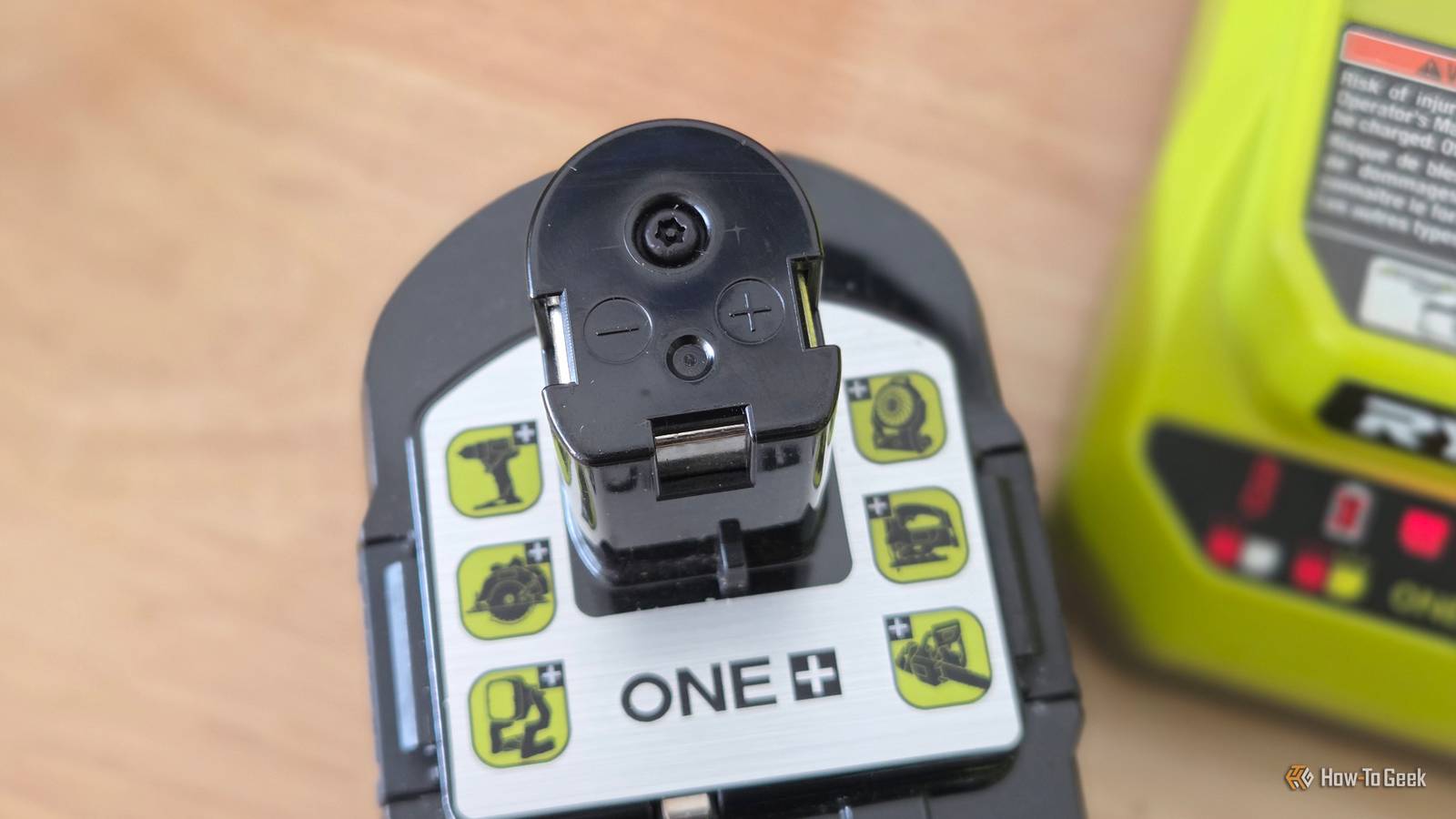
Published Nov 24, 2026, 6:00 AM EST Cory Gunther is a senior author and Newsletter Editor at Valnet, covering cutting-edge tech, Android, and more for How-To Geek. He's covered Android, cars, and technology for over a decade. When he's not reviewing the latest gadget, you can find him off-roading in his Toyota truck, fixing said truck, or doing something outdoors with friends and family. He's covered CES, SEMA, and MWC and reviewed countless phones, TVs, speakers, EVs, e-bikes, and more. Before Valnet, Cory worked for GottaBeMobile. His writing has also appeared on SlashGear, InputMag, and AndroidCentral. He's written over 9,000 articles. Power tool battery packs are expensive, and there's nothing worse than one of your batteries dying at random and refusing to charge. It's tempting to grab some jumper cables, wires, or even a nail and try those viral "jump-start" tricks you've seen online to revive a dead battery, but here's what you need to know first. We're all DIYers who love fixing things, and I understand not wanting to spend a bunch of money on yet another battery pack that'll cost as much as a new tool. That said, while boosting a deeply discharged lithium-ion battery can sometimes "wake" it up enough to accept a charge, it carries significant risks. Flashing lights don't always mean the same thing Credit: Tim Brookes / How-To GeekCredit: Cory Gunther / How-To Geek It's fairly common knowledge that if your Ryobi battery has four flashing lights, it's a goner, and you'll need to buy a new one. Alternatively, you might get an error message on the charger or no lights at all, and it completely refuses to recharge. This type of scenario happens with all major tool brands when a power tool battery pack is dead, drains too low for a charger to recognize, has a battery management system lockout, or has other issues. Some of those include chemical degradation, electrical faults, physical damage, or extreme temperatures. And while that battery might not be "dead" after all, and there are tricks to revive them, most of those tricks come with the risk of frying the internals, causing a fire, or ruining another battery while you're trying to jump-start the bad one. At some point, that battery pack needs to be replaced. It might work, but use caution Surely many of you have seen those videos on YouTube or TikTok of someone reviving a dead tool battery. The idea is pretty simple: you use one Milwaukee battery to "jump" a dead Milwaukee battery, and it magically starts being accepted by the charger. If you've ever had to jump-start a dead car battery, you understand the basics. Grab some insulated wires, a nail, alligator clamps, or something to connect the positive terminal of one battery to the positive terminal of the "dead" battery, along with another wire to connect the negative terminal to the negative terminal. Then, just like jump-starting a car, your fresh power tool battery pack gives a little juice to the dead one, bringing it back to life. It's fairly simple and quick, and I've seen it work, but it's also quite risky. Also, manufacturers do not recommend this practice. For one, never mix brands or battery sizes, so don't try using a 12Ah battery on a 4Ah battery, etc., and don't use a DeWalt battery to try and revive a Ryobi pack. Additionally, you'll want to connect both wires or contacts to the dead battery first, then the good battery last, to prevent power arcs, shorts, or other dangerous scenarios. I've also seen this done with a razor blade or a nail to connect battery terminals, and that's also a bad idea. We're working with high voltage, and you'll want protective gloves or insulated wires — not bare wires or metal. And finally, if you do try this, exercise extreme caution, and don't leave the two connected for more than about 10 or 15 seconds. Yes, it may work, but you also risk overcharging one of the many cells inside, which can cause further damage. It could ruin the good battery, or, more importantly, either cell could enter thermal runaway, potentially causing a lithium fire or explosion. Is it really worth the risks? Other things to try first It could be the charger, terminals, or even the temperature Credit: Patrick Campanale / How-To GeekCredit: Milwaukee If you do a quick search on the web or on Reddit, you'll learn that trying to jump-start a dead power tool battery isn't the best idea. The proper way to attempt a revival is to open the battery, check the cells individually, and then use a dedicated individual-cell charger to "fix" any cell that might be too low, aiming to get them all at the same voltage. For one, this is incredibly dangerous and not for the faint of heart. It'll void your warranty, and again, manufacturers strongly advise against it. It's also easy to nick a wire or cell, or do something that permanently ruins the battery or causes a fire. Plus, if one of the cells is too low, recharging it won't help, and you might as well replace it or the entire battery. Instead, I'd recommend trying a few other more "common" and safe tips first. Those include: Try a different power tool battery charger Clean the battery terminal pins and try recharging again Unplug the charger and clean its charging pins and battery terminals Let the battery cool (or warm up) to a comfortable temperature range, then retry on the charger And finally, there are a few other unconventional "hacks" that may or may not work, which you might want to try before resorting to a jump-start or buying a new battery. A common option, depending on the brand, is to press and hold the charge-indicator button while placing a power tool battery on the charger. This is an unofficial "reset" trick, but your mileage may vary. Lastly, get your battery, put it on the charger, wait 2 or 3 seconds, then take it off. Repeat this 20–30 times or more, and make sure the battery isn't getting uncomfortably warm. The goal is to try to remove it before the charger or battery management system detects a problem and the charger light flashes or turns red, which signals a problem or a dead battery and stops the flow of power. Each time, you'll get a tiny bit of juice. This essentially works as a very slow trickle charge, which may slowly add enough power for your charger to recognize the battery, prevent an error code, and eventually let it fully recharge — giving you a functional battery pack again. Again, your mileage may vary. Sometimes it's best to cut your losses In over 20 years, I've only had one Ryobi battery stop working on me, and the trickle charge trick above actually brought it back to life. However, it didn't stay charged very long, never seemed the same, and eventually died again, and I had to replace it. Sometimes, rather than taking apart a power tool battery, trying sketchy jump-starts, or the Ryobi "J1 jumper reset" trick, you're better off cutting your losses and buying a new one. Recycle that faulty battery, take advantage of a Home Depot battery deal, and get yourself a new one. Ryobi 18V ONE+ 4Ah HP Battery 2-Pack $129 $273 Save $144 Get a 2-pack of Ryobi's latest 18V ONE+ High Performance 4 Ah batteries and a charger, and be ready for all those projects.
Before you try “jump starting” a dead power tool battery, read this
Full Article
Original Source
Read the full article at Howtogeek →KhanList aggregates and links to publicly available news content. We do not host full articles from third-party sources. Always verify important information with original sources.