
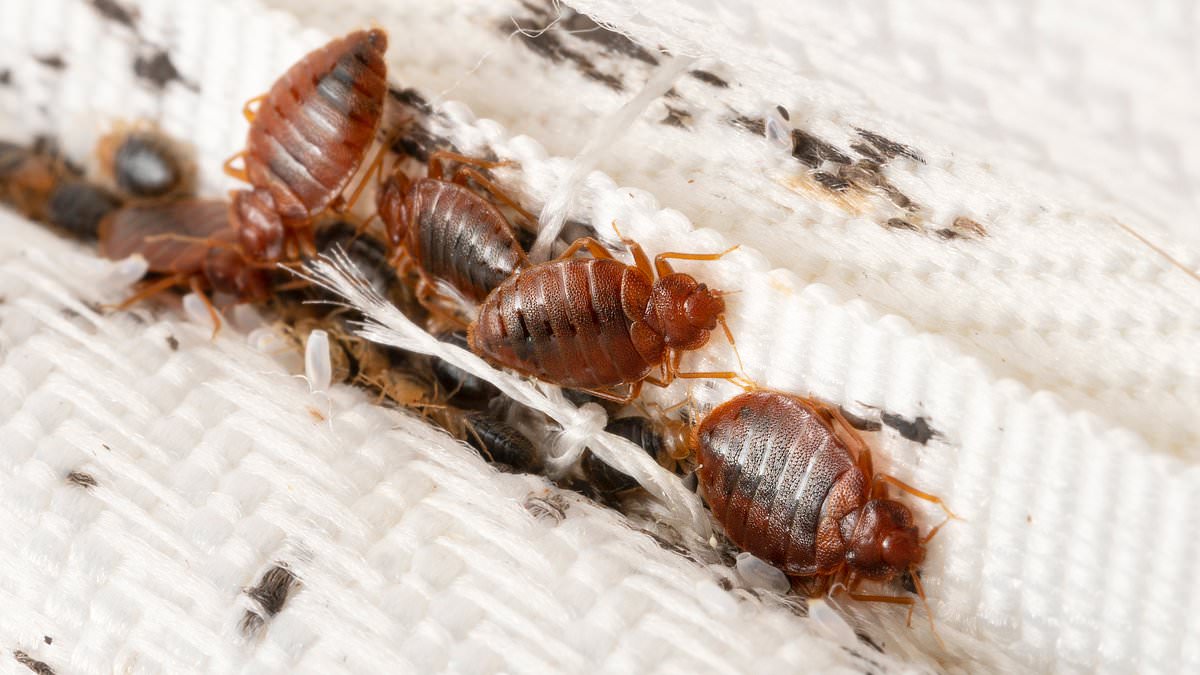
You’ve lugged your heavy case onto the train, found your reserved seat and slumped down, ready to relax for the rest of your journey.But what if the seat you’re settling into is hiding something far less welcome?Bed bugs have forced multiple Southeastern trains out of service after staff discovered the pesky insects crawling over bags and inside train drivers’ cabs.One driver was so spooked by the creepy crawlies that they allegedly refused to move the train across the depot unless ‘provided with a white full-body protection suit… in case any transfer to themselves’, according to The Telegraph.Two driver cabs were locked off to isolate the passenger areas and the train company said it hasn’t spread – but could the pests now be lurking elsewhere on the train?Martin Seeley, mattress expert and CEO at MattressNextDay, said: ’What passengers need to be aware of is just how easily bed bugs can spread without being noticed.‘The first sighting was reported on 22 September, so we’re already nearly two weeks on. In that time, one female bed bug could have laid more than 100 eggs, and because those eggs can hatch in around six to 10 days, some could already have hatched.’ Multiple Southeastern Railway trains were cancelled after bed bugs were discovered in the cabs of train driversHe describes the insects as 'brilliant hitchhikers' that can 'hide in the seams and folds of bags, coats and clothing, then travel somewhere completely new without the person carrying them ever realising'.'That's what makes them so difficult to contain,' Mr Seeley continues. 'You don't necessarily need to see a bed bug crawling around for it to spread. One hidden inside your belongings can be enough to carry the problem from one place to another.'The bed bug expert warns passengers to be wary when carrying belongings during their travels. 'So with these reports now coming to light, it's worth being much more conscious of where you put your belongings while travelling and what you do with them when you get home,' he said.Bed bugs are apple seed-sized critters, which are small enough to hitch a ride on luggage and clothing. If they do manage to make it into your home, they can then hide away in mattresses, bed frames, bedside furniture and even cracks in walls as thin as a credit card. They reproduce quickly, meaning infestations can quickly escalate. The creepy crawlies are most commonly found in hotels and a bed bug infestation swept across Paris in 2023, but more recent cases have cropped up across Europe.In 2025, callouts for bed bug infestations across the UK increased by 62 per cent and earlier this year 22-year-old Ellie Davina, from Bradford, found them on her bed during a one-night stay at the Premier Inn Manchester Airport hotel.Ms Davina recalled: 'I looked further and the more I looked, the more I found. As soon as I'd seen one, there was another and another and another.'I pulled the duvet back and they were absolutely everywhere - they were crawling out of the pillowcases. There were about four in the seam of this pillowcase, I'd had my head laid there.' At the time, the hotel chain said the room had since been treated and confirmed the case was isolated, with no evidence of bed bugs found in surrounding rooms.Premier Inn also said a full refund had now been processed and apologised to Ms Davina for the incident. Join the discussionWould YOU still sit down if bed bugs had been found on the train?What's your view? The pesky insects were contained and the train company said they haven't spreadBut how exactly do the little creatures make their way onto trains? Martim Gois, co-founder and CEO of Valpas, a bed bug safety certification company, told the Daily Mail: 'Bed bugs generally pass through trains in luggage. Longer journeys and sleepers give them more opportunity to emerge while passengers stay put.'He admits: 'Finding bed bugs far from a bed is worth taking seriously. It usually means there are enough of them to have spread beyond where they normally live: around beds.'On trains, they're usually passing through. When travelling, focus on where you sleep: choose a hotel certified bed bug-safe in real time, or check thoroughly on arrival.'Mr Gois explains how the insects like 'dark, undisturbed hiding places in luggage' and rarely travel on people.He recommends keeping bags zipped up and off the seats, as well as opting for hard-shell cases instead of fabric. Oly Turner, Head of Drivers for Southeastern, said at the time: 'We have a great relationship with our drivers, who have helped hugely in cooperating with us over these isolated incidents. 'When we receive reports such as these we check trains thoroughly before they are put back into service when given the all-clear. Cases have been contained to the drivers' cabs in only two of our trains and no bed bugs have been identified in areas for passengers. 'We continually carry out robust cleaning across our trains and stations, ensuring our customers and employees can travel safely and with confidence.'A spokesman added there were no bugs in any High Speed 1 services. Experts have since warned passengers to be 'more conscious' when they travel and have revealed how the creepy crawlies make their way onto trainsWhat to do if you find yourself on a 'Bed Bug Express'1. Check upholstered seats before you sit downMr Seeley explains how fabric provides 'more places to hide than a hard plastic or metal surface' and recommends having a quick look 'around the seams, piping, joins and any areas where the fabric is torn or lifting'.'Adult bed bugs are small, flat and reddish-brown, often compared to the size and shape of an apple pip. Younger bugs can be much smaller and paler, so they're much easier to miss,' he said.2. Zip up your bags and keep loose clothing off the seatItems such as bags, coats, scarves and jumpers have lots of spots for bed bugs to hide inside, according to the expert. 'They contain plenty of seams, folds and pockets where a bed bug could hide, so if you spread them across an upholstered seat, you're giving the insect another route onto something you'll later take home,' he adds. 3. Be careful where you store your belongingsMr Seeley said: 'Your seat isn't the only place your belongings come into contact with during a journey.'Bags may be placed on luggage racks, against other luggage or on the floor, so I'd keep everything properly closed and avoid leaving coats or scarves hanging loosely out of bags.'4. If you see signs that some might be around, move away and report itAs for passengers who might spot a bed bug or notice signs that they could be around, Mr Seeley said: 'I wouldn't sit there or start moving your belongings around the area.'He recommends: 'Move to another part of the train if you can and tell a member of staff straight away, giving them the carriage and seat location so it can be checked properly.'I'd also avoid trying to squash or brush it away with your hand or coat. That risks transferring it onto your clothing or belongings, which is exactly what you're trying to avoid.'If you can safely take a photo without getting close to it, that may also make it easier for staff to identify what you've seen.'
Bed bug expert issues warning to train passengers after pests force railway services out of action - here's how to avoid taking them home with you
Full Article
Original Source
Read the full article at Dailymail →KhanList aggregates and links to publicly available news content. We do not host full articles from third-party sources. Always verify important information with original sources.