
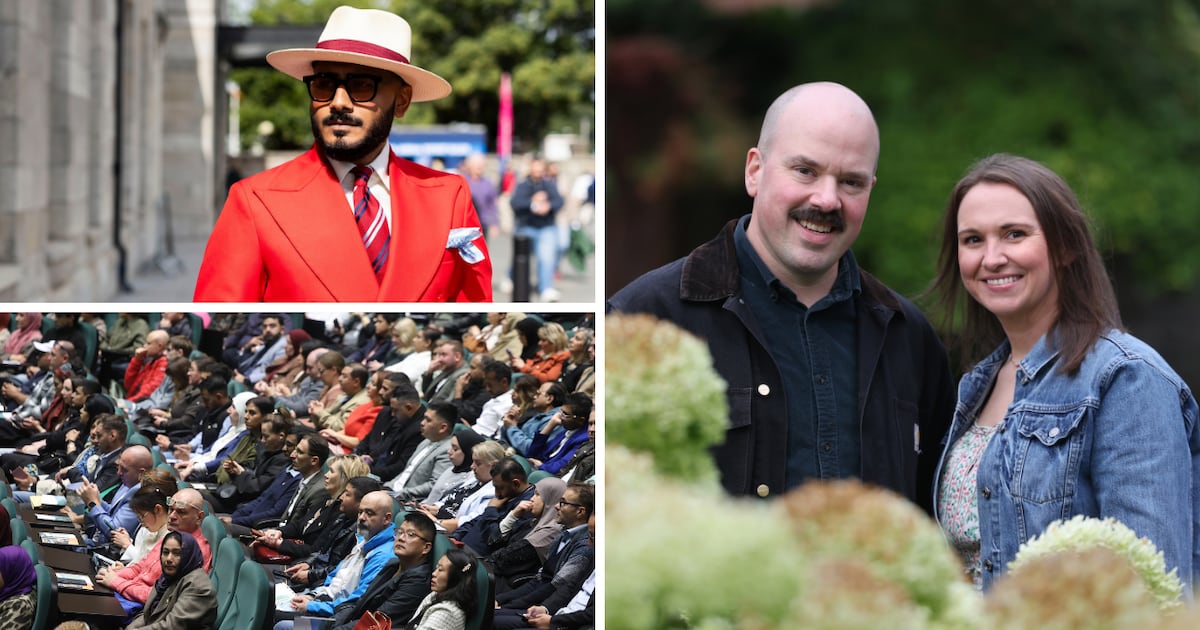
Nashville-born Rachel Roszman feels like she has “won the lottery” by becoming an Irish citizen. “We have kind of escaped the dumpster fire.”She and her husband Jay Roszman were among 5,600 people from more than 138 countries who received their Irish citizenship through naturalisation last week. “I feel a deeper connection to Ireland and a new confidence that this nation really is our home ... the depth of that feeling has taken me by surprise,” she says after the ceremony in the Convention Centre Dublin. “When my friends said ‘welcome to the tribe’, I realised I had been an outsider.” The joyous event was slightly overshadowed by Government plans to overhaul citizenship rules, including increasing the required period of residency from five years to eight, as well as new civics and financial requirements. READ MOREUnlike the record 18,900 US citizens who applied to become Irish in 2025 through the Foreign Birth Register, the Roszmans have no Irish parents or grandparents. Instead they have lived in Ireland since 2018. Rachel has come a long way from her reaction when her academic husband got his University College Cork (UCC) job offer in 2017. They were living in Pittsburgh, “life was good. We had owned a house. We had started a family”. Her career in sales was soaring as her husband completed his PhD. But she was fully behind moving “wherever he got a job”. She recalls nursing their newborn daughter at 4am, when Jay woke to the email of a job offer. “I just cried and cried ... I knew it was something we wouldn’t say no to.” [ ‘I might pack my bags’: How immigrants view Ireland’s new citizenship rulesOpens in new window ]But with Trump in the White House, the US was already transforming. And now, as she sees so much “being stripped away” Rachel feels “a sense of gratitude, relief and sometimes guilt ... of knowing what friends and family are going through.”Although Vermont-born Jay has no Irish roots, Ireland and its past drew him here and eventually to his role as lecturer in 19th-century Irish history. The journey began when he took an Irish history module during a semester in the UK; he later did a master’s at Queen’s University Belfast and an Irish history PhD in Pittsburgh. Jay and Rachel Roszman: Rachel feels Ireland has changed her, teaching her what she calls the 'it’ll be grand' mindset. Photograph: Dara Mac Dónaill/The Irish Times “It really solidified for me just how present and relevant the past is in the way people think about the world in which they’re living, in a way that American history didn’t really hit for me,” he says.[ Moving to Ireland? The financial realities Americans need to considerOpens in new window ]It was also history − in the form of the pandemic and Trump − that helped to crystallise the couple’s relationship with Ireland. During Covid they felt “safe and connected” in Ireland and were “watching what was happening in America ... we felt more and more settled here as time went on”, says RachelThis year they finally moved into a house of their own in Cork. “It felt like everything had come together,” she adds. Citizenship feels like “the natural next step to the life we’ve built here”.Although they are citizens, neither necessarily feels Irish. “I’m not of this place,” says Jay. “But citizenship takes the burden away of feeling anxious about where we call home, where we want to lay down roots, where we want to contribute.”Rachel feels Ireland has changed her, teaching her what she calls the “it’ll be grand mindset” and “what’s the point in stressing and rushing”. She adds: “It has made me a better person, more patient and more trusting.”[ ‘I’m an American, can I live in Ireland for six months of the year?’Opens in new window ]“Being in any place for a long period ... your whole way of approaching the world changes,” says Jay. New citizens are “not about changing Ireland, but about growing with Ireland and its culture”, he says. The Irish citizenship ceremony at the Convention Centre Dublin last week. Photograph: Leah Farrell/RollingNews.ie Last week’s ceremony means they can apply for citizenship for their daughter, who moved to Ireland three days after her first birthday. “She was born in the States, but all she knows culturally is Cork,” says Jay. The number of US citizens becoming naturalised is small, the largest cohort being Indian, who numbered more than 5,000 last year. Among those is Tariq Anwar who delighted in getting his Irish passport last month, having attended his citizenship ceremony in June.His path to Irish citizenship began after graduation 11 years ago with a quest for “peace” and “somewhere nice and quiet”, having spent the first 20 years of his life in the density of New Delhi. For Anwar, the transition to Ireland feeling “like home” has largely been down to the people he has met, and began on arrival in the country. He tells of the taxi driver who brought him from the airport to the bus station and refused to take payment. “I’m like, how is that possible? How is he not taking the money?”He recalls the professor he asked for directions on his first day at University of Galway (where he was doing a master’s in neuropharmacology). “He started jogging and said ‘follow me’, while asking all about me ... this was not something I’d ever experienced.” Then, in later years, the airport immigration officer saying ‘welcome home’ on seeing his permit, has strengthened his sense of belonging. “They don’t even say ‘welcome home’ when I land in New Delhi.”Tariq Anwar cuts a dash at the RDS on Ladies Day during the Dublin Horse Show. Photograph: Photograph: Alan Betson/The Irish Times After his master’s he moved to Dublin for work in pharmaceuticals and now has “more friends in Ireland than in India”. Coming to understand historical similarities between two former British colonies has been important for Anwar: “We would never have had an idea that a country so far away could have the same struggles and problems.”[ In pictures: Dublin Horse Show’s Best Dressed looksOpens in new window ] He, in turn, is leaving an impression on his adoptive country through his fashion: this summer he became the first male winner of The K Club’s Most Stylish Racegoer prize.He puts his interest in fashion down to his childhood, when, unlike his friends, he didn’t have fashionable clothes. So, once he began making money in Ireland, he bought himself nice clothes, he says. “When people see me being stylish, they think there’s just this outer part of me. But it represents my personality, my childhood, my adulthood. It’s a combination of everything that I’ve owned, struggled, and went through.”For Anwar, how Ireland has changed him doesn’t become fully apparent until he visits India and lets people on to the bus ahead of him, or chats to a waiter (much to the shock of the waiter and to his own dad, he says).[ Citizenship by descent is not racist, and language tests make perfect senseOpens in new window ]What is clear from Anwar and the Roszmans is how Irishness has become far more than about documentation, but a feeling of being part of something bigger. “A very big part of me was Irish way before getting the passport ... being Irish has come to mean, a feeling of belonging,” says Anwar. For Jay Roszman, congratulating the other new citizens who also had Irish pins on their clothes, “it felt a bit like being part of a club”.
Becoming an Irish citizen: ‘We have kind of escaped the dumpster fire’
Full Article
Original Source
Read the full article at Irishtimes →KhanList aggregates and links to publicly available news content. We do not host full articles from third-party sources. Always verify important information with original sources.