
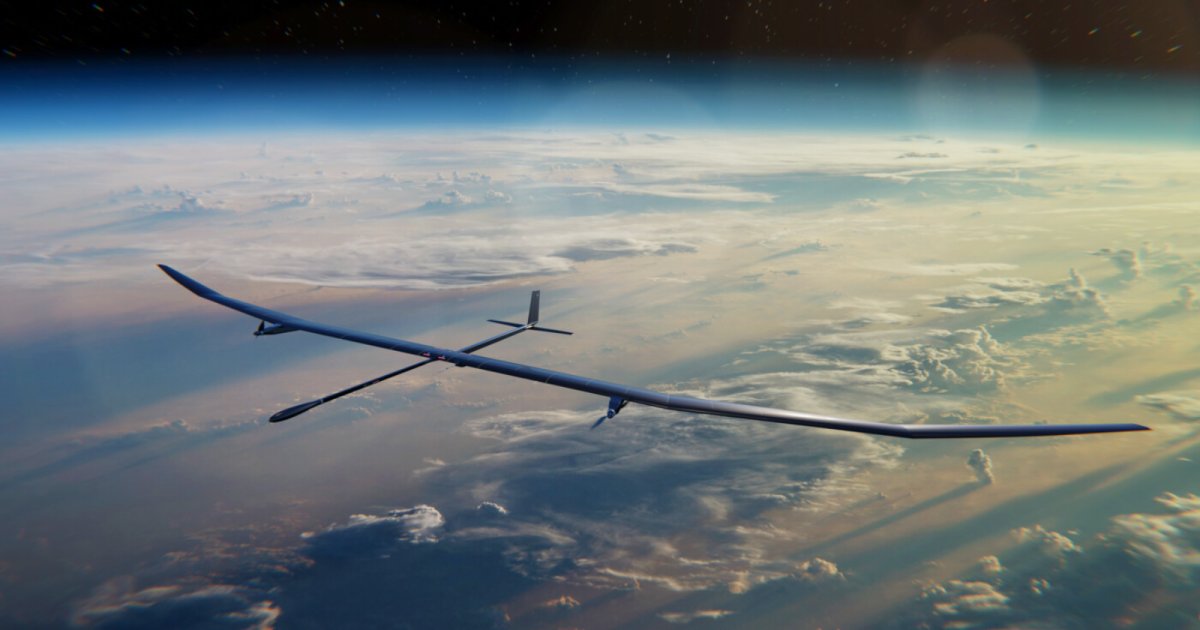
BAE Systems is giving its Persistent High Altitude Solar Aircraft (PHASA-35) solar-powered stratospheric drone an upgrade under a £15.7-million (US$21 million) contract to install a system allowing it to use energy beamed from the ground.The PHASA-35 is what is known as a High Altitude Pseudo Satellite (HAPS), which can operate at altitudes above 66,000 ft (20,117 m), where it cruises at 49 knots (56 mph, 90 km/h) using sunlight for power for up to a year.At least, that's the theoretical goal. As the featherweight PHASA-35 circles high in the sky on its 115-ft (35-m) carbon composite wings, it can act as a persistent communication link or monitoring platform. The problem is that, being solar powered, it has to rely on batteries to get it through the night.If you're down around the equator, that's not that much of a problem. But in latitudes like Northern Europe, there are times of the year when there is little or even no sunlight for long periods of time.Since no sunlight means eventual dead batteries and a long glide home, Britain's Advanced Research + Invention Agency (ARIA) is funding BAE Systems' Prismatic subsidiary to help develop over the next three and a half years a system that uses ground stations to beam microwaves to the PHASA-35, which will be collected by a receiver integrated into the aircraft's wings and converted back into electricity for its motors and batteries.According to BAE, the new system will not only allow PHASA-35 to patrol for up to a year, it could also free up structural weight by reducing the required battery load in favor of heavier communication and sensor payloads."PHASA-35 has already proven its worth in the stratosphere as a low-cost alternative to satellites and now this exciting project will explore whether we can make it even more capable," said Bob Davidson, CEO BAE Systems' Prismatic. "This is a strong example of British organizations working together to advance an emerging technology."Source: BAE Systems Tags David Szondy is a playwright, author and journalist based in Seattle, Washington. A retired field archaeologist and university lecturer, he has a background in the history of science, technology, and medicine with a particular emphasis on aerospace, military, and cybernetic subjects. In addition, he is the author of four award-winning plays, a novel, reviews, and a plethora of scholarly works ranging from industrial archaeology to law. David has worked as a feature writer for many international magazines and has been a feature writer for New Atlas since 2011.
Beamed energy from the ground to keep solar-powered drone airborne 24/7
Full Article
Original Source
Read the full article at Newatlas →KhanList aggregates and links to publicly available news content. We do not host full articles from third-party sources. Always verify important information with original sources.