
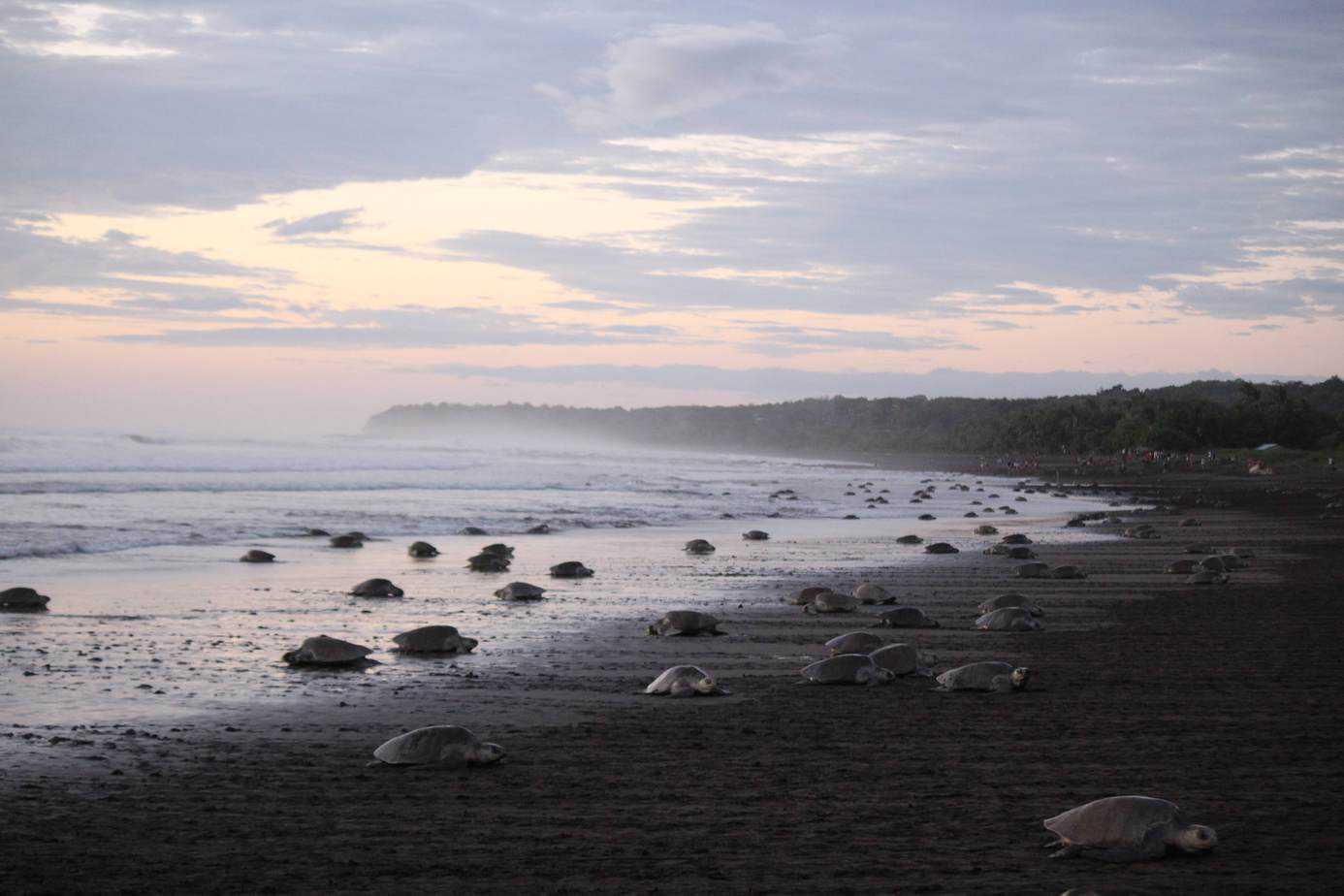
For a sea turtle hatchling, the crawl from the nest to the ocean is a race against crabs, birds and the clock. On parts of Costa Rica’s coast, something as ordinary as a porch light or a hotel sign can send that crawl in the wrong direction. Hatchlings find the sea by moving toward the brightest horizon, which on an undeveloped beach is the night sky over the water. Light from hotels, homes, streets and businesses can outshine it and pull the young turtles inland. Some end up on roads or private property and never reach the ocean. The problem starts before any eggs are laid. The U.S. National Oceanic and Atmospheric Administration (NOAA) has said artificial lighting on or near a beach can deter adult females from coming out of the ocean to nest. Daniel Arauz, a marine biologist with the Rescue Center for Endangered Marine Species (CREMA), has raised concerns about what coastal development is doing to nesting on Costa Rica’s Pacific beaches. Based on his observations in the field, Arauz said building along the shore has reduced nesting at beaches such as Tamarindo and Santa Teresa, where turtles once came ashore more often. His assessment rests on those field observations rather than a published long-term count of nests on either beach, and other factors could also be at play. Sea turtles generally return to nest in the region where they hatched, a behavior scientists call natal philopatry. Arauz said the turtles are not precise about the exact spot, and when they cannot nest where they were born, they simply look for another beach. Light is one reason a beach gets passed over. Arauz explained that a female who comes ashore on a brightly lit beach senses the light as a threat, turns back to the water and does not lay her eggs there. Heavy noise has a similar effect, he said. Research on Costa Rica’s Caribbean coast points the same way. A Duke University analysis of light levels on Tortuguero’s beach found fewer green turtles came ashore along the brightest stretches near the village, where most of the artificial light is concentrated. In March 2023, the Costa Rican Electricity Institute (ICE) installed 71 red-light lamps in Tortuguero to reduce the problem. A recent study of green turtle hatchlings there found that 15% crawled toward artificial light under white lamps, compared with 5% under red light. The effects may reach beyond the turtles. Each nest carries nutrients from the ocean onto the sand, and studies in Florida and South Africa have found that dune plants and ghost crabs take up nutrients from turtle eggs. Eggs and hatchlings also feed birds, crabs and other beach animals. Losing nesting beaches could upset that balance, although how much it would change Costa Rica’s coastal ecosystems has not been measured. Arauz recommends keeping building lights from pointing at the beach, shielding light sources and doing without large illuminated screens facing the sea, along with limiting noise and disturbance at night. U.S. wildlife agencies, including NOAA, give similar advice to beachfront owners: turn off, shield or redirect any light that can be seen from a nesting beach. Some Costa Rican communities have tried this before, with one beach town dimming its lights for nesting sea turtles two decades ago. Arauz also stressed the importance of responsible tourism that lets people watch turtles without interfering with their nesting. That balance has been tested at Ostional, home to Costa Rica’s mass nesting events known as arribadas, where crowds of visitors have kept turtles from nesting in the past. Nesting continues along both coasts for much of the year, from the olive ridley arribadas on the Pacific to the leatherbacks that return to Caribbean beaches each spring. As development spreads along Costa Rica’s coastline, protecting those beaches may come down to something simple. They need to stay dark enough for sea turtles to find their way.
Beachfront Lights Are Driving Sea Turtles Away From Costa Rica’s Nesting Beaches
Full Article
Original Source
Read the full article at Ticotimes →KhanList aggregates and links to publicly available news content. We do not host full articles from third-party sources. Always verify important information with original sources.