
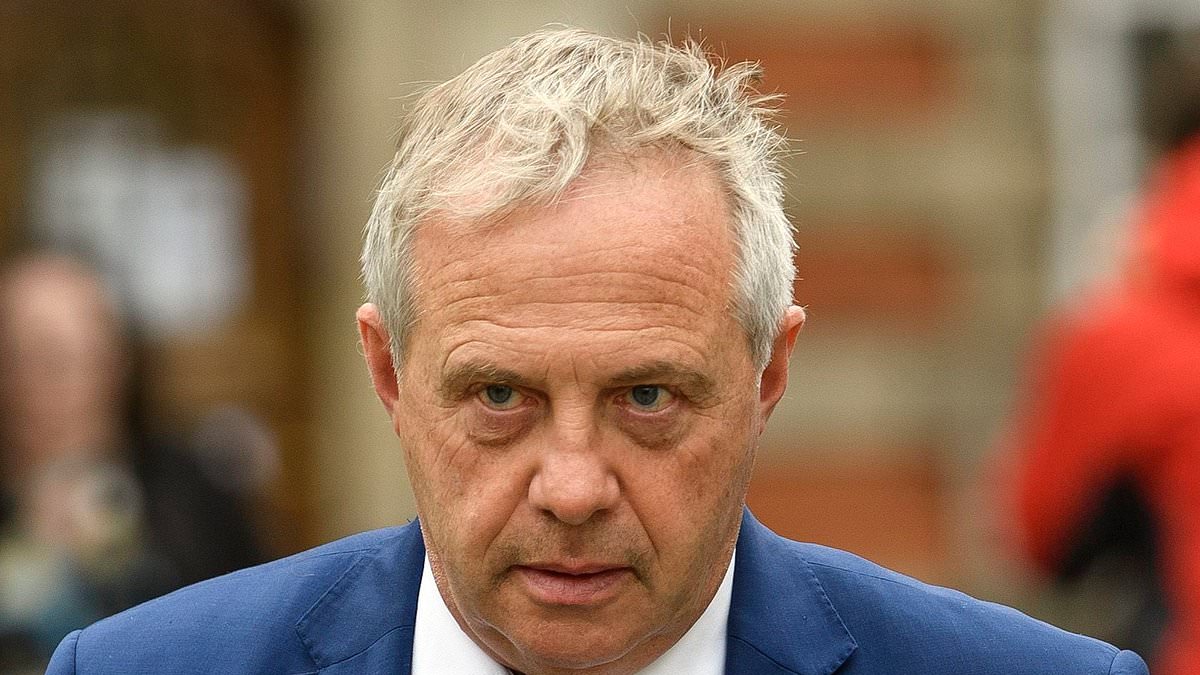
The BBC was today placed under investigation by the Government's anti-Semitism tsar over claims Jewish staff work in a 'hostile environment' and must prove to colleagues they are a 'good Jew' based on their views on Zionism and Gaza.Labour peer Lord Mann has stepped in amid allegations Jewish employees are being failed by the corporation and that some stories are even being censored.He fears some Jewish journalists have been driven out of the BBC because of their beliefs - and accused BBC bosses of having a 'patronised attitude' to complaints.Lord Mann also alleged some stories had been suppressed because the reporter was Jewish, at a time when the BBC has repeatedly faced accusations of bias in its coverage of the war in Gaza.Reform of the corporation is 'fundamental' to its survival, Lord Mann said, ahead of negotiations over the BBC's next Royal Charter and the continuing debate over the future of the licence fee.'This is institutional. People do not feel confident in raising it [anti-Semitism] within the BBC. I want to articulate the views of the Jewish voice within the BBC,' he said having spoken to Jewish whistleblowers himself.His intervention comes just days after it emerged a Jewish producer received £400,000 after being made redundant following a formal complaint about being subjected to anti-Semitism at the corporation.Lucie Kon, 57, revealed how her anorexia returned after she alleged BBC colleagues claimed Zionists like her were 'evil' in the wake of Hamas's October 7 attacks on Israel.She claimed she was instructed by her BBC co-workers to consider 'what drove Hamas to do what they did' when around 1,200 Jewish people were murdered and 251 others were taken hostage.Lucie Kon, 57, said she was mistreated by BBC colleagues who claimed Zionists like her were 'evil' in the wake of the October 7 Hamas terrorist attacks on Israel Ms Kon revealed how her anorexia returned amid the stress she endured at the BBC - and shared pictures of herself to show the impact. She received a £400,000 payout after she was made redundantLord Mann said it was 'commonplace' for Jewish BBC staff to be grilled about their views on international affairs because of their faith.'This is institutional. And the things that the BBC have done to try and sort things out have not worked,' he told The Times.'There are lots of incidents where people come forward with a good story and it's turned down. Comments are made to them such as, 'You're only doing this because you're Jewish'. It creates an unwelcome, even hostile, work environment.'I am not anti-BBC. That's not where I'm coming from. I'm coming at this saying this is vital. I'm looking at the lived experience of Jewish staff within the BBC and what that will be in the future. And that's fundamental to whether the BBC has a future.'Lord Mann is due to address the issue in a speech at a synagogue in Manchester on Thursday.'This problem can be sorted, but there is a problem to sort,' he will say. Former Labour MP and now peer John Mann will lead the Government investigationThe former MP will hand the findings of his investigation to Culture Secretary Lisa Nandy, who is leading negotiations over the BBC's next Royal Charter before the current agreement expires in late 2027.A BBC spokesperson said: 'We take any and all allegations of discrimination extremely seriously. There is no place for it at the BBC.'We have introduced compulsory training on anti-Semitism for all staff and actively encourage colleagues to report any incidents or concerns.'We are determined to ensure the BBC is a place where everyone feels accepted and able to be themselves.'Last year the BBC decided to review its entire Middle East coverage after admitting major reporting errors in its portrayal of Israel during the war in Gaza.The Corporation pledged to investigate wide-ranging claims of bias in a 13-page dossier published last December Allegations of bias were brought into sharp focus a month earlier after a memo written by independent adviser Michael Prescott was leaked.It claimed that the BBC appeared to have 'a desire always to believe the worst about Israel' and that BBC Arabic in particular seemed to 'minimise Israeli suffering and paint Israel as the aggressor'.In July last year the BBC's controversial Gaza documentary was found to have breached its own editorial guidelines by failing to disclose that the narrator was the son of a senior Hamas official.The programme, Gaza: How To Survive A Warzone, was removed from BBC iPlayer in February after it emerged that its 13-year-old narrator, Abdullah, is the son of Ayman Alyazouri, who has worked as Hamas's deputy minister of agriculture.The then BBC director general Tim Davie apologised for a 'significant failing' in relation to the documentary and pledged the corporation would take action to prevent it happening again. The documentary Gaza: How To Survive A Warzone was deleted after it was revealed that narrator Abdullah al-Yazouri (pictured) was the son of the deputy minister of agriculture in the Hamas-run government. It was found to have breached the BBC's own editorial guidelinesJewish producer Lucie Kon, whose family lives in Israel, has claimed she was instructed by colleagues to consider 'what drove Hamas to do what they did' and told that if she was prepared to label Hamas terrorists, she should 'call Israel terrorists, too'.She has also alleged colleagues said a documentary about the Nova music festival massacre should 'contextualise' the attack and described it as 'disgusting' that former prime minister Rishi Sunak had visited a Jewish school.The seasoned journalist, who has won both an Oscar and an Emmy, claims she was asked to stay at home for months before ultimately being forced out after lodging a formal complaint.She has since spoken of the devastating impact the ordeal had on her mental health after learning she would lose her coveted role at the BBC, including the return of an eating disorder she had not experienced since her youth.On Saturday night, Ms Kon posted two photographs of herself on social media taken three years apart.One, taken last weekend, showed her looking healthy and smiling. The other showed her appearing gaunt and frail.The earlier photograph was taken at BAFTA while she was taking part in a discussion about Mr Nobody Against Putin, a film she commissioned and executive-produced for BBC Storyville that later won an Oscar.'What the audience couldn't see was that I'd just been told I was being made redundant, I weighed almost nothing, and the next morning I was being admitted to an eating disorders unit,' revealed Ms Kon, writing on Substack. She said that she felt a sense of 'shame' in having lost her job.Ms Kon added: 'I'd complained about what seemed to me a clear-cut case of anti-Semitism, and a breach of the BBC's own guidelines and code of conduct. I'd asked for help. And I'd been dismissed.'Expressing again that she had felt ashamed, Ms Kon said the situation had 'left me feeling so silenced, and so alone, that it made me ill.'She said anorexia was more commonly found in teenage girls, not women with a 30-year journalism career behind them, which added to her sense of 'shame'.The BBC's deputy director general Rhodri Talfan Davies has met representatives from the corporation's Jewish staff network after Ms Kon's experience - to reassure them that they are respected and will not face discrimination.But he later told a Broadcasting Press Guild event: 'I don't think an independent inquiry is necessary.'We have very, very robust processes, and we review them regularly. Of course, in any large organisation there can be instances of discrimination, and we deal with those when they arise.'But there is no evidence of any systemic issue at the BBC.'
BBC to be investigated by anti-Semitism adviser over claims it has created 'hostile work environment' for Jews and censored stories
Full Article
Original Source
Read the full article at Dailymail →KhanList aggregates and links to publicly available news content. We do not host full articles from third-party sources. Always verify important information with original sources.