
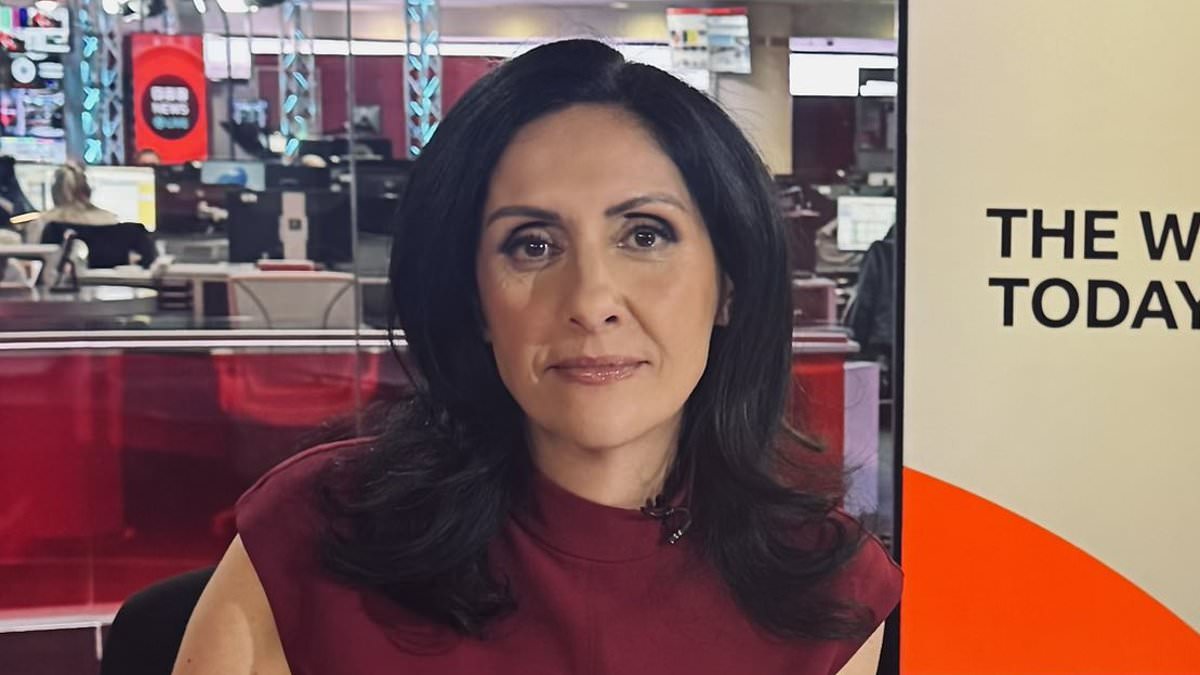
BBC news anchor Maryam Moshiri has said she is determined to 'get on with it' despite feeling exhausted at times by her ongoing battle with a rare incurable blood cancer. Ms Moshiri - who joined the Corporation in 2003 and is one of its best-known anchors - was diagnosed with polycythaemia vera (PV) in November 2024, a rare cancer that causes bone marrow to continuously create red blood cells which makes the blood become thick like honey. The cancer cannot be cured and can cause blood clots, heart attacks and strokes if untreated, but is typically managed like a chronic condition rather than a rapidly progressive illness. Speaking to Susanna Reid and Ed Balls on Good Morning Britain today after revealing the diagnosis on Sunday, the news anchor described having 'bad times' during the battle, when it felt as though her 'battery had been taken out'. The mother-of-three said she takes it day by day, admitting: 'You feel really not very well, very tired, like someone's taken your battery out. 'And at that point, I think you hunker down and you just think to yourself, "This day will be over soon, and I'll feel better again."' Around 15,000 people in the UK are living with polycythaemia vera. Ms Moshiri, 49, previously said she was 'very lucky' to have been diagnosed early on by her GP during a routine menopause blood test two years ago. BBC's Maryam Moshiri revealed her diagnosis on Sunday, saying she was 'very lucky' the condition was caught early The news anchor said some days she feels her 'battery has been taken out', but she is determined to 'get on with it' Since then, she has been undergoing immunotherapy for the chronic illness, a treatment which she described as 'gruelling', with side effects including insomnia, headaches and intense itching. But on Wednesday she said that her tough shift patterns as a journalist had helped instill her with a sense of 'just get on with it' and that she hoped to show people that 'you can carry on with your life'. She said: 'I was doing BBC Breakfast in the morning and the 10 o'clock news in the evening. 'I think as journalists, we work hard, we do shifts, we wake up early, we do nights, and I think there's that sense that's been instilled in me over the last 25 years as a broadcaster to just get on with it. 'I just felt to myself - this is my job, I love it. I've wanted to do broadcast news since I was a child. It was my dream job to be a TV news presenter. I now have that job, so if someone calls me and says: "We want to send you to Doha tomorrow, can you do it?" I'm not going to say no.'I'm going to say yes and I'm going to work it out when I get there. And that's how I kind of lived.' She continued: 'In my mind [the diagnosis] could change your perspective in two totally different ways. On the one hand, it could make you cautious, risk-averse, careful, saying no and planning for the long term. 'Or it could make you think, you know, get on with it, do it, have a go, why wouldn't I? Because you never know which it's going to be.' In the time following her cancer diagnosis, Ms Moshiri continued to work and last April she was flown to Rome to cover Pope Francis's death and ensuing conclaveThe presenter was frank about the 'horrible' symptoms she endured while undergoing treatment for the cancer, saying: 'I had headaches, I had itching so bad that I was bleeding into my clothes, bleeding through to my clothes at work.' But she added: 'But you can get through it. You know, you can carry on with your life. And there is hope for people.' On Monday, Ms Moshiri spoke about the diagnosis process and the early symptoms she had 'put down to perimenopause'. She told BBC colleague Lucy Hockings: 'I was having routine blood tests and my GP... noticed that my red blood cells, my HCT, as it's known, was very high.'From then, she said, she was referred to a haematology and oncology department at a hospital in London.'It was there,' Ms Moshiri continued: 'They diagnosed polycythaemia vera. It's a very rare form of blood cancer.'I was very lucky that my GP caught it early, because to be honest with you, I didn't have that many symptoms.'Yes, I was tired, I had headaches, but I put that down to perimenopause - I was a 46-year-old woman at the time. Who knows what you're suffering, you're busy, you have kids, you have a family.'In the time following her cancer diagnosis, Ms Moshiri continued to work - despite having more than a pint of blood drawn from her body every month to dilute the red blood cell concentration, which left her feeling sick and exhausted. In April 2025, she was flown to Rome to cover Pope Francis's death and ensuing conclave. 'I was working 14-hour days, constantly on air, constantly having to think on my feet, and holding it together, despite the fact that I had this chronic tiredness and fatigue,' she told The Times. But she clarified she does not want her diagnosis to get in the way of her work, adding that 'a big part of this disease is having to get on with life'. On her return to London, Ms Moshiri began an immunotherapy treatment at Guy's and St Thomas' NHS trust called interferon, which reduced the amount of blood that needed to be drawn. Aspirin is typically also given to patients to reduce the risk of clots. However, she said she suffered debilitating side effects, like insomnia, headaches and such intense itching she would draw blood from her scratching. She said: 'During my worst times when I was going through really quite gruelling treatment, I wasn't there for my kids. I'd be lying on the sofa, and my son would say, "mummy, can you come play football with me in the garden?" And you just can't. You're too tired.' Some months later, Ms Moshiri said she switched to a different drug which had more manageable side effects, but admitted to having to adjust to a different lifestyle that will be occupied by hospital appointments and medication. She is now supporting a new campaign Here for This, by Blood Cancer UK, which highlights the moments sufferers can miss due to the condition. READ MORE: 'I have chronic cancer but I'm not going to die': BBC news presenter Maryam Moshiri admits she was 'lucky' her GP caught incurable cancer early during routine blood tests
BBC presenter Maryam Moshiri determined to 'get on with it' despite feeling like her 'battery has been taken out' amid battle with incurable blood cancer
Full Article
Original Source
Read the full article at Dailymail →KhanList aggregates and links to publicly available news content. We do not host full articles from third-party sources. Always verify important information with original sources.