
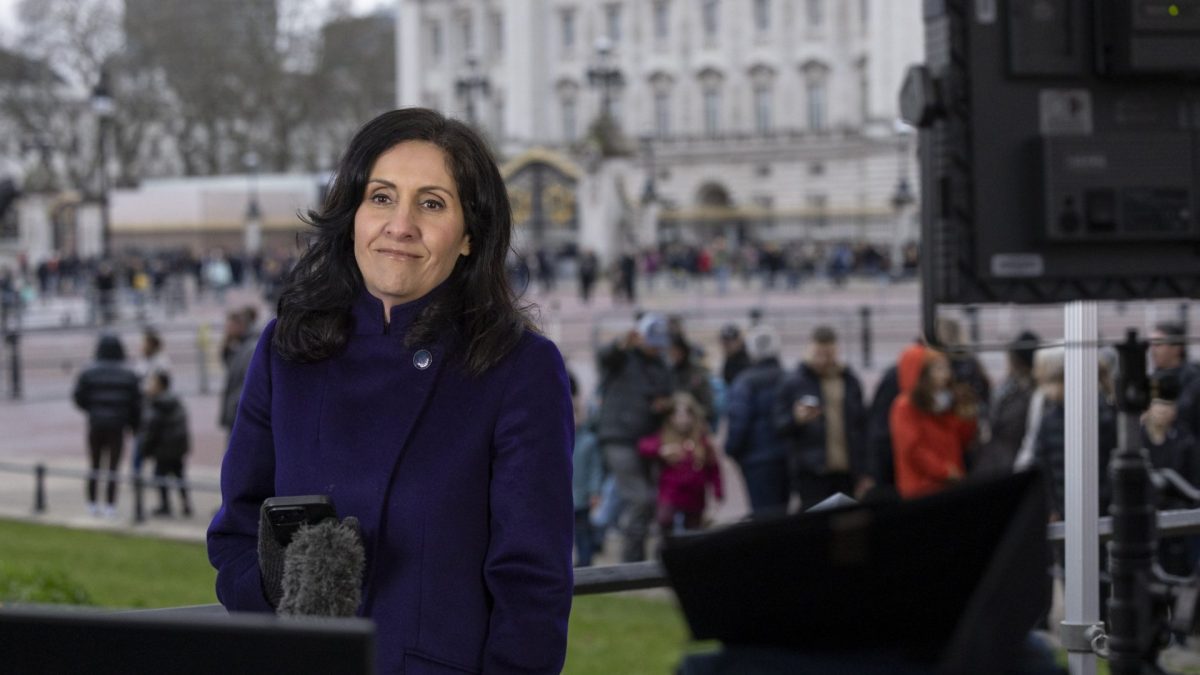
In our How I Manage My Money series, we aim to find out how people are spending, saving and investing to meet their costs and achieve their goals. This week, in our celebrity edition, BBC News chief presenter Maryam Moshiri, 50, tells us about growing up in a family that rented out rooms to lodgers to make ends meet, earning £20 a day as a teenage hairdresser’s assistant and why she spends money on giving her children things she never had. What was money like in your household growing up? My parents were quite open about finances because we didn’t have a lot of money. I came to this country as a first-generation immigrant. I moved here when I was a baby with my older sister and my parents, in 1978. My dad had a house in the capital with some rooms upstairs, and he would rent them out to lodgers to make money. My mum worked as a domestic worker in a local hospital in south-west London. I didn’t see the inside of a restaurant until I was about 16. My dad was very tight with money, understandably, I guess. My mum tried to give us the best she could. But I learned a lot in those early years that being happy and being content is not necessarily about how much money you have, it’s about the memories you make. My parents also understood the importance of education. All three of us got full bursaries to go to private school. My mum never said to me, “Marry a rich man. Marry someone with money.” It was always, “You three girls are going to go to university, get a degree, work, and have the career that I never had”.What was your first job, and how much did you earn? It was cash in hand, but I got paid £20 a day to be a Saturday girl at a local hairdressers. I would wash hair, sweep up hair, wash towels and generally just clean the sink areas. I was 14 and didn’t last very long. I wasn’t very good. Did working in financial journalism change the way you manage your own money? It has and it does because you become much more hyper-aware of how money can be managed and how circumstances can change. When you’re younger, you have this view that money is not really a priority, just kick the can down the road, don’t worry about it. But actually, as you get older, but also if you work in the world of financial journalism, you learn pretty quickly that saving and thinking about the future is really important. Are you a saver or a spender? I’m definitely a spender, but I have, over the last 20 or so years, changed the way that I view money. I prioritise it in a different way. I think you need to be prepared for the worst. I’ve learned that now it’s a good thing to be prepared for the worst and to have some savings put aside. What’s your biggest money weakness? My three kids. I spend a lot of money on them. When I was in my twenties, I would hang out with my colleagues at work who had children, and they’d buy things for their kids, and I’d be like, “Why are you spending so much money on your children? It’s so strange.” Maryam Moshiri is a mum of three and spends a lot of money on her children Then I had kids, and realised, all I really want now is just to focus on them, and to make them happy. Maybe in a way, I’m reliving my life through them. I want to make sure they have the things I never had. I feel maybe I try and overcompensate with my children. For my daughter’s birthday, I bought her a pair of Adidas trainers, a Shark hair dryer and a bubble face set. Do you feel pressure to spend money on your appearance because of your job? I spend a lot of money on clothing for work. We don’t get a budget; we don’t get a penny. We don’t get any discounts; we don’t get any money at all. Nothing. I rely a lot on pre-loved websites. I’ll try and spend money on tops rather than dresses, because tops are cheaper, and you can swap them over with bottoms, with the same pair of black trousers. It’s hard, because I’m on air every single week, four times a week, and I have to basically find new outfits. I don’t want people to be watching me and seeing the same outfit. What’s the best thing you’ve ever spent money on? One of the best, most useful things I ever bought is a cordless vacuum cleaner for my kitchen. It’s amazing. I love it. Another thing that changed my life is my mixer. Before I had it and my new oven, we had a really terrible, early noughties oven, which just cooked the food too hot one side and too cold the other side. The chocolate cake the BBC star makes that her children love I have now become actually quite a good baker. I make a chocolate cake that my kids say is the best chocolate cake ever. Do you have a pension, and what are your plans for retirement? The one I’m on is one from quite a few years ago, and I think it’s okay. There are various pension schemes that have changed over the years, but I’m on one of the older ones, which I think is pretty good. My plan for retirement is, with the way things are going now, to work for longer than I thought I would. I love broadcasting so much. I feel like I have so many more years to give that I would probably quite enjoy keeping working in broadcasting or in journalism in some way, shape or form. I am a strong believer in keeping busy. What’s the best piece of financial advice you’ve ever received? Someone once said to me, “Always try and have enough savings in your account to get you through three months of bills”, so mortgage and absolute essential outgoings. Because you never know what’s going to happen. Life can be quite unpredictable. And when I was very young, my granddad used to always say to me, the most important thing for you to learn is the value of money. It’s not what money can do for you, but the value of the pound in your pocket, and what that means.
BBC newsreader: I wear pre-loved clothes for my work wardrobe – we don’t get a penny
Full Article
Original Source
Read the full article at Inews →KhanList aggregates and links to publicly available news content. We do not host full articles from third-party sources. Always verify important information with original sources.