
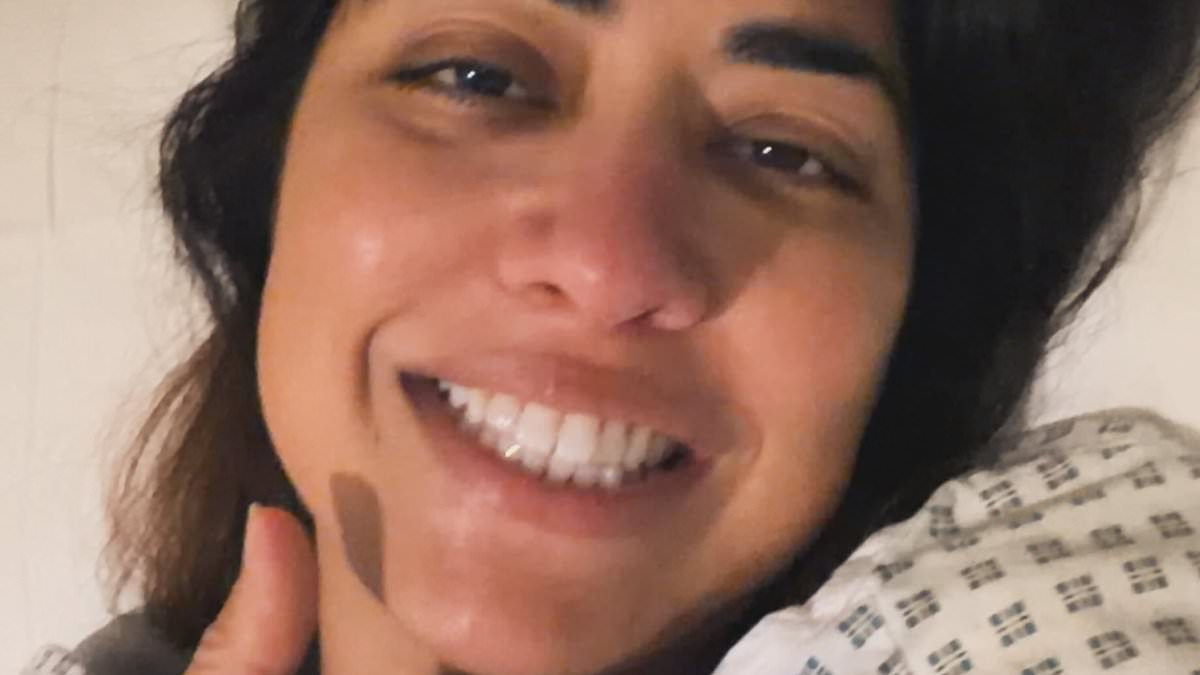
BBC 6 Music presenter Rhianna Dhillon has revealed she has been diagnosed with ovarian cancer at the age of 37. Rhianna – who has the BRCA1 genetic mutation – shared she received the news two weeks ago, has undergone a full hysterectomy and will start chemotherapy. In an emotional post, the TV and radio critic admitted she thought she 'had more time' as, according to the National Health Service (NHS), it 'mostly affects women over the age of 50'.Rhianna had already had a preventative double mastectomy three years ago after testing positive for the BRCA1 gene in 2014. Having a harmful mutation in the BRCA1 gene means your cells have a harder time repairing damaged DNA, which significantly raises your lifetime risk of developing certain types of cancer.Rhianna shared a picture of herself on Instagram smiling with her thumbs up as she lay down in a hospital gown, with the caption: 'Here we go again! BBC 6 Music presenter Rhianna Dhillon has revealed she has been diagnosed with ovarian cancer at the age of 37 Rhianna shared she received the news two weeks ago, has undergone a full hysterectomy and will start chemotherapy (pictured just before her diagnosis last month) Rhianna shared a picture of herself on Instagram smiling with her thumbs up as she lay down in a hospital gown, with the caption: 'Here we go again!''Even knowing I was at a much higher risk of getting ovarian cancer because of my BRCA1 genetic mutation, I wasn't expecting to get it QUITE so young. I thought I had more time.'I keep thinking of Blondie - despite me taking preventative measures with a double mastectomy, one way or another… this was always gonna get me.'I got my diagnosis two weeks ago and my surgery was on Friday so haven't quite been able to process everything yet - I had a full hysterectomy, so an absolute full stop on one part of my life I definitely wasn't ready to say goodbye to and the start of a stage of life that I really didn't want to have to think about for another 15 years. (sic)'She continued: 'The next 6 months are also looking very chemo-y so my film awards season is going to look slightly different… (I'm still going to work so please don't write me off just yet)!'I'm not quite ready yet for platitudes about silver linings and finding the positives in all this (hopefully that will come), but I will take all wig recommendations very seriously. (sic)'Rhianna went on to thank her 'incredible support network' for being by her side these past two weeks.She said: 'My mum, dad and brother who have stepped into action so quickly and have been there for every appointment, overnight stay, hysterical phone call - I love you and I'm so thankful for you and to all my family who have immediately been in touch to offer help and support, thank you.'My dearest, best friends. The love you have shown me. The messages, the consistent showing up, the voice notes, the tokens of love, you have no idea how much you have kept me together, even when I've felt so utterly broken.What is the BRCA gene and how does it affect people's risk of cancer?Having a mutated BRCA gene - as famously carried by Angelina Jolie - dramatically increases the chance a woman will develop breast cancer in her lifetime, from 12 per cent to 90 per cent. Between one in 800 and one in 1,000 women carry a BRCA gene mutation, which increases the chances of breast and ovarian cancer. Both BRCA1 and BRCA2 are genes that produce proteins to suppress tumours. When these are mutated, DNA damage can be caused and cells are more likely to become cancerous. The mutations are usually inherited and increase the risk of ovarian cancer and breast cancer significantly. When a child has a parent who carries a mutation in one of these genes they have a 50 percent chance of inheriting the mutations. About 1.3 per cent of women in the general population will develop ovarian cancer, this increase to 44 percent of women who inherit a harmful BRCA1 mutation. Rhianna was inundated with love and well wishes in the post's comments section'I don't think I've ever really understood how much community meant until I had to rely on mine. You have all my gratitude and I love you so f****** much. (sic)'Rhianna ended her lengthy post: 'For those asking what they can do to help, just support, company and the constant reassurance that people will still think I'm fit, even with a massive Frankenstein scar down my stomach.'Ps being hopped up on morphine, as I was in this photo was quite fun, although slightly embarrassed that I greeted my lovely surgeon post op with 'IT'S MY MAIN MAN MIKE!!' (sic)'Rhianna was inundated with love and well wishes in the post's comments section.Her Radio 6 Music colleague Lauren Laverne, 48, penned: 'Oh sweetheart I'm so sorry. This is absolutely f****** outrageous bulls***.'Sending you all the love in the world. Xxxxx (sic).'Greatest Hits Radio presenter Zoe Ball, 55, typed: 'Oh darling girl. Heart goes out to you. Sending all the love and strength. and more love (sic).'And I'm A Celebrity…Get Me Out Of Here! 2019 star Adele Roberts, 47, wrote: 'Sending you lots of love beautiful one xxxx (sic).'WHAT IS OVARIAN CANCER AND WHAT ARE ITS SYMPTOMS?Ovarian cancer is a cancer of the ovaries, which are part of the female reproductive system that contain their eggs. There are two ovaries and both are attached to the womb. Cancer on the ovaries can spread to the nearby bowel and bladder.It is the eighth most common cancer among women, and is most common in women who have had the menopause but it can affect women of any age. About 66 per cent of ovarian cancer cases are diagnosed in the more advanced stages of the disease.At the time of diagnosis, 60 per cent of ovarian cancers will have already spread to other parts of the body, bringing the five-year survival rate down to 30 per cent from 90 per cent in the earliest stage.It’s diagnosed so late because its location in the pelvis means the symptoms can be vague and difficult to recognize, particularly early on.They're often the same as symptoms of less serious conditions, such as irritable bowel syndrome (IBS) or pre-menstrual syndrome (PMS).The most common symptoms of ovarian cancer are:Feeling constantly bloated A swollen tummyDiscomfort in your tummy or pelvic area Feeling full quickly when eating, or loss of appetite Needing to pee more often or more urgently than normalSee your doctor if:You've been feeling bloated most days for the last three weeks You have other symptoms of ovarian cancer that won't go away – especially if you're over 50 or have a family history of ovarian or breast cancer, as you may be at a higher risk
BBC 6 Music's Rhianna Dhillon, 37, reveals ovarian cancer diagnosis as she undergoes a full hysterectomy ahead of six-month chemo battle and says 'I thought I had more time'
Full Article
Original Source
Read the full article at Dailymail →KhanList aggregates and links to publicly available news content. We do not host full articles from third-party sources. Always verify important information with original sources.