
Have you read George Orwell’s review of Mein Kampf? This might not sound like a grabby reference, or a killer hook for the algorithm. But Hitler is always hot. Hitler is legacy brand. Hitler is eyeballs. Also, it’s just a great review, even more so because it was written at a time when the world didn’t quite know what Hitler was “all about”.True, you get a vibe off people. The invasion of France. The ranting, visceral hatred. There were signs, clues, indications that this guy, this guy is not my kind of guy.But the full Hitler-verse had yet to reveal itself. And for a while you worry Orwell’s going to get it wrong, not go hard enough, misread the full history as we now know it. He writes about how much he likes Hitler’s face because he looks pained and sad, like a wounded dog, giving off that sense of eternal injustice the German people really went for.By this point you’re trying to catch his eye, coughing loudly, saying “Holocaust” into your fist. No, George. Don’t start talking about charisma.Luckily, it all turns out fine. Orwell says that he would definitely kill Hitler if he got within arm’s reach of him. Then he describes, better than anyone before or since, the terrifying nature of the world Mein Kampf is proposing, above all its utter boredom, the eternal grey repetitions, same struggle, same triumph, same boot stamping on same face, same pitch of willed and empty hysteria.And yeah … you’re thinking about T20 franchise cricket, aren’t you? I didn’t say it. You did. It’s fine. The mind goes where the mind goes.You’re picturing a year-round cycle of brain-flooding noise. An endless will to power. The Kansas City CheeseSteaks v the Reykjavik Unmentionables live from the Jakarta T5 Megascream, injected straight into your eyeballs by a robot replicant Danny Morrison.It’s fine that you want to make this connection. It’s even deeply fitting given the greatest story of the sporting week by an absolute mile, a story so big, so sweeping, so viscerally personal, that most people seem to have completely ignored it, comes from the polar opposite place.This is of course Temba Bavuma’s match-winning nine-hour hundred in the second Test against Australia in Gqeberha, one of those episodes where sport and the life of the nation seem to cross, blend and become indistinguishable.Mainly Bavuma in Gqeberha was an incredible feat of skill, resilience and constant adaptive intelligence, in the way only Test Cricket can deliver. Bavuma walked out to bat with the summer running away from him. Thrashed in the first Test, South Africa were 12 for two, faced with one of the great bowling attacks.Bavuma has been a transformative Test captain, with 12 wins in 14 matches, four hundreds, a world championship mace, all stretched over three broken years. But he is still always, always chasing legitimacy and affirmation, in a way that is unique to cricket, but also unique to this man in this role in this sporting nation. First black middle order batsman. First black captain. How is this going to fall? How strong is that ice underfoot?Temba Bavuma’s brilliant, resiliant 179 took 334 balls, and set the stage for a memorable South Africa victory in the second Test. Photograph: Themba Hadebe/APTwo days later Bavuma was last man out for 179 in a total of 425 for nine, sprinting off with a kind of light around him, waving his bat giddily, 36 years old, wife and kid in the crowd, the greatest moment of his sporting life.There were so many parts to this. First, the survival period, with that endearing tic of gently jutting his chin out at the bowler, mixed in with the odd deliciously clean whip or push or clump. Bavuma has really quick hands. I remember seeing him in east London in a white-ball game against dark skies and low stands, and all you could really see was his hands whizzing with thrilling speed, like fireflies in the night.In Gqeberha he was all poise and measured severity. When he plays a cover drive he seems to lean at 45 degrees, knees bent, entire body easing into the oblique, perfectly contained in his own little square of time and space.The game changed with the partnership of 106 with Marco Jansen before lunch on the third day, brilliant counterattacking Test cricket, but also an amazing tableau. At one end the gangling Dutch farmer with the easy, guileless stride, a cricketer who always seems to be running in with a bushel of radishes over one shoulder and a bolt-action rabbit gun in his waistband. At the other the tiny, super-smart black captain. It’s no more than an optic, unrelated to the nation’s real-world struggles. But it’s also real. Sport is, as ever, saying: how about this version of things?Bavuma got to his hundred with a release of pent-up power, swivel-pulling Pat Cummins through midwicket, holding the shot, one of those moments where the batter feels what has happened a second before anyone else, allowed in that microsecond to exist all alone inside his own little pocket of private triumph.But then Bavuma has always had to be aware, to hold himself a certain way. There was surprise in some corners that he turned out to be such an unflappable captain. Try being Temba Bavuma for a bit. You think this stuff is going to faze you?Bavuma is a child of the transition period, born three months after Nelson Mandela left Victor Verster Prison, the same day (get this) the government finally opened up all its public hospitals to black citizens. He grew up a township boy in Langa, playing in the street, learning which strips of local tarmac had the most carry and bounce.Plucked out aged 10 on a scholarship to one of South Africa’s top schools, he struggled. Ten is relatively late to start trying to become an elite batter. How about still perfecting your English, learning how to act, what to put on your plate at dinner? Even his height, which we must always talk about, is a thing. Bavuma is the 10th shortest man ever to play Test cricket. Yeah, pour it on. What else have you got?There was the slow-burn start to his career. For years the quota talk circled, the weird dual burden of innate outsiderdom and suspicions of favour. Then suddenly you’re the first township captain of what has always been an anglophone, military-elite kind of sport.skip past newsletter promotionafter newsletter promotionIt sounds overwhelming. Right up until you hear him speak, at which point you just want him to talk about all the stuff in that soft voice, gentle but deliciously insistent. It’s no surprise to learn Bavuma has a normal life away from this, that his wife is founder of a luxury real estate firm, he takes his kid to school, doesn’t do celebrity, that he’s never really made a point of making a point, but made it all the same by being relentlessly himself.Why talk about this here? Why bring endless grey, smothering repetition into it? First because even without the Bavuma story this was just an epic piece of sport, one of those occasions where every detail feels meaningful.Steve Smith getting actual whiplash, literally wearing a foam neck-brace after whirling around to see if an edge had carried. Marnus Labuschagne whirling at the crease, acting out his own thoughts in the air like a tortured pantomime horse, while his career self-suffocates in real time. Here is Anrich Nortje, the perfect composite of shoulders, glower and vengeful moustache, looking on like the hand of fate from a deserted balcony, groin-knacked but somehow still profoundly present.Temba Bavuma (centre) is embraced as his team enjoy victory in the second Test. The series decider begins in Cape Town on Tuesday. Photograph: Themba Hadebe/APThe whole thing heads on to Newlands on Tuesday and the sandpaper reunion game, an impossibly fine piece of narrative work, slow-cooked over eight years, the kind of storytelling the human brain just thirsts for.Although now it is also time to zoom out and feel the whiplash. On the fifth day of the first Test in Durban, as Australia wrapped up their own victory the TV commentator talked about the fine sporting spirit of the contest and how “it’s credit to the people of South Africa”, at which point the camera panned back with perfect comic timing to show: a completely empty stadium.So, back to Orwell and being on the right side of history. Because a great thing, a carefully woven cultural exhibit, is being overtly encouraged to die here. South Africa hadn’t played a Test before this series for 11 months. They played eight last year, two a second-string trip to Zimbabwe.The hard game, the actual game that still produces the short-form TV offshoot, is being sacrificed mercilessly. And the thing that is replacing it is not just demonstrably inferior, but self-dooming in its basic inanity.In the intervals of the Test, South African TV showed a mouthwatering banter-table chat-along featuring all of South Africa’s craggy modern greats, Polly, Makhaya, AB, the Steyn Gun, sat around just telling stories, doing everything but hug each other, conjuring up moments of beauty, gold, legend.This will not be allowed to happen in the future. T20 cricket can’t produce these stories. It’s throwaway content, parasocial celebrity fawning. What are we going to have 20 years from now? Luan-dre Pretorius telling bardically embroidered tales about the time he slash-hoicked 37 off 12 balls in the now defunct North American Mega-Lurch?There is still a fear of saying this out loud, of making the unarguable observation that a form of sporting hyper-capitalism is dictating that nothing can matter if it’s not monetisable right here and now. Half-understood arguments about demand and supply will justify an act of cultural vandalism. Well, yeah, but look at the way this entity in a state of managed decline appears, believe it or not, to be in a state of managed decline.The reality is something beautiful is being extinguished. It feels like the sporting arm of a process that has been called the enshittification of modern life, where the bottom line is the only line, where everything must be reduced to stupidity and profitable chaff.Orwell was also good on the “machine worship” of the early 20th century. He was, in the best way, a luddite. Inefficient, human-scale elements have a right to exist too. The mechanised loom made a few things better. But mainly it made a few people quite a lot richer.We can resist this, and not just in the realm of trash sport, but trash life generally. Humans still know what’s good. We crave these things, still hunger for stories like the Bavuma supremacy, which may never happen again, not in the current timeline, because its structures are being peeled away even as it plays out.
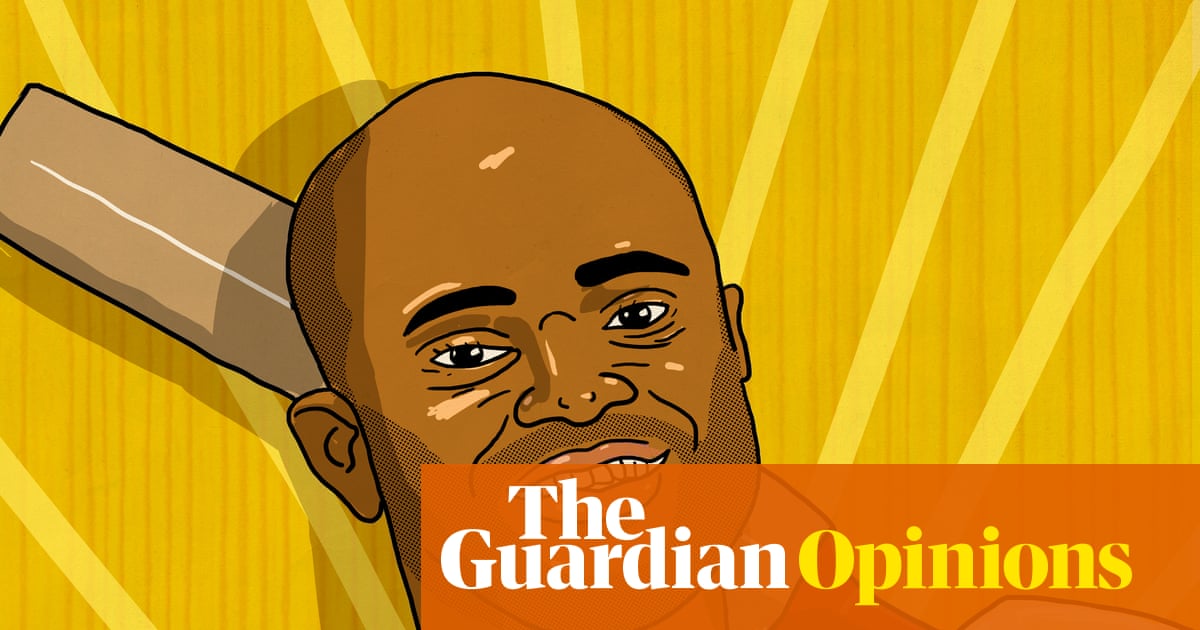
Bavuma’s nine-hour masterpiece was art we risk losing in South Africa’s Test purge | Barney Ronay
Full Article
Original Source
Read the full article at Theguardian →KhanList aggregates and links to publicly available news content. We do not host full articles from third-party sources. Always verify important information with original sources.