
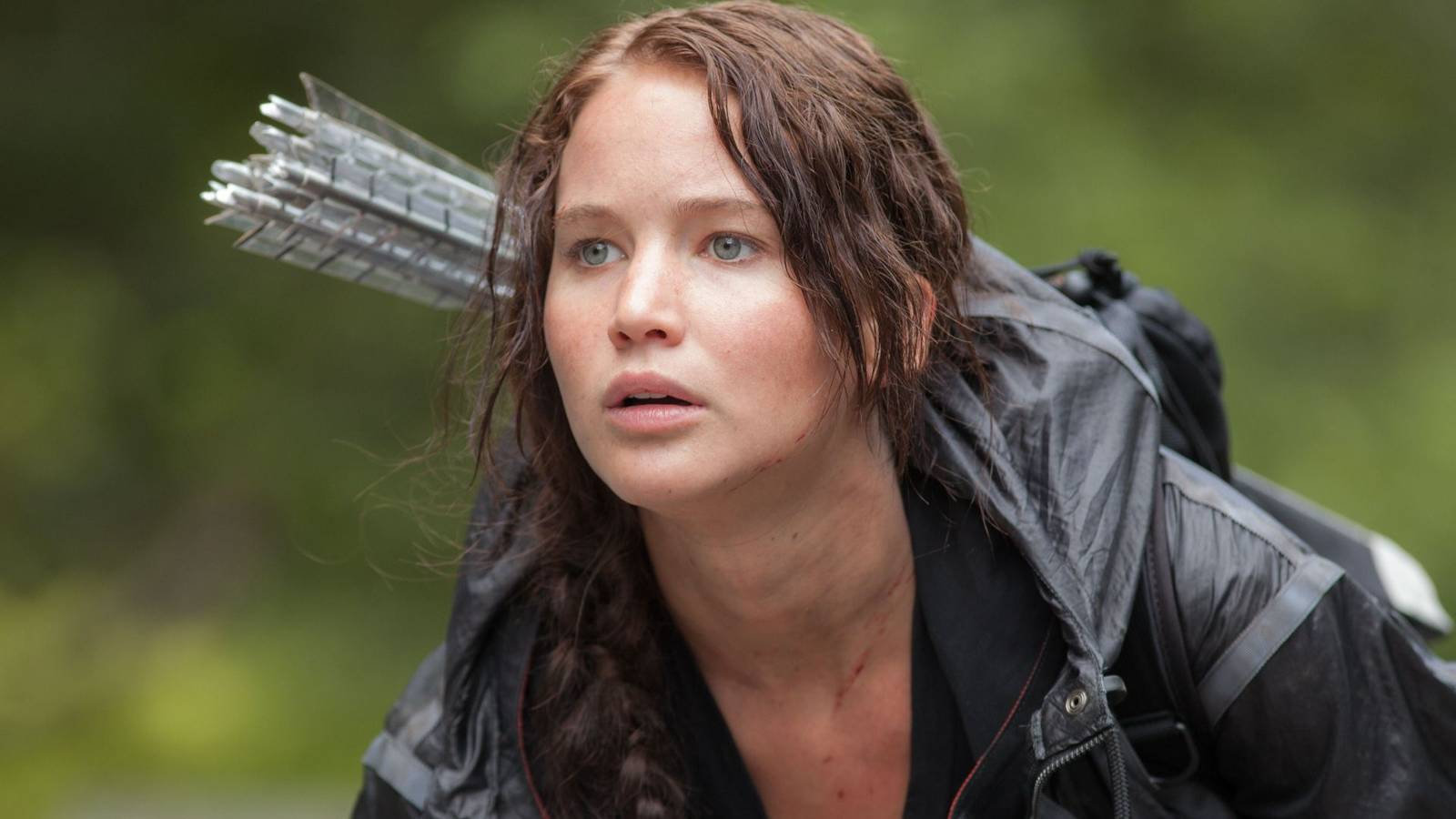
12 Years Before The Hunger Games, Japan Made A More Brutal Version Of The Same Story Lionsgate Published Nov 14, 2026, 4:45 PM EST Richard Craig is a Senior Author at Screen Rant covering film and TV. Richard has also written extensively about horror and film soundtracks, contributing a chapter to the first major academic collection on the folk horror genre, The Routledge Companion to Folk Horror. Richard is also a performing musician and holds an MA in Music and Sound Art. Sign in to your ScreenRant account Japanese cinema offered a rendition of The Hunger Games 12 years earlier, and it’s so much more intense. Young adult dystopian fiction has produced some of the most successful entertainment franchises of the 21st century. Few have made a bigger impression than The Hunger Games, Suzanne Collins' bestselling book series and its hugely successful film adaptations. The Hunger Games franchise established a distinctive formula for dystopian blockbuster filmmaking, combining political commentary with high-stakes survival drama. However, the idea of forcing young people to fight one another to the death in a government-controlled competition wasn't new when Collins introduced Panem. In fact, a Japanese filmmaker had already explored a remarkably similar premise, taking it in a considerably more violent and disturbing direction. Released more than a decade before the first Hunger Games movie, Battle Royale is one of the most provocative dystopian movies ever made. Its influence and similarities to Collins' franchise continue to invite comparisons, particularly among those who want something considerably more brutal after finishing Katniss Everdeen's story. Battle Royale Took The Hunger Games' Deadly Premise Even Further Directed by Kinji Fukasaku in 2000, Battle Royale adapted Koushun Takami's 1999 novel of the same name. The premise will sound immediately familiar to anyone who has watched The Hunger Games: a totalitarian government selects a group of teenagers, transports them to an isolated location, and forces them to fight until only one remains alive. However, while Katniss Everdeen enters the arena as part of a televised competition, the students in Battle Royale are victims of a government program intended to terrorize an increasingly rebellious younger generation. Battle Royale centers on a class of 42 junior high school students who are abducted during a school trip and transported to an island. Their former teacher, Kitano, explains that they have been selected under the Battle Royale Act, a government policy that forces one school class to participate in a three-day fight to the death. Each student receives supplies and a randomly assigned weapon, while explosive collars ensure nobody can simply refuse to participate or escape. The basic mechanics are remarkably similar to The Hunger Games, but Fukasaku's film makes the experience considerably less like a sporting event. There are no elaborate opening ceremonies, celebrity stylists, or opportunities to cultivate public affection. The teenagers are simply abandoned with instructions to kill their classmates, and the government expects them to comply. Rather than turning violence into an elaborate national spectacle, it presents the competition as a bleak institutional punishment designed to demonstrate the consequences of challenging authority. The Japanese Movie Is Far More Violent One of the most obvious differences between Battle Royale and The Hunger Games is their respective approaches to violence. The Hunger Games certainly contains disturbing material, particularly considering its teenage characters, but its PG-13 classification required fairly restrained bloodshed. Fukasaku, meanwhile, makes little effort to soften the brutality. Students are shot, stabbed, beaten, and blown apart, with Battle Royale frequently emphasizing the physical consequences of each confrontation. Its violence isn't restricted to the anonymous background deaths of characters audiences barely know, either. Fukasaku gives several students individual personalities and relationships before subjecting them to sudden, shocking deaths. The contrast between their ordinary teenage lives and the savagery of the competition is precisely what makes it so uncomfortable. The sudden deaths reinforce how little control the students have over their circumstances. Even characters who initially appear confident or capable of surviving can be killed within moments, often by people they previously considered friends. The arbitrary distribution of weapons makes matters worse, ensuring that some students begin with a significant advantage over others. There is also a particularly nasty sense of unpredictability to the film's violence. The Hunger Games establishes a more conventional progression of alliances, confrontations, and strategic eliminations, whereas Battle Royale frequently allows paranoia and panic to dictate what happens next. Both Movies Explore The Same Themes In Very Different Ways Despite their obvious similarities, Battle Royale and The Hunger Games approach their dystopian settings from different political perspectives. Both examine authoritarian governments that maintain control through fear, using young people as instruments of state power. However, The Hunger Games focuses particularly on class inequality, propaganda, and the exploitation of poverty. Panem's Hunger Games are an annual reminder of the Capitol's victory over the rebellious districts. The wealthy citizens are encouraged to treat the deaths of teenagers as entertainment, while the impoverished districts are forced to sacrifice their children. Battle Royale, by contrast, focuses more on generational conflict and the breakdown of trust between adults and children. Its fictional government responds to fears about juvenile delinquency by introducing a policy that effectively declares an entire generation expendable. The students are punished collectively, regardless of whether they have actually committed any wrongdoing. Battle Royale doesn’t present a conventional heroic rebellion but rather examines what happens when a society teaches its children to distrust one another. Its characters are frequently frightened, selfish, impulsive, and emotionally overwhelmed, which makes them seem considerably closer to ordinary teenagers than the increasingly strategic competitors of Panem. Why Battle Royale Remains Essential Viewing For Hunger Games Fans For anyone who loves The Hunger Games, Battle Royale is a perfect next watch because it offers the deadly survival premise in a much less sanitized form. Both put teenagers in situations where survival means confronting people they know, but Battle Royale’s approach makes the psychological and physical consequences much more immediate. There is no glamorous preparation for the competition, no carefully managed public image, and no expectation that the contestants will become celebrities. The Hunger Games examines how an authoritarian government uses spectacle and propaganda to maintain power, whereas Battle Royale spotlights the destruction of trust between ordinary people. The films also make an interesting double feature because their protagonists respond to institutional cruelty in different ways. Katniss gradually becomes a symbol of rebellion, while Shuya and Noriko are primarily concerned with surviving. As a result, Battle Royale is particularly valuable for anyone interested in dystopian narratives that don’t adhere to classic Hollywood blockbuster storytelling. Battle Royale is particularly effective at exploring the emotional consequences of its premise without turning every character into a perfectly calculated survivalist. The friendships, romances, jealousies, and petty disagreements that define school life don't suddenly disappear when the students are given weapons. Instead, those familiar relationships become the foundation for some of the film's most upsetting moments. Ultimately, Battle Royale deserves to be watched on its own merits rather than simply as the Japanese predecessor to The Hunger Games. Its examination of institutional cruelty, teenage alienation, and the destructive consequences of authoritarianism gives it considerably more substance than its notorious reputation for violence might suggest. Fans of The Hunger Games adventures will recognize plenty of familiar ideas, but Fukasaku's film takes them somewhere much darker. The Hunger Games 8/10 Release Date March 23, 2012 Runtime 142 minutes The Hunger Games is the first of four in the action-drama movie series based on the novels by Suzanne Collins. Set in a dystopian world where people are separated into twelve districts to maintain order, this first film in the franchise focuses on Katniss Everdeen as she is forced to participate in The Hunger Games: a draconian gladiatorial survival event where there can be only one winner. Cast Jennifer Lawrence, Josh Hutcherson, Liam Hemsworth, Woody Harrelson, Elizabeth Banks, Lenny Kravitz, Stanley Tucci, Donald Sutherland, Wes Bentley, Toby Jones, Alexander Ludwig, Isabelle Fuhrman, Amandla Stenberg, Willow Shields, Sandra Ellis Lafferty, Paula Malcomson, Rhoda Griffis, Sandino Moya-Smith, Raiko Bowman, Dwayne Boyd, Anthony Reynolds, Judd Lormand, Kimiko Gelman, Nelson Ascencio, Brooke Bundy Director Gary Ross Writers Billy Ray, Gary Ross, Suzanne Collins Main Genre Action Battle Royale 9/10 Release Date December 16, 2000 Runtime 114 Minutes The dystopian action movie Battle Royale takes place in a future Japan, where a group of high school students fight to the death in a deserted island until only one survivor remains. Directed by Kinji Fukasaku, the 2000 film gave rise to a whole genre of similar stories such as the Hunger Games books and movies, as well as the video game Fortnite. Cast Tatsuya Fujiwara, Aki Maeda, Tarô Yamamoto, Takeshi Kitano, Chiaki Kuriyama, Sosuke Takaoka Director Kinji Fukasaku Writers Koushun Takami, Kenta Fukasaku Main Genre Action
Battle Royale Told A More Brutal Version Of The Hunger Games 12 Years Earlier
Full Article
Original Source
Read the full article at Screenrant →KhanList aggregates and links to publicly available news content. We do not host full articles from third-party sources. Always verify important information with original sources.