
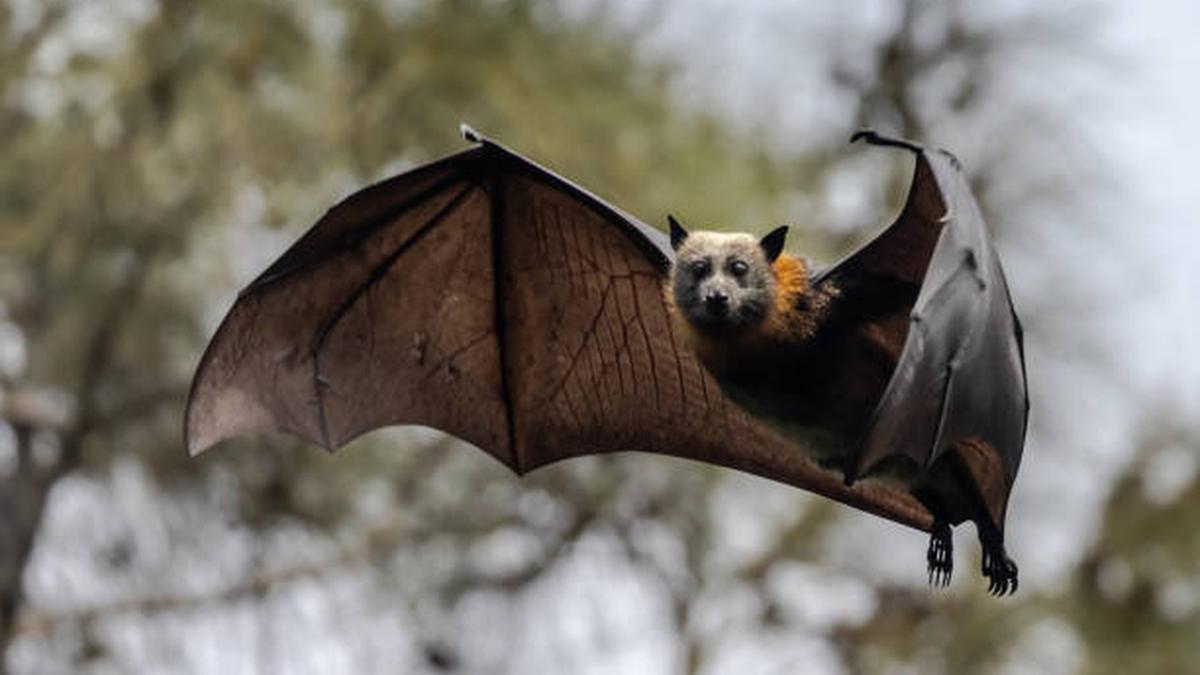
‘Some modern bats can migrate thousands of kilometres and live in very diverse climates on every continent, except Antarctica.’ | Photo Credit: Getty Images/iStockphoto From the largest ever study of bat genome and fossils, scientists deduced that the world’s only flying mammals — that account for one fifth of all living mammals — likely originated in Europe, and spread to every continent except Antarctica. The scientists, in a paper in the journal Nature, pegged the bat’s evolution at 65 million years ago, in the late Palaeocene, “coinciding with increased global temperature and environmental change.”This discovery countered previously held hypotheses that bats originated in Africa or North America. The study, that involved 137 scientists from 64 countries, working together as part of the “Bat1K” consortium, concluded that the animals spread from Europe first to Africa and then to Asia, the Americas and to Australia.The researchers also found that the bat’s ability to fly and echolocate (that is, when animals emit calls and then listen to the echoes to navigate and hunt, often in darkness) came about at almost the beginning of the animal’s evolution. For instance, echolocation took place before the diversification of modern bats, revealed the study of a fossil bat.Rewriting the evolutionary treeCo-author Sonja Vernes from the University of St. Andrews and Bat1K founder, told The Hindu that bats, being the only mammals that are able to fly, gave them “a huge advantage” when it came to dispersing across the globe. “Even today, we know that some modern bats can migrate thousands of kilometres and live in very diverse climates on every continent, except Antarctica,” said Prof. Vernes.Scientists took decades to build the enormous dataset, which included 103 species, many rare or from remote places, representing every one of the extant 21 families. They used state-of-the-art DNA sequencing methods to compare genomes, including those of fossil bats. They updated their evolutionary tree, answering much debated questions about how bat groups are related.Bats, which are hugely under-recognised for their ecological role, and instead seen as harbingers of disease outbreaks among people, are in fact vital in pollinating plants, controlling insect pests and dispersing seeds.Bat-inspired approachesNo less than 1,500 species of bats exist across the globe today, and present extraordinary evolutionary adaptations. “Several species host a diversity of viruses without overt disease symptoms and show unique immune adaptations,” said the paper adding that some species are exceptionally long-lived compared with other mammals of similar body size.Prof. Vernes said: “Now that we have this extraordinary genomic resource, we can start searching for the genetic mechanisms that make it possible for bats to live such long lives while resisting disease.” The long-term goal, she told The Hindu, is that “once we know how they do this, we can design bat-inspired approaches that could improve human health.” Published - September 25, 2026 02:00 pm IST
Bats first originated in Europe 65 million years ago, scientists say
Full Article
Original Source
Read the full article at Thehindu →KhanList aggregates and links to publicly available news content. We do not host full articles from third-party sources. Always verify important information with original sources.