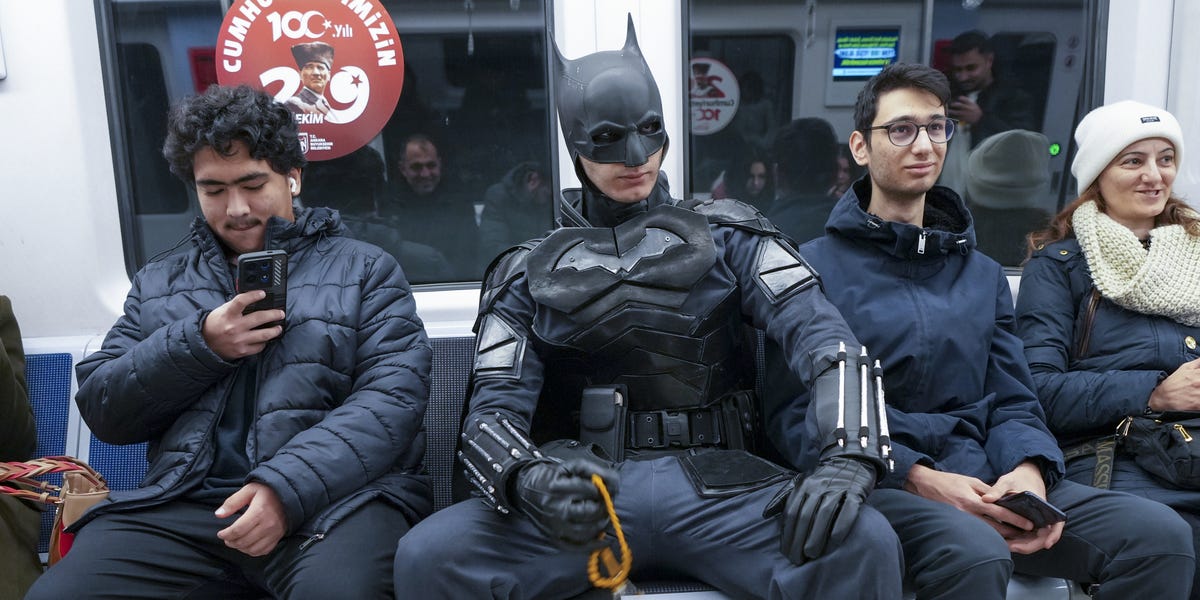
3 min readHere’s what you’ll learn when you read this story:Prosocial behavior is a category of voluntary actions taken to comfort, help, or cooperate with someone else. A new study found that when people were in the presence of someone dressed as Batman, prosocial behavior increased. One theory suggests that the embodiment of Batman’s ideals might spur prosocial actions, while another proposes that an interruption of routine scripts (such as the appearance of someone dressed as a superhero) fostered present-moment awareness. Humans are social creatures, and we want to know why our sociability takes the particular forms it does. One team of psychologists is focused on understanding all the subtle nuances that specifically predict prosocial behaviors—voluntary actions that offer help, comfort, or cooperation with someone else.In our culture’s modern mythmaking, the superhero archetype is the epitome of a prosocial behavior, since the superpowered (or superwealthy) individuals fight for the greater good, often against overwhelming odds. In line with that thinking, a new study from scientists at the Catholic University of the Sacred Heart (Università Cattolica) in Milan, Italy, investigated how the appearance of one of these superheroes—in this case, Batman—would impact the prosocial behavior of people in a public setting. The results of the study were published in the journal npj Mental Health Research.The experimental set-up is a strange one. The field study consisted of 138 train rides on the Milan metro, and on each ride, a pregnant woman boarded the train and an observer recorded whether someone offered their seat to the woman. In the control condition, only the woman boarded the train, but in the experimental condition, a person dressed as Batman also boarded along with the woman. The goal was to see whether the unexpected appearance of the Dark Knight inspired a different response to the pregnant woman, and brief interviews were conducted with passengers who eventually offered up their seats.The results showed that when the cosplaying superhero wasn’t present, only 37.66 percent of rides resulted in someone offering their seat. However, when the Bruce Wayne imposter also boarded the train, that number jumped to an incredible 67.21 percent (though 44 percent of the people in the experimental group reported not seeing the superhero when offering up their seat).“It is […] possible that the superhero figure enhanced the relevance of cultural values, gender roles, and norms of chivalrous help, consistent with research on the ‘priming’ effect associated with superheroes” Francesco Pagnini, lead author of the study, said in a press statement.However, the study also offers up another explanation to explain this sudden outbreak of chivalry—the appearance of someone dressed as Batman may snap us into a moment of present-moment awareness, increasing the likelihood that people noticed the standing pregnant woman.“Unlike traditional mindfulness interventions that require active engagement, this study highlights how situational interruptions alone may be sufficient to produce similar effects,” Pagnini said in a press statement. “This suggests a potential mechanism through which novelty and unpredictability promote prosocial behavior.” In other words, the appearance of a strange figure shattered the “routine scripts” of riding the metro, according to the authors.To promote similar prosocial behaviors, the authors argue that urban planners and policymakers could try to develop intentional “positive disruptions” in daily life that momentarily break routine and engage this prosocial ability that comes with present moment awareness. However, the authors note that future studies need to spread to other characters and situations to see if this routine-breaking correlation continues. Because it’s quite possible that it’s actually a side effect of the inspirational power of the Caped Crusader.Darren lives in Portland, has a cat, and writes/edits about sci-fi and how our world works. You can find his previous stuff at Gizmodo and Paste if you look hard enough.
Batman Makes You Nicer. Science Just Proved It.
Full Article
Original Source
Read the full article at Popularmechanics →KhanList aggregates and links to publicly available news content. We do not host full articles from third-party sources. Always verify important information with original sources.