
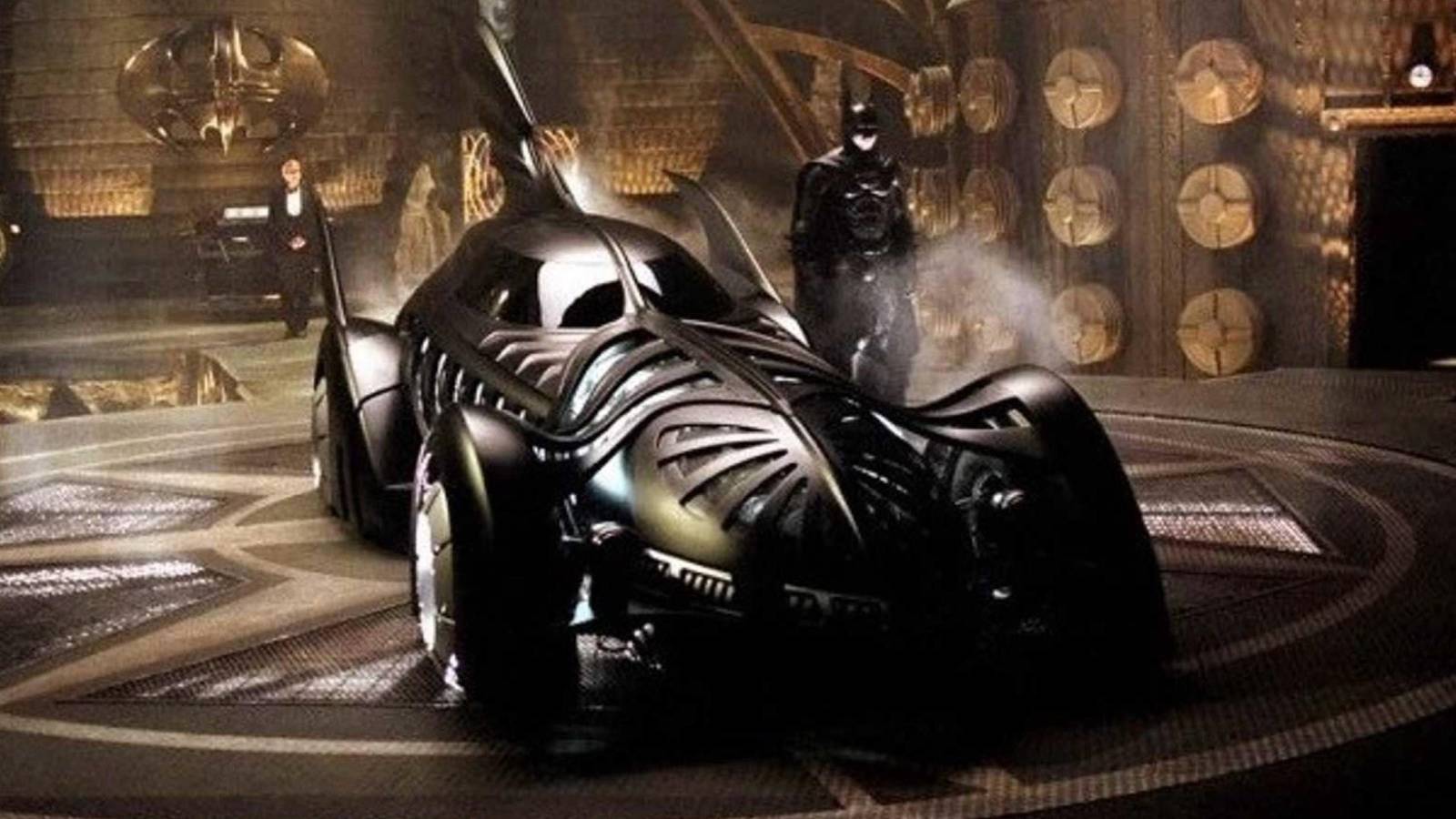
Published Sep 20, 2026, 12:55 PM EDT Simon Gallagher has worked in movie and TV journalism for more than 17 years. He has written more than 6000 articles and reviews, and edited thousands more. He is an expert in the entertainment industry, particularly in the golden age of screen superheroes. Simon is also a Rotten Tomatoes approved critic. Sign in to your ScreenRant account Every new Batman has three major milestones early in their career: first, the announcement of the actor playing the Dark Knight, then the new Batsuit, and finally, what the new Batmobile will look like. Even before any story details are revealed, new DC generations can massively influence the reception of Gotham’s protector by nailing all three. For the most part, even though criticism of every new Batman actor casting feels inevitable, the Batmobile has been a consistently high standard. And that matters, because Bruce Wayne’s iconic vehicle is more than a car: it’s immediate visual shorthand for every Batman iteration. You can tell a lot from what’s parked in the Batcave about the tone, philosophy, and scale of a Batman movie, long before a single line of dialogue is spoken. The Batmobile is considerably more than just an accessory, and it’s quite remarkable how different almost every generation of the famous car has been. Just as different versions of Batman have been more gothic, more supernatural, more utility-like, or more street-level and gritty, we’ve seen Batmobiles that have been tanks, muscle cars, high-tech supercars, and aura farms on wheels. A sleek, gothic bullet car tells you one thing about a director’s approach to Batman, and a functional military prototype tells you something completely different. From the Caped Crusader to The Batman · Eight Questions How Well Do You Know Batman? “I’m Batman.” 🦌Bob & BillDetective Comics #27, 1939 🥘The Camp EraAdam West, 1966 🎣Burton & SchumacherKeaton to Clooney, 1989–97 💉The Dark KnightBale & Ledger, 2005–12 🕵The BatmanPattinson & Reeves, 2022– LIGHT THE BAT-SIGNAL → 01 Batman debuted in Detective Comics #27 in May 1939. Cartoonist Bob Kane received sole credit for creating the character for the next 76 years — on every comic, every TV series, every film — despite being only half of the real partnership. His uncredited collaborator wrote much of the original story, designed the cowl and cape, invented the name “Bruce Wayne,” named Gotham City, and helped create the Joker, the Penguin, the Riddler and Catwoman. DC finally added his name to all Batman credits in 2015. Who? AJerry Robinson BBill Finger CJoe Shuster DOtto Binder ✓ Correct! Bill Finger (1914–1974). Kane’s original 1939 pitch was a Superman-style figure in a red leotard with a domino mask and bat-wings; Finger talked him into the cowl, scalloped cape, gauntlets and grey-and-black colour scheme that have defined the character ever since. Finger also wrote Detective Comics #27 itself, named Bruce Wayne (after Robert the Bruce and Anthony Wayne), created Gotham as a stand-in for New York, and co-created most of the rogues’ gallery — while signing a 1939 contract that gave Kane exclusive byline credit. Kane received millions in royalties; Finger died poor and uncredited. After a 2014 documentary and a 2015 family campaign, Warner Bros. and DC added “Batman created by Bob Kane with Bill Finger” to every credit starting with Gotham (Fox), Batman v Superman (2016) and forward. ✗ Wrong. The answer is Bill Finger. Jerry Robinson (option A) really did co-create the Joker and Robin alongside Finger and Kane — he was the third member of the early studio — but the cowl, cape, “Bruce Wayne,” Gotham City and the actual script of Detective Comics #27 were Finger’s. Joe Shuster co-created Superman, not Batman. Otto Binder created Supergirl and Mary Marvel. Finger signed away his byline in 1939 and didn’t receive on-screen credit until 2015. NEXT → 02 Batman: The Movie — released in July 1966 between the first and second seasons of the ABC TV series, featuring the “Holy Whatever, Batman!” tone, the four super-villain team-up (Joker, Penguin, Riddler, Catwoman), the shark-repellent Bat-spray, and the Batmobile/Batboat/Batcopter — is generally considered the first theatrical Batman feature film. Two earlier 1940s movie serials don’t qualify as standalone features. Which actor played Batman in this first theatrical feature? AAdam West BLewis Wilson CRobert Lowery DMichael Keaton ✓ Correct! Adam West (1928–2017), with Burt Ward as Robin and Cesar Romero as the Joker. West played the role across 120 ABC episodes (1966–1968) and the 1966 theatrical feature, hammed up the camp tone to perfection, and then spent decades typecast before reclaiming the role in animated form (Batman: Return of the Caped Crusaders, 2016) and as Mayor West on Family Guy. The two traps are real: Lewis Wilson played Batman in Columbia’s 15-chapter 1943 serial Batman, and Robert Lowery played him in the 1949 sequel serial Batman and Robin — but those were Saturday-morning chapter plays, not standalone theatrical features. Michael Keaton’s Batman doesn’t arrive until Tim Burton’s 1989 film. ✗ Wrong. The answer is Adam West. The trap is real but technical: Lewis Wilson (1943) and Robert Lowery (1949) both played Batman in Columbia movie serials, but those were 15-chapter Saturday-morning serials, not theatrical features. Adam West’s 1966 Batman: The Movie — with the four-villain team-up and the shark-repellent Bat-spray — is the first standalone Batman feature film. Michael Keaton doesn’t arrive until 1989. NEXT → 03 Batman: The Animated Series (Fox Kids, 1992–1995) — the Bruce Timm/Eric Radomski production with the deco-noir “Dark Deco” backgrounds painted on black paper — is consistently ranked by fans and creators as the definitive screen Batman. Its central performance is so iconic that the actor reprised it across 30 years, every DC Animated Universe series, and a dozen Arkham-series video games. He died on November 10, 2022, and DC essentially treated his passing as the death of Batman’s voice. Name him. ATim Daly BKevin Conroy CMark Hamill DWill Friedle ✓ Correct! Kevin Conroy (1955–2022). Conroy’s key innovation, on his first audition for BTAS in 1991, was to give Bruce Wayne and Batman two distinct voices — Bruce as the lighter, charming playboy and Batman as the deeper, harder-edged growl — a take that became the industry default and was openly copied by Christian Bale, Ben Affleck and Robert Pattinson on screen. He played the role for 31 years, across BTAS, Superman: TAS, Justice League, Justice League Unlimited, Batman Beyond (as the elderly Bruce), and every Rocksteady Arkham game. The trap is genuine: Mark Hamill voiced the Joker opposite Conroy on BTAS and is just as legendary in that role. Tim Daly voiced Superman; Will Friedle voiced Terry McGinnis in Batman Beyond. Conroy died in November 2022 at 66. ✗ Wrong. The answer is Kevin Conroy. Mark Hamill (option C) is the giant trap — he voiced the Joker opposite Conroy on BTAS for 30 years and is widely considered the definitive screen Joker — but Batman was Conroy. Tim Daly voiced Superman in the DCAU; Will Friedle voiced Terry McGinnis in Batman Beyond, with Conroy still playing the elderly Bruce. Conroy died November 10, 2022. NEXT → 04 Jack Nicholson’s Joker in Tim Burton’s Batman (1989) earned him an estimated $60–$90 million from a film for which his actual on-screen salary was a fairly modest $6 million — making it, dollar-for-dollar, one of the most famously lucrative single roles in Hollywood history. He achieved this by negotiating an unusual deal structure that other actors immediately tried (and largely failed) to copy. What was it? AA flat $50 million bonus on opening weekend success BA no-cut equity stake in Warner Bros. itself CA percentage of box-office gross AND merchandise royalties DA fixed-rate-per-ticket micro-royalty on every theatrical screening ✓ Correct! Nicholson took a $6 million base, a piece of the box-office gross (so-called “first-dollar gross” rather than net profits, which Hollywood accounting has a habit of vapourising) AND a percentage of Batman merchandising — the toys, posters, t-shirts, lunch boxes, video games and ride tickets. Batman (1989) grossed $411 million theatrically and unleashed the largest superhero merchandising wave in history, and Nicholson’s royalties on it have reportedly continued accruing for decades. His agent Sue Mengers, and his attorney’s “back-end participation” structure, became the gold standard talent-deal template that A-listers like Tom Cruise and Robert Downey Jr. would later use. Nicholson also negotiated top billing over Michael Keaton (despite Batman being the title character) and limited shoot days. It’s the most-copied bad-guy deal in Hollywood. ✗ Wrong. The answer is C — a percentage of box-office gross plus merchandising royalties. The $6 million base salary was relatively modest by 1989 star standards; the magic was the back-end participation in both ticket sales and the unprecedented Batman toy/poster/lunchbox merchandise wave, which has reportedly continued paying out for decades. Tom Cruise and RDJ later borrowed the same gross-points-plus-merch template. There was no $50M opening-weekend trigger, no equity stake in Warners, and no per-screening micro-royalty. NEXT → 05 After Ben Affleck stepped down from his planned solo Batman film, Warner Bros. handed the project to a new director who reconceived it as a noir-detective serial-killer story modelled on Se7en and Zodiac, runs 2h 56min, casts Robert Pattinson as a brooding second-year Bruce Wayne, and gives Paul Dano’s Riddler a Zodiac-style cipher gimmick. The Batman (2022) grossed $772 million worldwide. Who directed it? AZack Snyder BChristopher Nolan CTim Burton DMatt Reeves ✓ Correct! Matt Reeves — the Cloverfield (2008), Let Me In (2010), and Dawn of the Planet of the Apes (2014) / War for the Planet of the Apes (2017) director. Reeves co-wrote The Batman with Peter Craig, leaned hard into a Fincher-noir detective tone (the Riddler is essentially Zodiac), and got Pattinson, Zoë Kravitz (Catwoman), Colin Farrell (an unrecognisable Penguin), Paul Dano (Riddler) and Jeffrey Wright (Gordon). The film established its own continuity separate from the DCEU/James Gunn DCU. The Penguin (HBO/Max, 2024) followed as a Reeves-produced spin-off, and The Batman: Part II is currently scheduled for 2026. ✗ Wrong. The answer is Matt Reeves — the Cloverfield, Let Me In and Planet of the Apes-reboot director. Nolan made the Dark Knight trilogy (2005–2012); Snyder made Batman v Superman (2016) and Justice League (2017/2021) with Affleck’s Batman; Burton made the 1989/1992 Keaton films. The Batman (2022) is Reeves’s, in its own continuity, with The Penguin (2024) as the spin-off and Part II in 2026. NEXT → 06 Joel Schumacher’s Batman & Robin (1997) — with Bat-nipples on the suit, Arnold Schwarzenegger’s Mr. Freeze spitting ice puns (“Let’s kick some ice!”), Uma Thurman’s Poison Ivy, Alicia Silverstone’s Batgirl, and an estimated $238 million box-office failure on a $125 million budget — is widely regarded as one of the worst superhero films ever made. It killed the live-action Batman franchise for eight years until Batman Begins (2005). Who played Batman in it? AGeorge Clooney BVal Kilmer CMichael Keaton DChristian Bale ✓ Correct! George Clooney — in his only outing as Bruce Wayne, between his ER fame and Out of Sight. Clooney has publicly apologised for the film for nearly thirty years; he told Entertainment Weekly he “destroyed the franchise” and routinely thanks fans for their hostility. The trap is Val Kilmer, who played Batman in the previous Schumacher film, Batman Forever (1995) — he was originally signed for two but exited due to scheduling and reported disputes with Schumacher. Keaton played Batman in Burton’s 1989 and 1992 films (and returned in The Flash, 2023). Bale arrived eight years later in Nolan’s Batman Begins (2005). The Bat-nipples were Schumacher’s, the ice puns Schwarzenegger’s, the apology Clooney’s. ✗ Wrong. The answer is George Clooney. Val Kilmer (option B) was Batman in the previous Schumacher film, Batman Forever (1995) — he then exited and Clooney took over for Batman & Robin. Keaton was Batman in Burton’s 1989/1992 films (and returned in The Flash, 2023). Bale arrived in Nolan’s Batman Begins (2005), eight years after Batman & Robin killed the franchise. NEXT → 07 Cesar Romero’s Joker on the 1966–1968 ABC Batman series — white grease-paint, green wig, red lipstick, manic giggle — remains one of the most-cited comedic TV villains in American history. Romero, a leading-man matinée idol since the 1930s, agreed to the role on one condition: he refused to do a specific thing for the makeup. You can still see what he refused if you look closely. What did Romero refuse? ATo wear the green wig (he wanted his own hair dyed) BTo speak in a falsetto voice CTo shave his moustache DTo wear purple gloves ✓ Correct! Romero refused to shave his trademark moustache — reportedly a vanity rule he’d had since the 1930s — so the makeup department simply caked white grease-paint over it. If you watch the 1966 episodes or Batman: The Movie (1966) on Blu-ray, you can clearly see the moustache bristles poking through the white paint above his lip. It’s one of TV’s most-cited “visible-prosthetic” quirks — later parodied by Burt Ward and explicitly nodded to in the 2016 animated Batman: Return of the Caped Crusaders (Romero was already dead, having passed in 1994, but the animation reproduces the moustache underneath the makeup). Romero played the role for all three TV seasons and the 1966 feature. ✗ Wrong. The answer is shaving his moustache. Romero had had his trademark Latin-lover moustache since the 1930s, refused to lose it for any role, and the makeup department simply painted white grease-paint over it — if you look closely on Blu-ray you can see the bristles poking through under his lip. The wig, the high-pitched giggle and the purple gloves were all things he gladly did. NEXT → 08 Todd Phillips’s Joker (2019) — the standalone, R-rated, $1.07-billion-grossing Joaquin Phoenix vehicle that exists outside any DC continuity — was nominated for 11 Academy Awards, the most of any comic-book-derived film at the time. It won Best Actor for Phoenix. It also won exactly one other Oscar that night. Which? ABest Director (Todd Phillips) BBest Original Score (Hildur Guðnadóttir) CBest Adapted Screenplay (Phillips & Silver) DBest Picture ✓ Correct! Best Original Score, Hildur Guðnadóttir — the Icelandic cellist and composer who, in the same awards cycle, won the Emmy and Grammy for Chernobyl (HBO, 2019). Joker’s score (anchored by the haunting cello motif during Arthur Fleck’s bathroom dance) was her breakthrough; she became the first solo woman to win Best Original Score since Marilyn Bergman in 1984 (and the fourth ever). Phillips lost Best Director to Bong Joon-ho for Parasite, which also won Best Picture, beating Joker’s nomination. The film’s screenplay nomination was Adapted (because it’s based on existing DC IP), not Original — option C names the right category but it lost to Jojo Rabbit. ✗ Wrong. The answer is Best Original Score — Hildur Guðnadóttir (also the Chernobyl composer that year). She became the fourth solo woman ever to win the category. Phillips lost Best Director to Bong Joon-ho (Parasite); Best Picture also went to Parasite; the screenplay nomination was Adapted (not Original) and lost to Jojo Rabbit. Phoenix’s Best Actor + Guðnadóttir’s Best Original Score are Joker’s two 2020 Oscar wins. REVEAL MY RATING → The Bat-Signal Has Faded · Final Scorecard Your Gotham Standing 🦌 / 8 World’s Greatest Detective — or a Gotham red herring? ⤴ ROUND TWO The Batmobile has always been a statement, both by the filmmakers and by Bruce Wayne himself: an extension of Batman and simultaneously a mirror held up to his version of Gotham. And over the years, the evolution of Batman's famous vehicle has been remarkable, given that its purpose has never changed. 10 The Serials Batmobiles (1943 & 1949) It's only appropriate to bundle these two "Batmobiles" together because they're just not really Batmobiles at all. At least not by the metrics the others are typically judged. In both The Batman (1943) and Batman and Robin (1949), the filmmakers seemingly didn't understand the assignment, giving Bruce Wayne a civilian car that he then drove as Batman. That's not exactly the most inconspicuous choice for someone attempting to disguise themselves. Offering no commentary on Wayne's Batman mythology, the cars - a 1939 Cadillac Series 75 Convertible Sedan and a 1949 Mercury Convertible, respectively - were poor fits for superheroism, built as prestigious luxury cars with low cornering performance and, in the case of the Mercury, awful weight distribution. Good for Bruce Wayne's image, bad for hiding a secret identity and chasing villains. 9 Gotham's Batmobile (2018) By every conventional measure of what makes a good Batmobile, the car introduced for David Mazouz’s young Batman fails. The prequel series spent five seasons showing the slow evolution of Bruce Wayne, culminating in a 10-year time jump that showed him as Batman very briefly, and sadly, the wild spirit of the underrated show didn’t carry across to his ride. Gotham’s Batmobile wasn’t built by Bruce Wayne, making it different from most of the movie cars (and all of the best ones), and is instead just a Ford Mustang Premium Fastback with no real visible modifications. The matte black color scheme is at least very cool. The problem here is that there's just no expression of what Batman represents. Okay, yes, it’s a nice muscle car, and it’s not the worst choice for a hero just starting out, but there’s no theatricality, and none of the aura of other designs. And no villain will see this car and know instinctively that they're in trouble, even if they don't know who Batman is. 8 Ben Affleck's Batmobile If any iteration of Batman deserved a gigantic tank, it was Ben Affleck’s hulking Bruce Wayne. Instead, Zack Snyder’s vision for the Batmobile in Batman v Superman: Dawn of Justice is an over-designed sci-fi car that looks a little like it belongs in the Mad Max universe. Angular and almost alien-looking, it was designed by production designer Patrick Tatopoulos and to be fair to him, it looks like it belongs in the Snyderverse. Ironically, this Batmobile also looks like it belongs in the Knightmare timeline, with its aggressive angles, and heavily visible weaponry. It’s fast, and loaded with features, but it feels both a little too much like a heavy metal, provocative answer to the superior Tumbler and rather like sensory overload. 7 Robert Pattinson's Batmobile (2022 Onwards) Matt Reeves’ take on the Batmobile is a perfect reflection of his take on Gotham City: a mostly realistic, more grounded vision that fits a fledgling hero still finding his feet. Built on the modified skeleton of a 1970 Dodge Charger, it’s a statement car, with real muscle car weight, but it loses points for feeling like it wouldn’t be out of place being driven by Vin Diesel in the Fast & Furious series. James Chinlund’s Batmobile design is like a heavy-duty battering ram without the internal sci-fi features, and it fits Reeves’ grubby, crime-riddled Gotham, but it’s not quite the superhero car you’d expect from Batman. What it loses on presence, it definitely retains in power. 6 Adam West's Batmobile (1966) Joe O'Shea Created by legendary George Barris in just three weeks, the 1966 Batmobile is the most pop art the car has ever been. A marked improvement on the road cars used in the 1940s serials, this iconic version was built on the chassis of a one-off 1955 Lincoln Futura concept car, to which Barris added bubble canopies, tail fins modeled after bat wings, and a rear-mounted jet turbine. It’s all very cartoonish, but it perfectly suited the vibe of the show. Like the utility belt on Adam West’s Batsuit, the car also came packed with iconic, tongue-in-cheek gadgetry including the Emergency Bat-Turn Lever and the Rear Bat-Deflector, and no other iteration can compete in pure kitsch value. It’s one of the most recognizable cars in Hollywood history, and none of the subsequent designs that went for more stylish swings would have existed without this vision, even if they were better. 5 Titans Batmobile – 2018-2019 Appearing sadly all-too-briefly in the gritty Titans series, this barely visible Batmobile was a victim of Iain Glen’s Bruce Wayne barely appearing as Batman. It’s only on screen for a few moments in a small number of episodes, and you don’t really get a good sense of the design from those flashes alone. But designer John Gallagher did reveal the complete concept art of Titans’ Batmobile (above) and showed an underrated design. The car might have ended up as nothing more than flashy set dressing, but it paid tribute to Adam West’s kitschy 1960s aesthetic with the a nice live-action riff on the iconic Batman: The Animated Series Batmobile. Honestly, it deserved considerably more screentime, which might have given some better insight into its actual capabilities. Even on aesthetics alone, it’s a gem. 4 George Clooney's Batmobile - Batman & Robin (1997) Far more underrated than Joel Schumacher's first Batmobile, the version driven by George Clooney in the much-maligned Batman & Robin was a victim of the cool reception of the movie. And it deserved a lot better. The tail fins are pure camp, and the lighting owes a lot to Schumacher's dayglo vision of Gotham, but the lines are impeccable, and there's a welcome embrace of the same proportions as Batman: The Animated Series. It's also more than twenty feet long, which perhaps says something about compensating that we won't get into here. Schumacher's Batsuit was probably the worst atrocity inflicted on the cinematic Dark Knight, but his ride was cooler than it ever seems to get credit for. It's both gothic and cartoonish, and dripping with aura, and the idea of it speeding out of the darkness, lit up menacingly, is exactly what you want from a more theatrical Batman. Accused of being ridiculous, this Batmobile knows what it is, and embraces the fundamental silliness of a superhero who dresses up as a bat to fight clowns and freaks. 3 The Tumbler - The Dark Knight Trilogy (2005-2012) In stark contrast to the Schumacher Batmobiles, Christopher Nolan's Batmobile stripped away the cartoonish vibes to embrace pure military functionality. Nolan's Gotham was the least comics-accurate, and the most realistic, and Christian Bale's riot-armor-wearing Batman driving around in a prototype tank was exactly the right marriage. The 8000-pound behemoth is a high-tech war machine, mirroring Bale's utility Batsuit, and there's not much comic book spirit about it, even if it does owe something spiritual to Frank Miller's Dark Knight Returns tank. Often considered the best Batmobile of all, Nolan's version only loses points because it could be driven by any screen vigilante, but there's no denying that Nathan Crowley mission to make a cross between a Lamborghini and a Humvee resulted in something incredibly striking. The vehicle's backstory, as a reclaimed Wayne Industries prototype, also fits Bale's resourceful Batman better than if he'd built something himself. This is, fundamentally, a deterrent on wheels, which looks inarguably like it will always get sh*t done. 2 Val Kilmer's Batmobile - Batman Forever - 1995 It might feel controversial to rank Schumacher's first Batmobile above the widely-adored Tumbler from Nolan's trilogy, but lean into the pain, and you'll understand it quickly enough. After the beautiful, sleek elegance of Tim Burton's Batmobile, Schumacher went for a more horror-inspired vibe, initially turning to legendary designer HR Giger for a radical redesign. His concepts proved too wild, but the final version, which was created by Tim Flattery was still inspired by Giger's biomechanical aesthetic, and it remains a stunning visual statement. Burton's Batman had been more like a horror character, so you can see why Schumacher wanted something more overtly supernatural, and his Batmobile does look disarmingly like a xenomorph. In terms of achieving Batman's unspoken superpower of striking fear into the hearts of Gotham's villains, this is the pinnacle for Batmobiles. It's not just "chicks" who dig the car, and the fact that its blend of gothic and outrageous theatricality was so misunderstood is rather a good parallel to Batman Forever itself. 1 Michael Keaton's Batmobile – 1989-1992 Tim Burton had a clean slate when he eventually brought Batman back to the big screen in 1989, but his commitment to world-building and establishing the right aesthetic was his first triumph. Working with production designer Anton Furst, Burton set the high benchmark for every version of Gotham that came after it, and his Batmobile fit perfectly with the grand, gothic vision he pulled out of his brilliant mind. Built on a pair of joined Impala chassis and powered by a central jet turbine engine, Michael Keaton’s Batmobile was inspired by the first line of Burton’s script, ‘Hell has erupted through the pavements and just carried on growing.’ His response was to look back to the past, referencing 1930s Salt Flat racers, with a neo-noir edge, and the modern spirit of military stealth vehicles. Reading his comments on his design mandate now (from a Bomb magazine interview by Lynn Geller), you understand just how perfectly he delivered the vision: “The Batmobile was more like a knight in armor, an extension, an expression of Batman’s costume - an intimidating, furious war machine. We didn’t spend much time looking at concept cars of the future. We went back in time. We wanted it to look very forbidding, and the most forbidding things that we had ever seen were some of those surveillance aircraft, so it had that stealth look to it. It’s like a knight in armor, with that shrouded, helmeted feel to it, and then with a rocket engine right down it – so you end up with this piece of pure expressionism” This Batmobile says everything about Bruce Wayne’s commitment to theatricality and otherness, the unspoken aspirations of his entire Batman identity. It came with hidden weaponry and gadgets, like Keaton’s equally sleek Batsuit, and it’s an utterly timeless beauty, that immediately established a visual identity. And it's a worthy champion. First Film Batman First TV Show Batman (1966) Created by Bob Kane, Bill Finger Latest Film The Batman
Batman: Every Live-Action Batmobile, Ranked From Worst To Best
Full Article
Original Source
Read the full article at Screenrant →KhanList aggregates and links to publicly available news content. We do not host full articles from third-party sources. Always verify important information with original sources.