
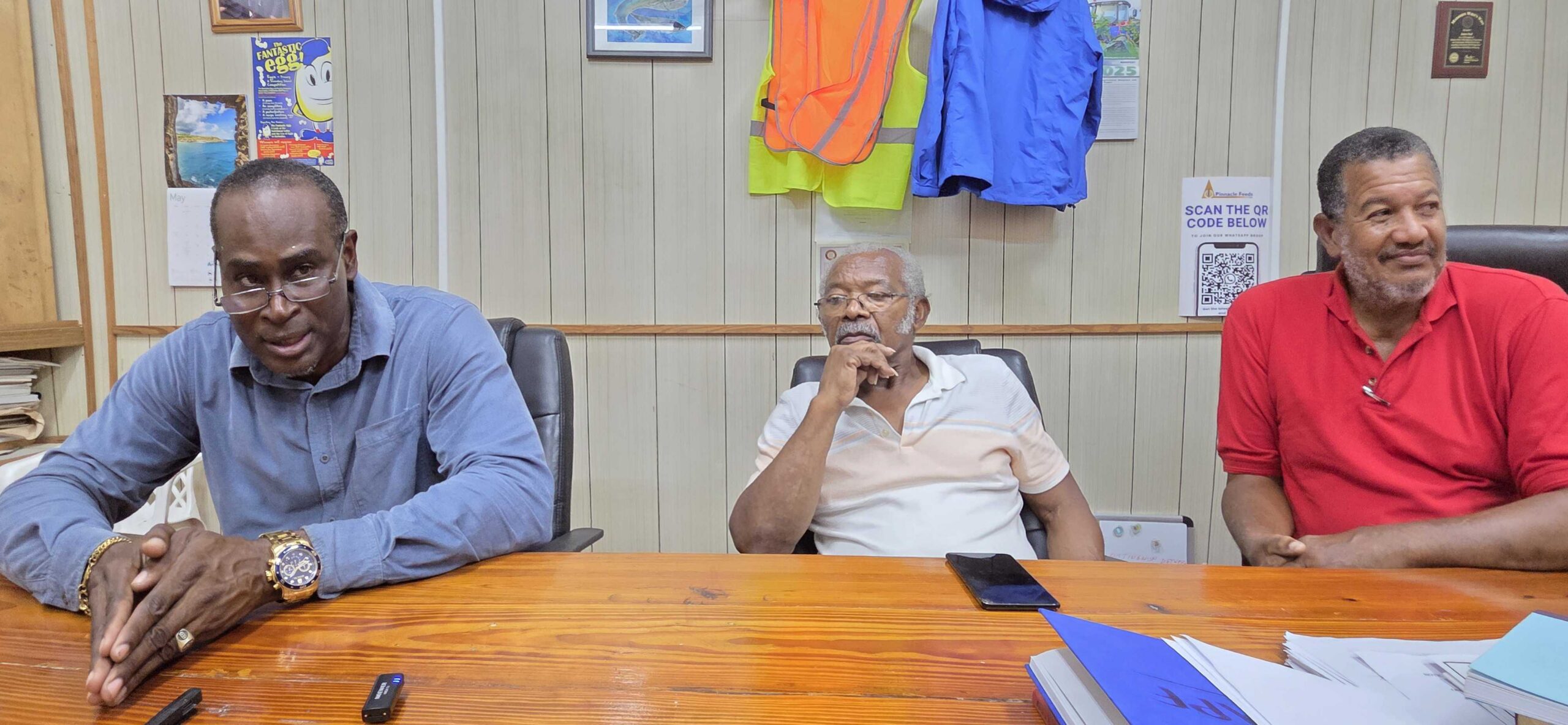
The Barbados Agricultural Society has rejected suggestions that former chief executive James Paul was abruptly dismissed or deliberately locked out of a recent membership meeting. Amid mounting speculation, BAS President Henderson Williams and board member McDonald Stevenson said Paul’s departure was the result of a long-planned retirement and an organisational restructuring, a process of which the former chief executive was fully informed. Speaking on behalf of the 12-member board of management, Stevenson said the decision to transition leadership had been in the works for quite some time. Paul, who is in his early 70s, had reached retirement age, and the board needed to make structural changes to elevate the organisation, he added. “It wasn’t a question of dismissing Mr Paul, it was a question of having reached retirement age,” Stevenson said. “The board held meetings with Mr Paul during the year. He knew that it was coming, and in those situations, we were trying to give him a soft landing, in that he was even offered a consultancy to help him in the transition period.” According to Stevenson, the former chief executive never voiced any opposition during these discussions and knew his exact retirement date months in advance. Williams reiterated that the move was a collective board decision, rather than a personal directive, aimed at securing the future of the 181-year-old agricultural body, the nation’s oldest non-governmental organisation (NGO). You Might Be Interested In “The organisation cannot be dying and the board does nothing to resuscitate it,” Williams said. “I don’t have a problem with 71-year-olds working in an organisation, but at the end of the day, we still need to make sure that the organisation is fit for purpose.” Williams also addressed the controversy surrounding a recent pig farmers association meeting, where rumours circulated that Paul had been deliberately locked out. The BAS president said attendance was strictly restricted to official members of the commodity group. Because the former chief executive is not a registered pig farmer, he was denied entry. He explained that maintaining a distance from individual commodity groups within BAS is standard protocol for the chief executive to ensure impartiality. “There is an expectation that an individual should be serving the interests of all the commodity groups and to serve those commodity groups with a level of independence The restriction at the meeting was further prompted by what Williams described as unusually high attendance and an underlying canvas aimed at removing him as president of the pig farmers. “We got calls on top of calls that there was this massive canvas going on in the background, including people being involved who one would expect to be independent,” Williams noted. “Because of all of that confusion, we determined that to protect some people from themselves and their integrity, the best approach would be not to have persons who are not members participate in the meeting.” The BAS board member urged the public and the farming community to recognise that the society is governed by a board of management, not a single individual. The BAS was created by an Act of Parliament in 1845, merely seven years after emancipation as thousands of newly freed slaves were entering the Barbadian society and economy as wage-earning labourers and peasant farmers. At its founding, the BAS represented the interests of the former enslavers — the planters. Over time it evolved into a non-governmental umbrella for farmers, commodity groups and rural producers. It promotes diversification beyond sugar, supports marketing and food security, and organises the annual Agrofest exhibition. Much of that transformation since the late 1970s has been credited to long-time general manager Haynesley Benn and Paul, his successor as chief executive. (RR)
BAS rejects claims Paul was fired or barred from meeting
Full Article
Original Source
Read the full article at Barbadostoday →KhanList aggregates and links to publicly available news content. We do not host full articles from third-party sources. Always verify important information with original sources.