
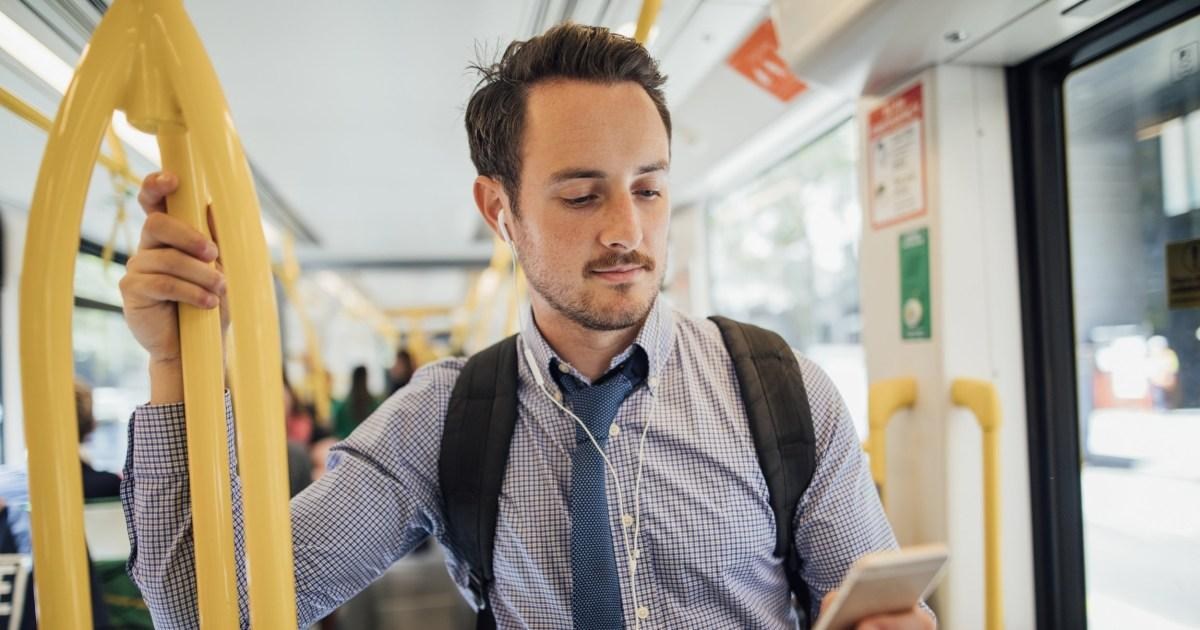
It’s the ultimate commuter faux pas (Picture: Shutterstock / DGLimages) You’ve bagged a seat on your morning commute, settled in with a copy of Metro, and then you hear it: someone else’s terrible playlist. ‘Bare beating’ is a viral term coined by Metro to describe the act of letting the beats of your music or phone conversation play out loud, rather than using earphones. And now, the UK government is cracking down on this despised habit, as local authorities are encouraged to use new powers to fine offenders. It’s part of a new campaign, launched today, to put a stop to what is officially being termed ‘loudcasting’, and could see commuters fined up to £1,000. Under the same penalty threshold, passengers can also be ticketed for vaping and littering, and engaging in threatening behaviour. Prime Minister Andy Burnham said: ‘We’ve all been on the train when someone starts blasting music or videos from their phone. It gets on your nerves and can quickly spoil the journey. Remember your headphones! (Picture: Shutterstock / Zamrznuti tonovi) ‘So we’re launching a nationwide campaign reminding passengers to use headphones on trains. ‘On top of that, we’re giving local leaders new powers to tackle loud music, vaping and littering on buses. ‘It’s a simple thing, but one that will make journeys that little bit better for all of us.’ Ask Metro Use AI to go deeper into the stories you care about – powered by Metro and trusted publications. The campaign, which launches today, will encourage passengers to ‘share the carriage, not the noise.’ It follows new legal powers rolled out for local transport authorities across England on August 5, 2026, giving them the power to crack down on bare beaters. Fines could reach £1,000 if you don’t comply (Picture: Shutterstock / 24K-Production) And, fresh guidance issued today maps out how authorities can put their own local rules into action. Transport Secretary Heidi Alexander added, ‘It is so frustrating when the actions of an inconsiderate few spoil journeys for the rest of us, whether that is vaping, littering or blasting music out loud. ‘Even small changes in behaviour can make a massive difference to people’s experience on public transport.’ How will the rules be enforced? Enforcement will be handled by authorised officers, including transport safety officers and the police. Plus, audio reminders will be in place on the rail network reminding passengers of the rules. However, speaking on Times Radio, science minister, Chris McDonald, warned that there will be no ‘bus police’ to issue punishments, and penalties will be issued ‘in the same that any rule or law is enforced in the UK.’ Offenders will face a straightforward three-step enforcement approach. You can share music, but make sure others are not disrupted (Picture: Shutterstock / Dusan Petkovic) First, officers will issue an initial warning, reminding passengers of the rules regarding loud music, vaping, and littering. Secondly, the rules will be explained to the offender, including how their behaviour impacts fellow passengers. Finally, if passengers refuse to comply, officers can issue a formal fixed penalty notice of up to £100. If someone persistently offends, they can face further action, including being removed from the network and being fined up to a maximum of £1,000. What is the new announcement really changing? Metro‘s Senior Political Reporter Craig Munro explains that fines for people blasting out dreadful beats on the train are not new. Craig says: ‘You can read the riveting railway byelaws for yourself online – they say nobody should, “to the annoyance of any person”, use any “instrument, article or equipment for the production or reproduction of sound”. ‘It’s the same section also blocks passengers from singing in a way that annoys others, but mercifully on-carriage busking is less of a thing in the UK compared to elsewhere. ‘These rules make clear that anyone caught breaking them can face a fine up to £1,000 and get booted off the train at the next stop. ‘So, what’s the announcement here? Well, one of the reasons people still blare music on trains despite these rules is a lack of enforcement. This campaign joins other countries, such as Singapore last month, that are banning bare beating (Picture: Shutterstock / Drazen Zigic) ‘An explicit new campaign like this one might make offenders think twice before they punch the ‘volume up’ button on the side of their phone, if they think someone has their eye on them. ‘However, for the same reason there are questions over how effective it’ll be to introduce fines for offenders on the bus. ‘Unlike trains, buses these days don’t usually have a conductor who can deal with unruly passengers – and the government says they won’t expect drivers to enforce the rules. ‘Instead, “authorised officers” such as transport safety officers and the police will handle them, but it’s unclear how this would work in the real world.’ A Freedom of Information (FOI) request revealed that no one was fined for playing music out loud in 2024, and only one warning was issued. What other cities ban bare beating? The new campaign follows the steps of Kraków in Poland, which, in January this year, introduced rules banning passengers from using phones or other devices on speakerphone on buses and trams, with a 200-zloty (£39.18) fine if broken. Additionally, the Indian city of Chennai introduced a rule this July, which could see passengers fined up to Rs 2,500 (£19.68) for playing music or videos without earphones. Our Top Shopping Picks See London's Christmas lights from an open-top double-decker bus this winter My skin always suffers when the heating goes on but this serum changed that The skincare formula that finally took the guesswork out of my routine Families can save up to 20% on summer 2027 holidays in Club Med's four-day sale Cold mornings are coming and this is the dressing gown I want to live in Singapore’s Land Transport Authority (LTA) also introduced new regulations in September, targeting disruptive behaviour on its public bus network, fining up to S$500 (£295.44), in line with rules already active across Singapore’s train system. Do you have a story you’d like to share? Get in touch by emailing MetroLifestyleTeam@metro.co.uk Arrow MORE: Why family holidays shouldn’t stop when you grow up Arrow MORE: The £16.50 private rooftop spa that’s right in the middle of London Arrow MORE: M27 drivers face long delays after fatal motorcycle crash closes motorway The Getaway Expert Your exclusive seven-day guide to travelling with confidence from Metro's resident travel expert, Alice Murphy.
‘Bare beaters’ face a £1,000 fine for blasting music on British public transport
Full Article
Original Source
Read the full article at Metro →KhanList aggregates and links to publicly available news content. We do not host full articles from third-party sources. Always verify important information with original sources.