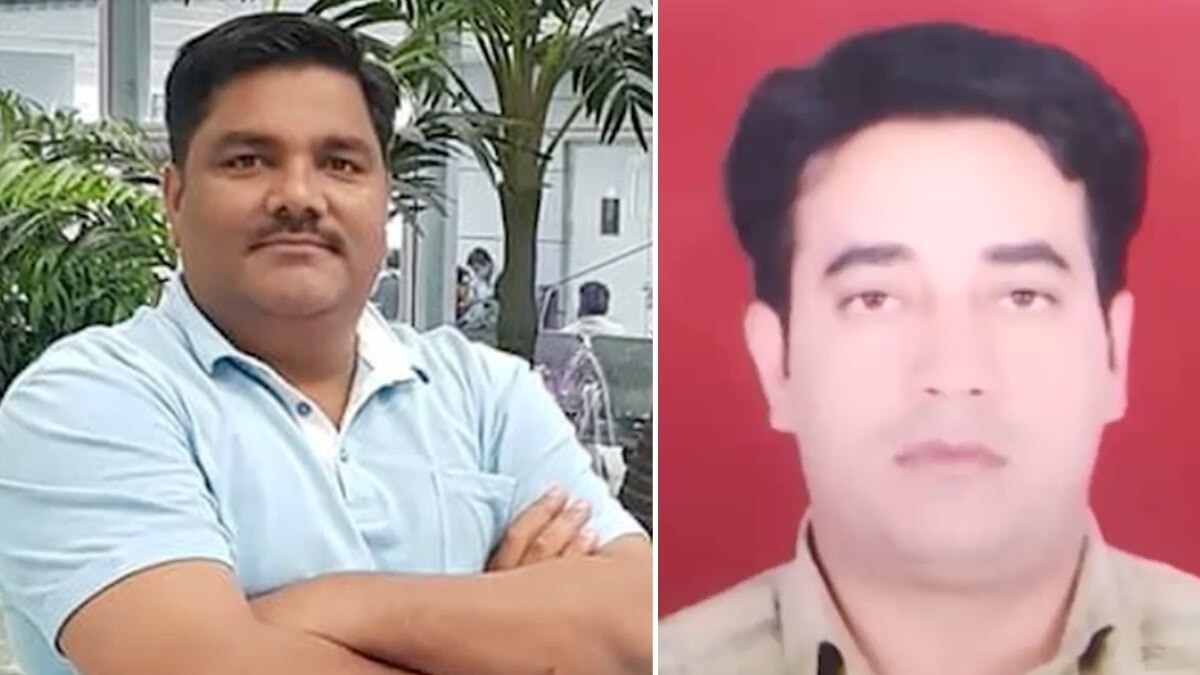
A Delhi court's sentencing order lays bare the brutality of Ankit Sharma's murder while explaining why Tahir Hussain and four others escaped the death penalty despite the crime being termed "rarest of rare".A Delhi court sentenced former AAP councillor Tahir Hussain and others to life imprisonment for the 2020 murder of IB officer Ankit SharmaA Delhi court on Friday sentenced former AAP councillor Tahir Hussain and four co-convicts to life imprisonment for the 2020 murder of Intelligence Bureau staffer Ankit Sharma, rejecting the death penalty despite describing the killing as a "rarest of rare" crime marked by "the utmost brutality".Additional Sessions Judge Praveen Singh said the prosecution had failed to establish that the five convicts were beyond reformation, a requirement before capital punishment can be imposed.The sentence was pronounced in the presence of Hussain and the other convicts amid tight security. The courtroom was packed with lawyers and senior Delhi Police officials, including the Crime Branch's Joint Commissioner and Deputy Commissioner of Police. Hussain's family members were also present.After the sentence was pronounced, Hussain said the High Court would serve him justice. COURT CALLS MURDER 'NAUSEATINGLY SICKENING'In its sentencing order, the court described Sharma's murder as "nauseatingly sickening" and said it was committed with "the utmost brutality" during the communal violence that erupted in northeast Delhi following protests against the Citizenship Amendment Act (CAA) and the National Register of Citizens (NRC)."The victim was sucked in by the murderous mob, baying for blood, solely on account of his religion," the court said. The judge observed that the assault was "so fierce, unrelenting, and from such close quarters" that Sharma's body did not immediately collapse after he was killed.The court said the brutality continued even after Sharma's death."The savagery, however, did not end there. The body of the victim was strapped like an animal and dragged to Chand Bagh Pulia. As if the hatred had still not been satiated, the dead body was thereafter thrown into the nala," the order said.Calling the murder "horrendous", the court added: "The barbarity with which this horrendous murder was committed is nauseatingly sickening."It said the extreme brutality amounted to "an aggravating circumstance of immense magnitude" and that the crime test tilted the case towards the category of "rarest of rare" cases.WHY COURT REJECTED DEATH PENALTYDespite its strong observations on the manner in which Sharma was killed, the court declined to impose capital punishment."I am unable to agree with the Special Public Prosecutor that the convicts are beyond reformation, or have such fiendish character that their continued existence, even in prison, will be a menace to society," the court said.The judge said the state had failed to place material on record showing that any of the convicts had a violent disposition or a propensity to commit crimes."The final test that law requires me to undertake before I conclude that this case invites capital punishment is whether the convicts are beyond redemption and there being no chance of reformation," the judge observed.The court said it was firmly established in criminal jurisprudence that "death penalty is the last resort".It also pointed out that no specific act during the commission of the murder had been attributed to or proved against any individual convict.The court acknowledged that the law permits a death sentence even when a murder conviction rests on unlawful assembly under Section 149 of the Indian Penal Code. However, it said a higher threshold must be met before capital punishment can be awarded."It is because these crimes were committed in complete disdain for the law and utter disregard for life and property," the court said, adding that something more than mere membership of an unlawful assembly was required before "a life is ordered to be extinguished by a judicial decree".The judge nevertheless made it clear that the convicts would face the full force of the law for the other offences for which they had been found guilty."I find myself unable to agree based on the SPP that the convicts are beyond reformation or have such a fiendish character that their continued existence, even in prison, will be a menace to society. For the other offenses the convicts have been found guilty of, they must face the full force of the law," the order said.DELHI POLICE SOUGHT DEATH PENALTY FOR ALL FIVEDelhi Police had sought the death penalty for all five convicts, arguing that they had descended "to the level of being animals" while relentlessly assaulting Sharma.Special Public Prosecutor Madhukar Pandey argued that Sharma was brutally killed and that the convicts showed him no mercy."Those who are asking for mercy today should have shown mercy themselves. No mercy was shown from anyone's side. No one even took Ankit to the hospital. They are asking for mercy after committing such a brutal murder," Pandey had submitted.The prosecution had sought capital punishment after the court convicted Hussain and four others in the murder case.COURT CONVICTS HUSSAIN AND FOUR OTHERSOn July 13, the court convicted Hussain and four others for Sharma's murder.In its verdict, the court held that Hussain was a member of a heavily armed mob that assembled with animus against Hindus to commit rioting, arson and loot, and murdered Sharma in a "savage and relentless assault".The court said the prosecution had proved that members of the unlawful assembly knew that death could result in pursuing their common object and that someone could be killed.Hussain was convicted under Sections 302 (murder), 365 (kidnapping or abducting with intent secretly and wrongfully to confine a person), 147 (rioting), 148 (rioting armed with a deadly weapon), 153A (promoting enmity) and 188 (disobedience to an order duly promulgated by a public servant) of the IPC, read with Section 149 (unlawful assembly).The court acquitted Hussain of criminal conspiracy and abetment charges. Six co-accused were also acquitted.HOW ANKIT SHARMA WAS KILLEDSharma, an Intelligence Bureau officer, went missing on February 25, 2020, after stepping out of his home in northeast Delhi during the communal violence.His body was recovered the following day from the Khajuri Khas drain near Chand Bagh Pulia.His father, Ravinder Kumar, subsequently lodged an FIR at Dayalpur police station accusing former AAP councillor Tahir Hussain and others of murdering his son.The court's sentencing order described how Sharma was allegedly attacked by a murderous mob before his body was dragged and thrown into a drain.The violence in northeast Delhi had erupted in February 2020 during protests against the CAA and NRC. Fifty-three people were killed and several others were injured.ANKIT SHARMA MURDER CASE: KEY DATESFebruary 2020: Communal violence erupted in northeast Delhi during protests against the Citizenship (Amendment) Act, leaving 53 people dead and several others injured.February 25, 2020: IB officer Ankit Sharma went missing after stepping out of his home in northeast Delhi during the riots.February 26, 2020: Sharma's body was recovered from the Khajuri Khas drain near Chand Bagh Pulia. His father, Ravinder Kumar, lodged an FIR at Dayalpur police station accusing Tahir Hussain and others of murder.June 3, 2020: Delhi Police Crime Branch filed a chargesheet in the Karkardooma court against 10 people, including Hussain, charging them with kidnapping, murder and rioting in the Chand Bagh area.August 21, 2020: The Delhi court took cognisance of the chargesheet.March 24, 2023: The court framed charges against Hussain and 10 other accused under various IPC provisions, including murder, rioting, promoting enmity and criminal conspiracy.July 13, 2026: The court convicted Hussain and four others in Sharma's murder case. Hussain was convicted of murder but acquitted of criminal conspiracy and abetment charges. Six co-accused were acquitted.July 27, 2026: The court heard arguments on sentencing and reserved its order for July 31. The prosecution sought the death penalty for all five convicts.July 31, 2026: The court sentenced Hussain and four co-convicts to life imprisonment, holding that the case did not warrant the death penalty despite qualifying as a "rarest of rare" crime on the basis of its brutality.- EndsPublished By: Sonali VermaPublished On: Jul 31, 2026 18:39 IST
Barbarity is nauseatingly sickening: Court on IB officer's murder in Delhi riots
Full Article
Original Source
Read the full article at Indiatoday →KhanList aggregates and links to publicly available news content. We do not host full articles from third-party sources. Always verify important information with original sources.