The Bank of England has held interest rates for the fifth successive time despite cautioning that energy prices and an AI-driven memory chip shortage will drive inflation higher.Forecasts by the central bank have also suggested that food inflation is set to tick higher later this year as supply issues linked to hot and dry weather weigh on prices for shoppers.A majority of the central bank’s nine-strong Monetary Policy Committee (MPC) voted in favour of keeping interest rates at 3.75%.Six members of the MPC voted in the favour of keeping the rate steady, while three called for an increase to 4%.Andrew Bailey, governor of the Bank of England, said: “Inflation has fallen faster than we’d expected, but the conflict in the Middle East continues to mean high and volatile energy prices.“That will cause inflation to rise again later this year.“However the conflict unfolds, our job is to make sure any increase in inflation is temporary and that it comes back to our 2% target.”In the first monetary policy report since Andy Burnham became Prime Minister, the Bank painted a slightly improved outlook for the state of the economy.It indicated that inflation is likely to peak slightly below previous forecasts, while growth could be stronger.In the first monetary policy report since Andy Burnham became Prime Minister (PA)PA WireHowever, policymakers suggested that the war in the Middle East is still causing significant uncertainty over how the UK and global economies will develop.The Bank predicted that UK inflation will average around 3% this year, before slowing to 2.7% in 2027 and 1.8% in 2028.It suggested that consumer price inflation – which was recorded at 2.6% last month – is likely to peak around 3.2% later this year, before steadily easing back towards the Bank’s 2% inflation target.Read MoreIn last month’s MPC meeting, the Bank had suggested inflation would peak at “slightly above 3.25%”.Higher oil prices linked to the Middle East conflict are expected to be the main driver of inflation, pushing energy prices higher for households and businesses in the coming months.The Bank has predicted that households will see a marginal rise in energy bills from October due to a new energy price cap.In July the price cap rose to £1,663 for the annual electricity bill of a typical household. This is expected to increase to £1,680 in October, the Bank said.It added that this is around £45 lower than would have been the case without the Government’s decision to temporarily remove VAT on household electricity bills.Governor of the Bank of England Andrew Bailey (Carl Court/PA)PA WireThe move is expected to have knocked 0.1 percentage points off the inflation rate in the second half of this year.The Bank also cautioned that a memory chip supply shortage, linked to high demand from the AI sector, could also add to inflation.The shortage is expected to push technology prices higher and therefore “add a little over 0.1 percentage points to UK consumer price inflation” by the end of the year.Food inflation has slowed in recent months but is expected to swing higher again, to nearly 3.5% by the end of the year, although this is weaker than previous estimates.The rise in food prices is linked to higher energy bills for food producers and supply issues caused by hot and dry conditions linked to the El Nino weather phenomenon.Meanwhile, the central Bank also suggested that the UK economy is likely to grow by 1.1% both this year and next year in its central forecast.It points to a slightly stronger outlook after the Bank previously pointed to 0.8% growth in 2026 in its previous full projections in April.The picture for unemployment is also slightly improved, with the Bank suggesting this will reach 5.3% next year, having predicted it could be 5.5% in 2027 in its most positive projection from April.
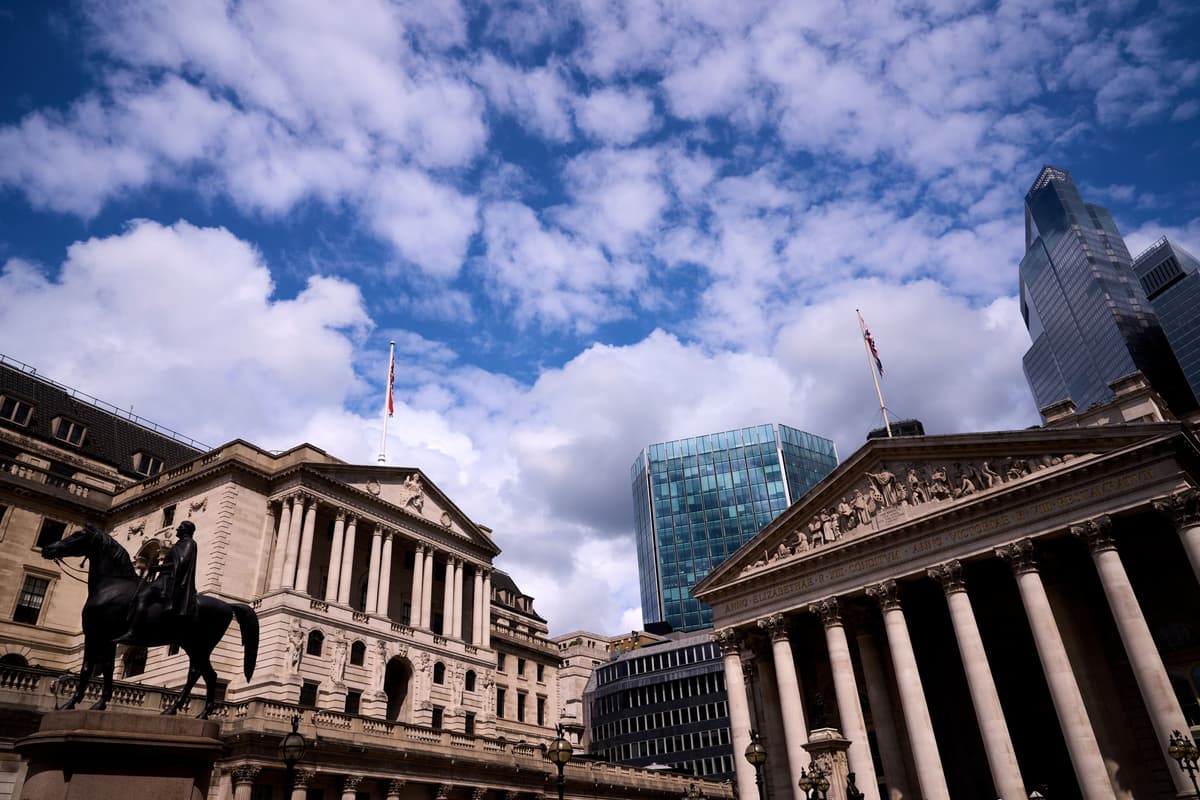
Bank holds interest rates as energy and memory chips set to lift inflation
Full Article
Original Source
Read the full article at Standard →KhanList aggregates and links to publicly available news content. We do not host full articles from third-party sources. Always verify important information with original sources.