
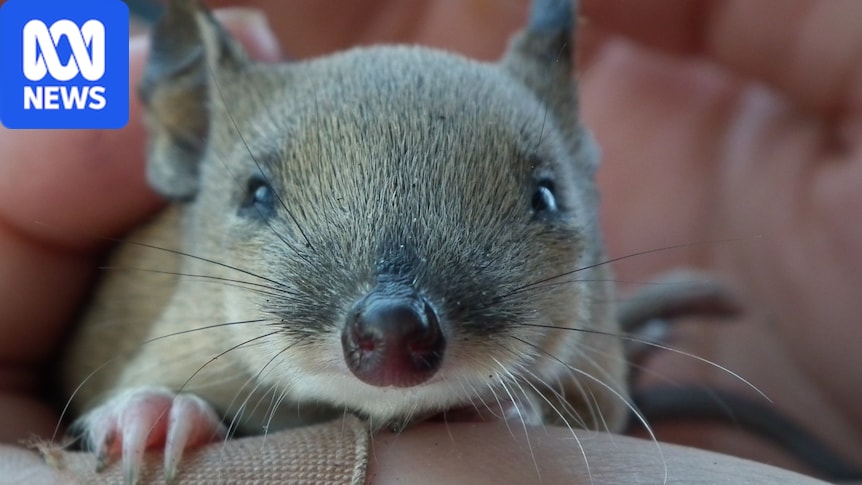
A study has uncovered a new subspecies of bandicoot in Australia, with researchers raising concerns for the declining marsupials.Scientists long believed all bandicoots in South Australia were southern brown bandicoots.However, according to a new study published in the Australian Journal of Taxonomy, the southern brown bandicoot is found only in the state's south-east.Bandicoots in the Mount Lofty Ranges, Fleurieu Peninsula and on Kangaroo Island instead are related to quendas, a bandicoot species found in Western Australia, but due to their geographical isolation are now considered their own subspecies.Researchers made the discoveries while digging through archives across the country.They catalogued specimens across Australia, using skeletons and written records to gain a clearer picture of bandicoot species and populations.The SA Museum's Steven Cooper said it was a "remarkable achievement" by his colleague from the Western Australian Museum, Kenny Travouillon.Researchers discovered minute differences in bandicoot anatomies. (Supplied: Michael Lee, South Australian Museum)"[He made] detailed comparisons of the body structure, size, skull morphology, and teeth, any possible characteristic, any measure of the different characters as well," Professor Cooper said."It all then got aligned with the genetics data."We had thousands of genes sequenced, pretty well covering all the different bandicoot species."Important animal under threatThe southern brown bandicoot is already classified as an endangered species.Professor Cooper said it could mean a "conservation reassessment" for the new subspecies of quenda.Bandicoots require thick vegetation for burrowing. (Supplied: You Li)The animals require thick ground vegetation for their habitat. Land clearing, as well as pests such as foxes and cats, have reduced the population. Kangaroo Island Landscape Board biodiversity unit team leader Karleah Berris said bandicoots across the state had been left with small, isolated populations at risk of further decline."Bandicoots are ecosystem engineers. They do a lot of digging for their food, mostly insects. Think fungi, underground roots and tubers. It involves a lot of digging," Dr Berris said."That soil turnover is actually incredibly important in our ecosystems, so it's a species we want to keep around in the state."The study also uncovered a third, newly discovered species called the little brown bandicoot (Isoodon microtis).It was once unique to the Eyre Peninsula but is now believed to be extinct.Green Adelaide conservationist Jack Casley-Smith said it highlighted why local conservation mattered."Describing a new species … that went extinct around a century ago is sobering but serves as an important reminder of the rapid changes that have occurred to our environment since European settlement," he said."It also highlights how gaps in historical data has led to issues with shifting baselines in understanding the state of the environment."A beloved marsupialIn addition to their importance to the ecosystem, bandicoots have drawn a lot of interest from people wanting to give them their best chance at survival.Bandicoots have become well-known locally. (Supplied: Michael Lee, South Australian Museum)Dr Berris said bandicoots had become a tangible example of an animal that could be protected."People have grown up with them in their backyards in the hills, seen them on the roads at night on Kangaroo Island," Dr Berris said."They’re a species that you grow up with seeing around and they're quite elusive."They are quite difficult to see, and I think people really connect with that idea that this is our last bandicoot species naturally left in the state and we really need to protect them if we want to keep them around."
Bandicoot research uncovers new subspecies amid conservation calls
Full Article
Original Source
Read the full article at Abc →KhanList aggregates and links to publicly available news content. We do not host full articles from third-party sources. Always verify important information with original sources.