
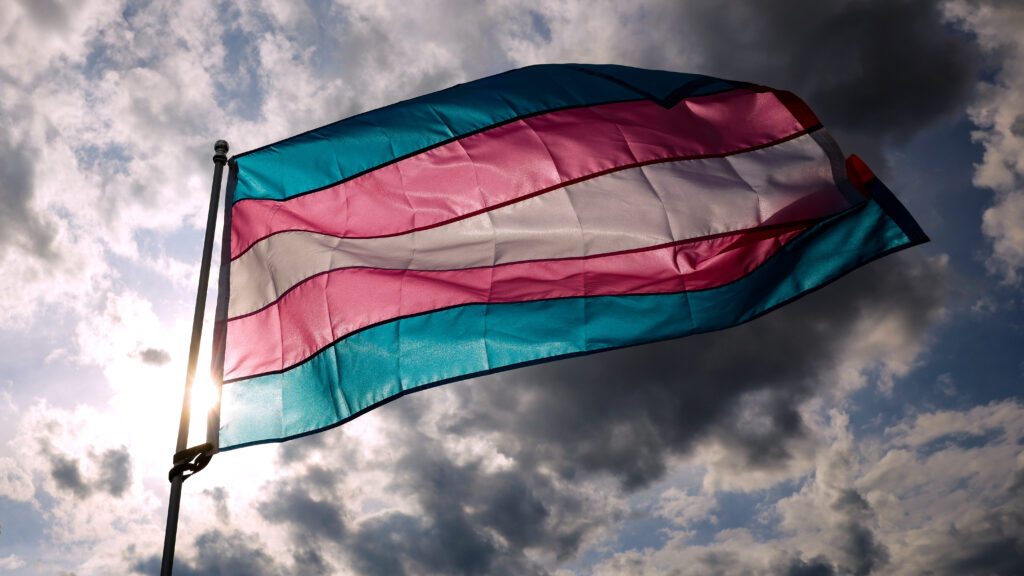
The blue wave that handed Democrats power in both the House and Senate did not filter neatly through ballot measures across the country. Measures on abortion, marijuana, science funding, and Medicaid largely reflected a more liberal national sentiment. But multiple states voted to implement or enhance restrictions on transgender youth. In Arizona, Colorado, and Washington, voters approved or were poised to approve measures to enact or expand prohibitions on transgender youth participation on school athletics teams aligned with their gender identity. Colorado also was on track to approve a new ban on gender-affirming surgery for minors. While critics called the measures on transgender rights “ballot candy” for Republicans, there was no correlation between the measures and winning candidates’ affiliations. Colorado Democrats, for example, won the Senate, most House seats, and both the governor and attorney general offices. The results indicate that many voters are concerned about gender, sports, and fairness in particular, but those worries may be outsized compared to the number of young transgender people these laws will apply to. Existing data suggest around 300,000 youth ages 13 to 17 nationally identify as transgender, and some 40% may participate in sports. In late 2024, the NCAA said that there were fewer than 10 transgender athletes among more than 500,000 total. And in response to a recent poll, an NCAA representative confirmed that zero transgender athletes currently compete in women’s leagues. Data is limited and murky on the physical advantage that people worry transgender women may have in various competitions, but research so far does not suggest any inherent edge. When it comes to medical care, data show that top surgery is rare among minors, while bottom surgery on a minor’s genitals is already virtually nonexistent. The Trump administration has relentlessly targeted youth gender-affirming care in the last two years, leading many hospitals to stop providing care like puberty blockers and hormones, even in states where the care is still legal. It’s unclear what that fight will look like now, as candidates like Abdul El-Sayed and James Talarico, who have expressed support for transgender youth, won across the country. Locally, six transgender candidates won seats in state legislatures that have never previously elected transgender representatives. “The voters rejected the anti-trans rhetoric used against candidates while still stripping away our rights at the ballot,” Chase Strangio, who leads the ACLU’s LGBT & HIV Project, said on Instagram. Strangio argued that ballot measures are “a function of funding more than anything” and should not be used as justification for more restrictive legislation. The blue wave could have trickle-down effects on Colorado’s ballot measures. Both proposals are statutory changes, which means that even once they officially pass, the state legislature can make amendments before enacting them. On Wednesday, the state’s governor-elect said the restrictions would need “a long, hard look,” before implementation, The Denver Post reported. Abortion votes stick to the status quo Four states voted on ballot measures related to abortion, and all preserved the existing legal status. The most contentious vote was in Missouri, where just two years ago voters narrowly approved a measure to enshrine the right to reproductive freedom in the constitution. The state legislature asked voters to reverse that decision, tying a potential abortion ban to a more popular proposal to constitutionally ban gender-affirming care for minors. (That care is already illegal in the state, but not constitutionally prohibited.) Voters unequivocally rejected the bid, with nearly 56% of the vote against it. In Nevada and Virginia, where abortion is already legal, strong majorities voted to enshrine that right in the state constitutions. Four years after the Supreme Court overruled Roe v. Wade, 26 states have some type of legal protections on abortion. But stalwart red Idaho denied the right to abortion, preserving the state’s existing ban. Weed smokers are safe in Mass. A measure to repeal Massachusetts’ recreational marijuana law was defeated handily, with nearly 76% of voters choosing to keep the grass growing. Polling showed the measure had little chance of passing, yet out of the state’s nine ballot questions, it became the most expensive. The measure was almost entirely funded by Smart Approaches to Marijuana, a national nonprofit that advocates against legalization that put $3.7 million into the campaign. Opponents paid $2.8 million. While no other states considered measures to legalize drugs like marijuana or psychedelics, Idaho voters preserved their right to do so in the future. More than 66% rejected a proposal that would have given all power to legalize psychoactive drugs to the legislature. But results on other drug policy measures seem to complicate the narrative of a big blue wave. Voters in two states approved measures that appear to endorse the Trump administration’s punitive approach to drug policy from his executive order naming fentanyl as a weapon of mass destruction. Arizona approved a measure naming drug cartels terrorist organizations and directing the state’s Department of Homeland Security to address the threat, while Colorado voted to increase criminal penalties for the possession, manufacture, and sale of fentanyl. (Colorado’s governor-elect said this, too, may need to be reconsidered.) Californians friendly to $8.4 billion research fund Golden State voters appeared on track to pass California’s Proposition 38, which authorizes $8.4 billion in bonds to fund immunology and immunotherapy research. The result suggests that the state’s voters were eager to defend research funding after the Trump administration’s slew of grant terminations, delays, and disruptions. But the measure has generated controversy because of where that funding will likely go. Prop 38 will direct half the funds, $4.2 billion, to a single institute that isn’t named explicitly but which must meet a long list of criteria that experts in California politics call “oddly specific.” Only one institute appears to meet those criteria: the California Institute for Immunology & Immunotherapy. This institute, also known as CIII, was cofounded by Gary Michelson, a billionaire philanthropist, retired surgeon, and Prop 38’s leading backer. Michelson poured more than $40 million of his own money into the Yes on 38 campaign; fellow CIII cofounder and treasure Meyer Luskin contributed $5 million in support of the measure. As of mid-October, the No on 38 campaign had raised less than $9,000. CIII is still under construction and went from having zero employees during the 2024 calendar year to three last month, according to documents filed with the Internal Revenue Service and reporting by CalMatters. STAT’s own reporting revealed that the American Association of Immunologists, the field’s leading scientific society, seriously considered pulling its endorsement of Prop 38 once it became clear half the funds would likely go to Michelson’s institute. The organization decided to maintain support after its governing body met with Michelson in August. The measure also drew support from more than 70 organizations, including Gov. Gavin Newsom and the state’s Democratic and Republican parties. Proponents argued that this investment would help researchers working to cure or treat new treatments for Alzheimer’s, heart disease, and cancer. They also framed Prop 38 as a way for voters to protect California from abrupt turns in federal science funding. A Medicaid win, a school meals loss Other health-related ballot initiatives saw mixed results, reflecting voters’ overarching concern with affordability and funding. As national Medicaid cuts loom, South Dakota voters rejected an amendment that would have conditioned the state’s expansion program — already approved by voters — on the federal share of funding remaining at 90%. Proponents of the measure argued that decreases in federal funding would make it too expensive for the state. But it also would have meant a sudden loss of coverage for the tens of thousands of residents who are enrolled through the expansion program. Arizona voters approved a measure to require voter approval for any local taxes on groceries, and to cap any such tax at 2%. (There’s no statewide sales tax on groceries, but local jurisdictions can enact them.) North Dakota voters narrowly rejected a proposed constitutional amendment to require public schools to offer all students free breakfast and lunch. The program would have cost $124.3 million to $134.3 million every two years, per the North Dakota Monitor. STAT’s coverage of chronic health issues is supported by a grant from Bloomberg Philanthropies. Our financial supporters are not involved in any decisions about our journalism.
Ballot measures affirm divisions over abortion and transgender issues
Full Article
Original Source
Read the full article at Statnews →KhanList aggregates and links to publicly available news content. We do not host full articles from third-party sources. Always verify important information with original sources.