
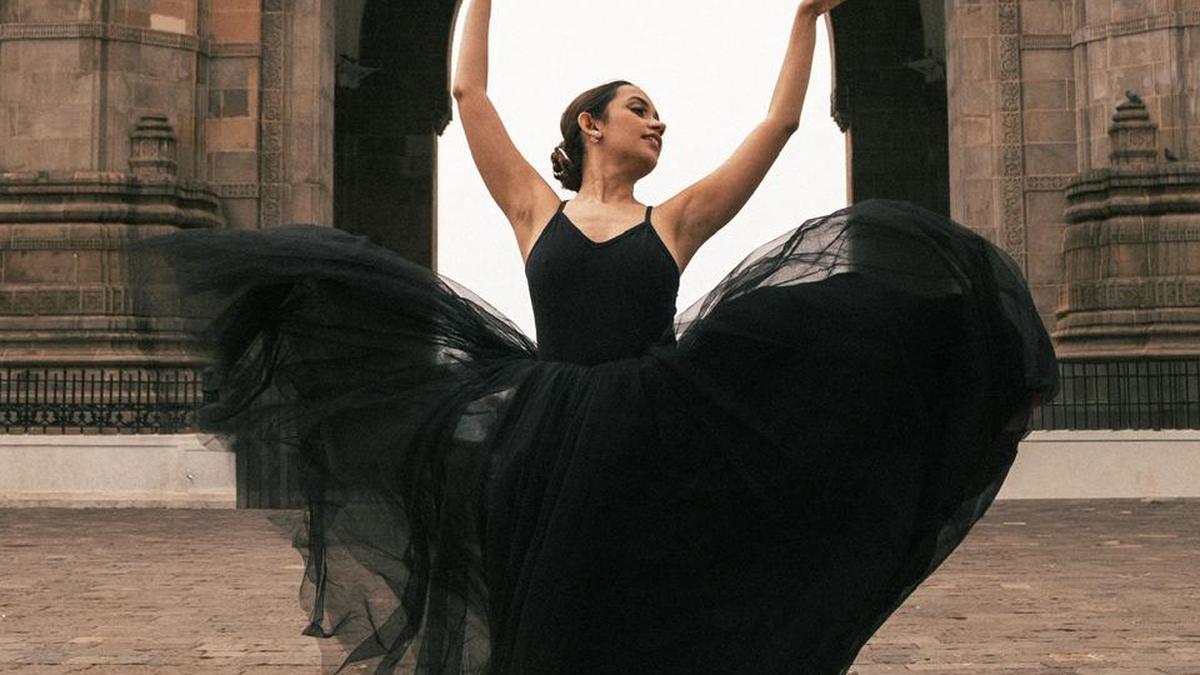
There is a fair amount of chaos in the ballet class. Little girls, in leotards and tutus twirl around the room, chatter among themselves and occasionally lose their balance. Some cling to the barre, the rail used for support, while others stretch, wobble and try to hold their positions. A few casually drop into splits as though it were the most natural thing in the world. Then the music changes. Feet turn out, backs straighten, arms rise and slowly the chaos falls into place. Watching from the side is Dhvani Kothari, founder of the National Ballet School of India. Across 12 centres in Mumbai, she now teaches more than 250 students, ranging from three-year-olds to a 44-year-old mother of two. Her own journey into ballet was far from conventional. At 13, Dhvani had already tried jazz, contemporary and hip hop, but none felt right. Then a Russian ballet instructor visited India, and everything changed. “When I tried ballet it was an instant click. I knew I belonged to it. I can just be myself here,” she says. The instructor eventually left, and Dhvani had to find her own way. Much of her formal training happened in Croatia and Hungary. At 16, she spent six months in Croatia, later returning at 19 and also spent almost six months training in Hungary. But it was not easy being a late starter. “Most of the dancers in my class were aged between 10 and 12. So it was awkward being the oldest in the class. But with time, I got comfortable,” she says. Competitions followed and so did wins. At 19, she won the Bosphorus Ballet Festival in Turkey, which had participants from 75 countries. “That win made me believe that Indians can also perform ballet with a formal, structured training,” she says. Dhvani had her formal training in Croatia and Hungary. | Photo Credit: Courtesy: NBSI In 2019, Dhvani started the National Ballet School of India. Within a year, there were more than 100 students. Then the pandemic hit. Classes moved online, a particularly difficult transition for an art form that relies heavily on physical correction and movement. “Bringing ballet to a country that still didn’t understand it, was in itself a struggle, and then to shift all of that to an online mode was tough. Initially, we didn’t really know how it was going to work. But with a supportive set of students things began to fall in place,” she says.Running the school also meant taking on responsibilities beyond dance. “I was young and didn’t really understand the business aspect of it, but was keen to introduce ballet to more young enthusiasts. Eventually, I learned to balance the creative and administrative aspects,” she says. Dhvani had to develop a curriculum, introduce exams and competitions, organise shows, and build a team. The school follows the Vaganova method of Russian ballet, known for its rigorous training and emphasis on technique. Students follow a structured syllabus over seven to eight years. Dhvani’s NBSI follows the Vaganova method of Russian ballet, known for its rigorous trainig. | Photo Credit: Courtesy: NBSI There are still several misconceptions she has to deal with. Ballet is often seen as something only girls do, or as a hobby rather than a serious form of training. There is also the assumption that beginners immediately start dancing on their toes. In reality, pointe work usually comes much later and depends on a dancer’s ankle and core strength and level of training. Dhvani also wants to dismantle the idea that ballet is only for thin bodies. “Ballet is for every body type, because there is really no limitation to how you do it,” she says.Another challenge is the shortage of male dancers. The school currently has only six boys, and the gap becomes particularly evident during performances. “A proper classical ballet routine requires male dancers too, as certain roles demand their presence. I hope to see more boys pursue this form,” Dhvani says.The infrastructure for ballet in India is gradually improving. Mumbai now has venues such as the Royal Opera House and NMACC, but Dhvani feels there are still few spaces suitable for a full-scale ballet production. Studios also often lack sprung flooring. When she began training in India, she says, dancers would practise on marble floors. For Dhvani, ballet is not something that ends when class is over. “It is a way of life for me, because every aspect of me is linked to the dance form. My sleep, diet and even thought process are shaped by ballet. And no, I don’t survive on salads alone. I include plenty of protein in my meals and occasionally indulge in a slice of chocolate cake,” she says.Her larger ambition, however, goes beyond getting more children into ballet classes. At present, students who want to pursue ballet professionally have to leave the country for advanced training and opportunities. “We train them and then watch them leave. “Ideally, I would like to see them perform and build their careers here.” The thought that a ballerina is a performer and is meant to be on stage is changing. Dhvani and her dancers have worked on film sets, provided movement direction for Bollywood actors and collaborated with brands and cultural institutions. The school also stages its own productions and has built a growing network of students and teachers, creating more opportunities for ballet in India. Back in the studio, the music starts again. The girls return to the barre, straighten their backs and stretch their arms into position. For Dhvani, this is where the work begins.
‘Ballet is for every body type’: Indian ballerina Dhvani Kothari challenges stereotypes
Full Article
Original Source
Read the full article at Thehindu →KhanList aggregates and links to publicly available news content. We do not host full articles from third-party sources. Always verify important information with original sources.