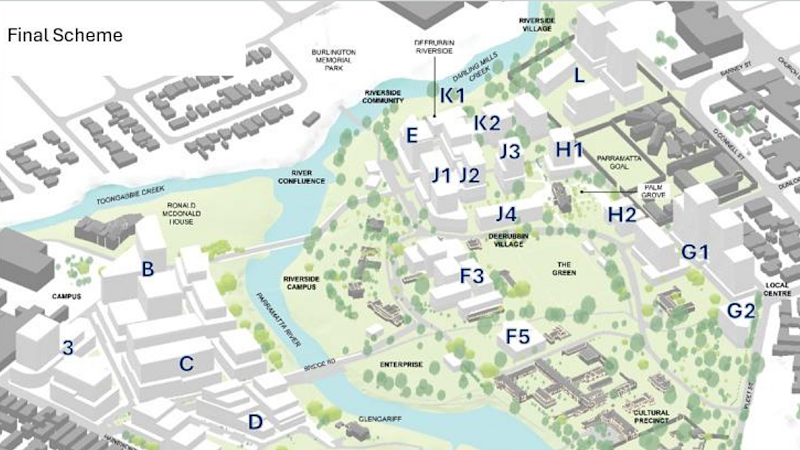
The state government’s plans for the dramatic rezoning of North Parramatta have been scaled back, following sustained complaints from community members and a federal MP over concerns about heritage.The NSW Labor government in 2025 exhibited plans for 2500 homes in government-owned land north of Parramatta’s CBD, but a final plan for the area, released on Friday, lists rezoning to allow up to 2000 homes, with buildings spanning between two and 23 storeys tall.The final rezoning announcement caps off years of local debate about the future of the 33-hectare area, which brought opposition from both the Parramatta lord mayor-turned-state MP Donna Davis and federal MP Andrew Charlton.Charlton argued rezoning was not appropriate until a final decision had been made on the world heritage status of the convict-era Parramatta Female Factory, which abuts the site but is not included in plans. The UN earlier this year handed down a draft decision recommending it not be listed for world heritage status.The rezoning will include 100 affordable homes and up to 10 hectares of public open space, the government said. There will be space for sports fields and play areas. The University of Sydney has put in an unsolicited proposal for a university space next to the area.The site, next to stops for the underused Parramatta light rail service, is about 2km from the Parramatta CBD and under-construction metro stop, and in walking distance of the Westmead Health Precinct.A drone view of the Parramatta Female Factory precinct from above.Parramatta Female Factory FriendsOne of the earlier proposed buildings next to the Parramatta Female Factory and other heritage sites has been removed from the final plan in favour of green space, while the height of another planned building next door will be reduced from 21 to 13 metres. Most of the land being rezoned is owned by the government and will be sold off over the next four years.At a housing conference on Friday morning, Premier Chris Minns said the government would spend $125 million on electricity, water and road connections for the area, and praised the final exhibit as a “balanced result” between heritage and housing needs.Opposition Leader Kellie Sloane told reporters at the conference the Liberal Party was “very supportive of what the premier is saying about this” but called on Minns to be more ambitious in providing affordable housing on the site.“We built the light rail to get there but this government needs to be more ambitious when it comes to affordable housing as well. To have an area where it’s government land, our government built the transport corridor to build 2000 homes, and only 100 of those will be genuinely affordable. It’s not good enough.”Premier Chris Minns in conversation with Housing Now! leader David Borger.Housing Now!Charlton did not respond to a request for comment but, in an Instagram Reel posted on Friday from the historic Hambledon Cottage, said: “we are working hard to protect Parramatta’s heritage”. He was giving former premier Bob Carr, now chair of the Australian Heritage Council, a tour of historic sites.Phil Bradley, a former Greens councillor and vice president of the North Parramatta Residents Action Group, said the group was “enraged” that the government was ignoring advice from the UN’s International Council on Monuments and Sites through the overdevelopment of areas around the historic sites.Liberal reforms slammedEarlier at the conference – organised by bipartisan pro-density group Housing Now! – Sloane faced sustained backlash over the party’s new policy to give back to councils the ability to decide where to place low- to mid-rise housing, a control previously taken over by the state government. Councils would only be allowed to enact alternatives if the number of homes under their own plans meet or exceed that of the state government’s.Minns, the Urban Development Institute of Australia, advocacy group Sydney YIMBY, and the Housing Now! network all slammed the changes as unnecessary or harmful to housing growth in Sydney.David Borger, chair of the group, said councils could not be trusted to organise their own density alternatives because doing so often led to “silly outcomes like putting density on the edge of local government areas”.“We think the low- to mid-rise policy is a basic smart policy for Sydney that will deliver housing to people most in need and we can’t afford to take our foot off the accelerator in the middle of a crisis,” he said.Sloane said the policy was not about letting councils off the hook.“At the moment we have a very rigid structure … A one-size approach just doesn’t work in Sydney, where every community is so different. You can’t tell the people in Parramatta that their planning opportunities are the same as Balmain,” she said.Start the day with a summary of the day’s most important and interesting stories, analysis and insights. Sign up for our Morning Edition newsletter.From our partners
‘Balanced result’: Parramatta rezoning plans scaled back following heritage concerns
Full Article
Original Source
Read the full article at Smh →KhanList aggregates and links to publicly available news content. We do not host full articles from third-party sources. Always verify important information with original sources.