
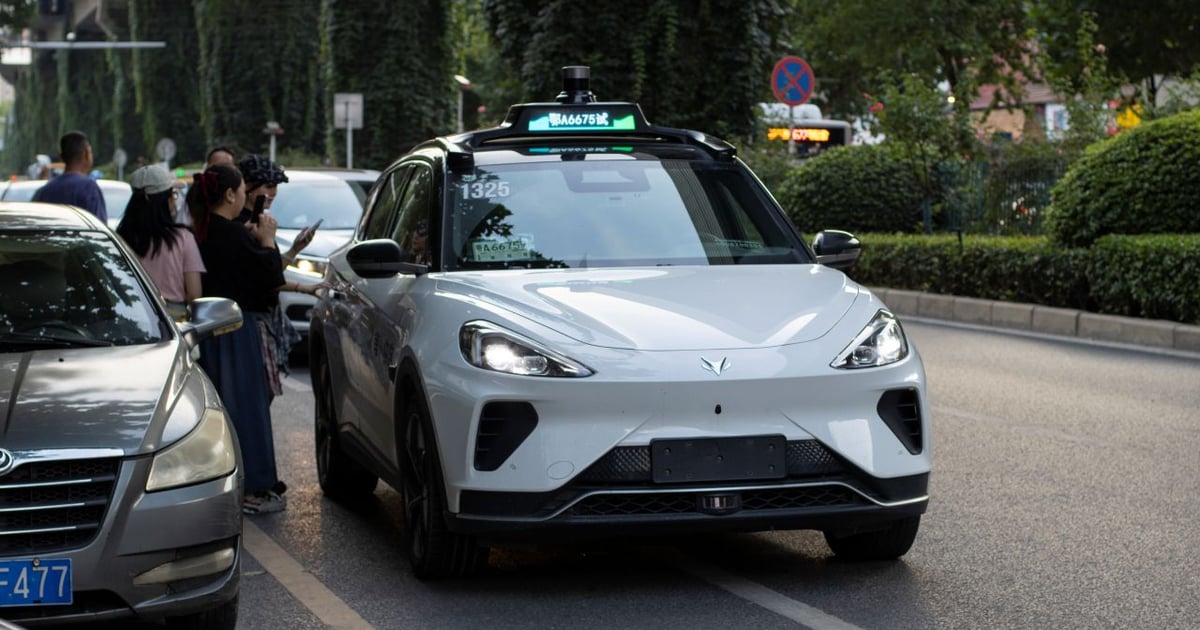
Tourists in Wuhan, China, hail a self-driving robotaxi developed by Baidu.hapabapa via Getty ImagesThe Baidu model shows how important physical AI is becoming for industries such as autonomous vehicles, but it also highlights one of the main challenges associated with world models: expense.The Chinese open source AI vendor, at its AI Day Apollo event on Tuesday, unveiled Apollo World, a world model built to train autonomous vehicles such as Baidu’s robotaxis. According to Baidu, the model can generate about three years of real-world testing per day. It was trained on 217.48 million miles of data from the Apollo Go fleet.Apollo World reflects the flexibility and importance of AI world models in moving generative AI beyond knowledge tasks into the physical world. Many AI models remain applicable to domains such as coding and cybersecurity; however, the growing popularity of world models enables enterprises to see how AI can influence domains like autonomous vehicles.World models and autonomous driving“It’s the most reasonable application of world models because the automotive industry is one of the more mature ones,” said Lian Jye Su, an analyst at Omdia, a division of Informa TechTarget. “The other one is actually gaming, so between gaming and automotive, world model vendors have plenty of opportunities to democratize world model usage.”Related:Humanoid bottlenecks emerge amid US-China tensionsSu added that enterprises can use world models for various purposes, thereby potentially achieving commercial viability and popularity. That viability is evident in the variety of world model creators and their focus on autonomous driving.The Waymo World Model from Google DeepMind was built on top of the Genie 3 foundation model and converts video logs into 3D simulations. Waabi is another vendor that relies on its proprietary world model to train its AI-first virtual trucking fleet before putting an actual fleet on the highway. The Nvidia Cosmos open source world model enables developers to put physical world logic into their robotics and autonomous workflows.Despite the growing popularity of world models, one major challenge is how expensive they are due to the massive compute power they require for training and for them to run in real time. Most world models also require one GPU per active user, which is extremely expensive for users. However, even with the high cost, the models are worth the investment, Su said.“World models are very powerful models,” Su said. “The moment you get it right … you have strong foundational data. You can generate very accurate duplicates of a virtual version of the physical world, and that generally contributes heavily to very accurate prediction and generation.”Related:Physical AI moves beyond traditional roboticsEsther Shittu is an Informa TechTarget news writer and podcast host and producer covering AI technology.About the AuthorNews Writer, AI BusinessEsther Shittu has covered AI technologies and industry trends since 2021. As co-host of the Targeting AI podcast, she talks with experts, thought leaders and practitioners exploring critical AI developments. Before AI Business, she wrote for SearchEnterpriseAI, the New York Daily News, Bklyner and the Brooklyn Daily Eagle. When she's not diving deep into the world of AI, she spends her time on passion projects and raising her three daughters.
Baidu’s new world model highlights value, challenge of physical AI
Full Article
Original Source
Read the full article at Aibusiness →KhanList aggregates and links to publicly available news content. We do not host full articles from third-party sources. Always verify important information with original sources.