
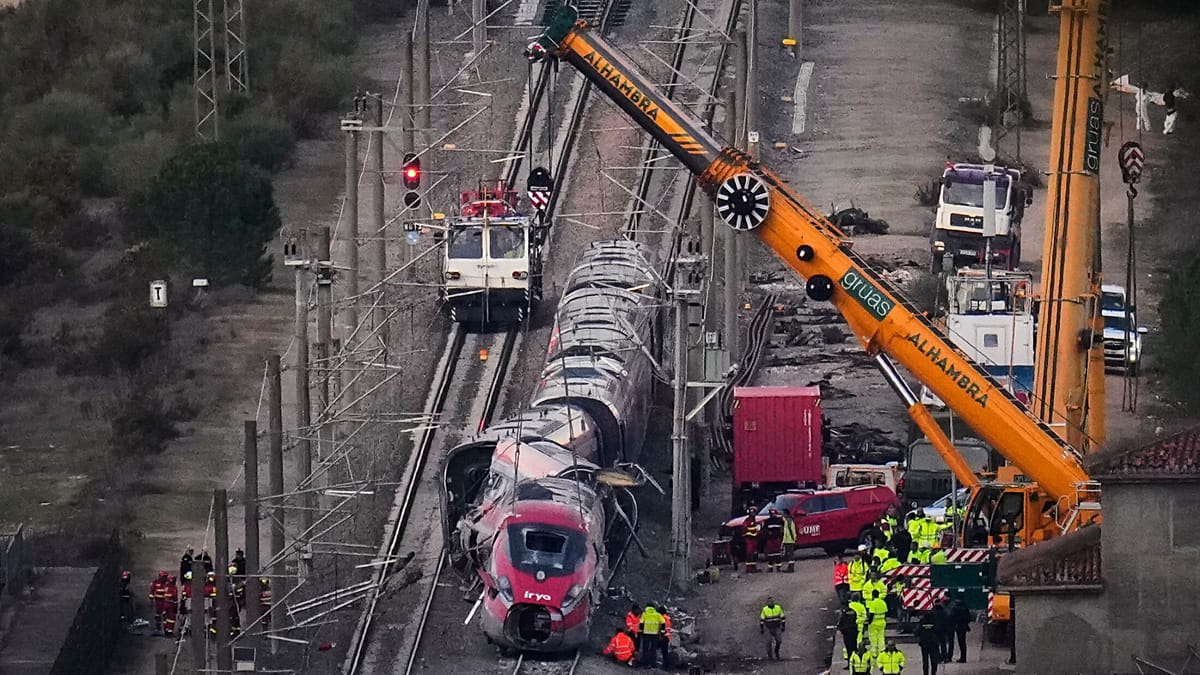
Published on 25 November 2026 - 14:36 GMT+1 Court-appointed experts investigating the 18 January rail accident in Adamuz, Córdoba, Spain, in which 46 people were killed and more than 150 injured, point to a poorly executed weld and subsidence of the ground as the most likely causes of the disaster. ADVERTISEMENT ADVERTISEMENT In a preliminary expert report dated 20 November, the three engineers tasked with establishing the cause of the accident state that a 6.4-millimetre irregularity, detected in October 2025, may have contributed to the fracture of the rail that caused the Iryo train to derail and then collide with a Renfe Alvia. The experts warn, however, that outstanding tests could still alter their conclusions. A faulty weld and a track irregularity detected months earlier According to the experts, the sinking of one of the rails may have generated overloads on the opposite rail as trains continuously passed over it, progressively weakening the weld until it broke. The engineers call this phenomenon the 'seesaw effect'. The irregularity did not require trains to reduce speed, but it did call for closer monitoring and maintenance work. The experts say they have no evidence that such follow-up was carried out. The weld under investigation joined a rail manufactured in 1989 to another from 2023, installed during upgrade works on the Madrid-Seville high-speed line in 2025. The two rails differed in properties and hardness, although this type of joint is covered by Adif's technical standards. The investigators have also found inconsistencies in the welding records and are examining whether the quality checks carried out during the works were sufficient. Ten months of investigation and tests still outstanding The examining magistrate in Montoro, Cristina Pastor, has asked the Judicial Police in Córdoba to look for alternative laboratories after the Centre for Public Works Studies and Experimentation (CEDEX) reported that it did not have the means to carry out certain tests on the concrete sleepers. Ten months after the accident, the investigators are still awaiting the analysis of the rails, welds, ballast and sleepers recovered from the scene. These tests will be crucial to determine how the fracture originated and to establish any potential responsibility.
Badly welded rail and sinking ground likely caused deadly Spanish train crash, experts say
Full Article
Original Source
Read the full article at Euronews →KhanList aggregates and links to publicly available news content. We do not host full articles from third-party sources. Always verify important information with original sources.