
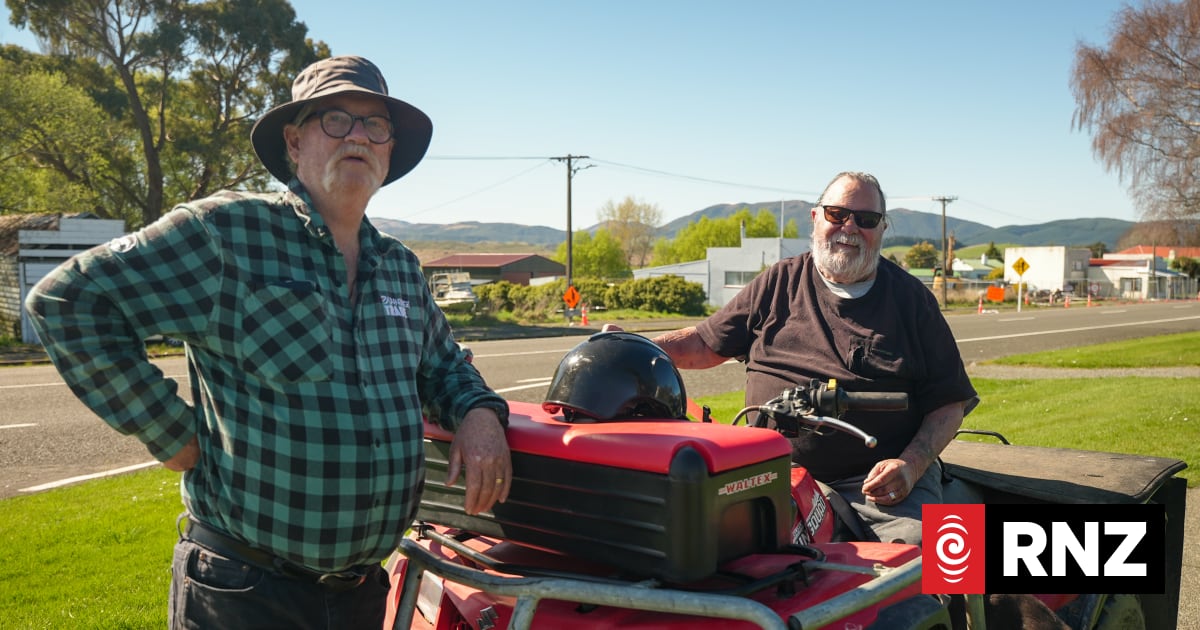
People in Southland's former coal country are fighting against a loss of industry, families and opportunities. They are also struggling against the rising tide of the cost of living. With Election Day tomorrow, RNZ South Island correspondent Tim Brown and camera operator Louis Dunham head to Ōhai and Nightcaps for their last journey on the Backroads to the Beehive.Ōhai and Nightcaps were once the heart of Southland's coal industry.The towns were bustling, home to more than 1000 people each and hundreds of coal miners in underground and open cast mines.Carter Allan first went underground as a teenager and spent 40 years mining coal.He will soon turn 80 and cannot believe how much Ōhai has changed in his lifetime."The Linton Mine itself had 100 underground miners at the face, they were digging 800 tonnes a day," he says, sitting outside his home in a quiet dead end street on the outskirts of Ōhai."There were 1200 in the town. I'd say if there's 300 [now] we'd be lucky."Ōhai was once home to more than 1000 people, but now only about 300 live there.RNZ / Louis DunhamThe faces have also changed."Once upon a time I knew everybody in Ōhai," Allan says."I wouldn't know 10 people in Ōhai now. Wouldn't have a clue who they were."Mechanisation changed the nature of mining and Ōhai's last coal mine closed in 2021.The mine was run by Solid Energy until the company's collapse in 2015.Locals talk about promises of mine restoration with pastures and lakes when the coal was gone but the mine was sold after Solid Energy went into voluntary administration. The new owner has planted hundreds of hectares of pine trees.'It's just sad. New Zealand's been sold out'James McGeoch, who has lived in Ōhai for about a decade, says that was a betrayal."That was done, sort of, underhandedly. Most of the people in this town agree with that," he says."The promises they give you, don't wind up at the end and we're a classic example of that."That land should have been turned back into pasture and used and not planted in trees. The whole side of this town is going to have pine tree forest down it in 20 years. Who would want to live here with all that pollen and the shade, not being able to see this lovely vista? It's just sad. New Zealand's been sold out."Most of the miners are now long gone.Takitimu Mine is all that is left of the once thriving coal mining industry in Ōhai and Nightcaps.RNZ / Louis DunhamThe wider area is now home to only one mine, Takitimu in Nightcaps, and its future is in doubt.Trina Kemp grew up near Nightcaps and is raising her children on the family farm.She fears for the future of the area."We're just watching our town die," she says."We grew up here, went to school here and numbers are dwindling for children coming through because you used to have a 200-acre farm to run your family on and now you've got the big farmers with a few workers."Farming is now the backbone of the area but farmers have faced a terrible start to spring, with wet and cold weather making life tough."You don't want to know about my life on the farm at the moment," Kemp says."It's been wet. It's been terrible. It's horrible. With the weather, you're out there with calves, you're out there with lambs and you're saving as much as you can save."'We've seen the best of New Zealand'Back in Ōhai, one of the town's last shops was being torn down when RNZ visited.Allan says it is another symptom of the area's decline.The rugby club? "Gone," he says.The post office? "Gone.""The four shops - gone. It's quite sad actually, now I have just woken up to the fact that we've seen the best of New Zealand."Allan pays more than $4000 per year for rates."For what we've got here in this town? It's nothing," he says."We've got a bit of water going past the road. We've got no footpath, we've got nothing, no shops, no nothing."Dave Reid pays almost $5000 for rates in rural Southland.RNZ / Louis DunhamIt is the same story in Nightcaps, where Dave Reid pays almost $5000 for rates."The rates are just so expensive to be here. Us pensioners are feeling like we are being rated off our properties" he says.If he or his wife died, he says the other would not be able to afford to stay.Reid cannot understand how the cost of living in small town New Zealand has become so expensive."We've been sold down the river by politicians from either side," he says."This country produces so much food, it's got so many natural resources but now when you even go to buy a cheap cut of meat, like mince, that's a luxury."Mike Samuels, a pensioner who has recently moved to Ōhai, agrees that his generation has been sold out by politicians and decision-makers."They've got our tax out of us for 50, 60-odd years and now they've just chucked us on the backburner, we sit here in town and if we weren't frugal we would have trouble surviving," he says.Nightcaps is home to the last remaining coal mine in Nightcaps or Ōhai.RNZ / Louis DunhamHe and others have little or no faith in politics or politicians."At the moment it's like a sick cow, it needs to be shot," Samuels says.In Nightcaps, Chris Garrett cannot stand the two major parties or their leaders."The National Party are a bunch of evil bastards and Labour's not much better," she says."Each end of the country gets ignored by the politicians. I've lived from one end to the other now and they just don't want to know about small town New Zealand."They've got no mana. They're disreputable. They seem to think that them and their mates are more important than the country."'Living the dream' in paradiseDisillusionment and distrust of politicians is rife. Services are lacking.Life is expensive, even in some of the cheapest parts of the country, so why do people still call them home?Ōhai and Nightcaps are known for their stunning views of the surrounding hills and green pastures.RNZ / Louis Dunham"When people say 'oh, why do you live there for?' I say, 'I'm living the dream'," Reid says."If we have three cars going up the road or down the road, it's called a traffic jam here. It's really good, honestly," Samuels says.The Southland towns have thrived because people scratched out a living and injected life into the green pastures and wild hills.Local characters fought for their slice of paradise."I'd like to keel over here, finish here, that would suit me down to the ground," Allan says.
Backroads to the Beehive: No country for coal men
Full Article
Original Source
Read the full article at Rnz →KhanList aggregates and links to publicly available news content. We do not host full articles from third-party sources. Always verify important information with original sources.