
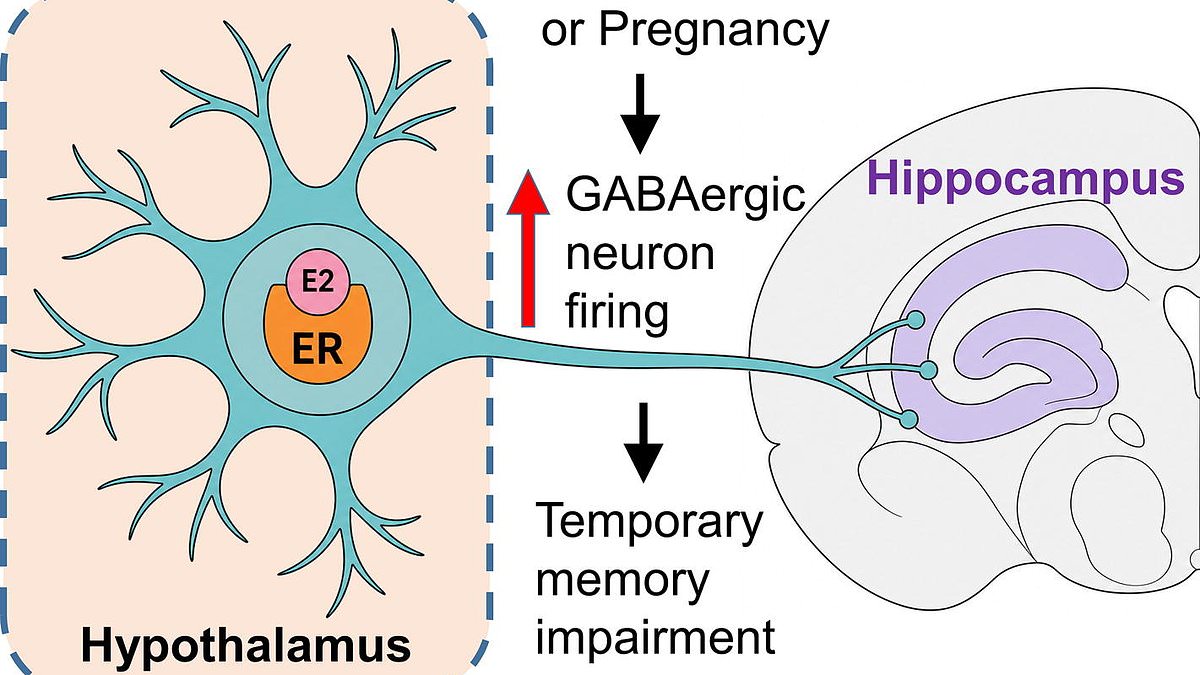
Published: 09:39 EDT, 27 September 2026 | Updated: 09:45 EDT, 27 September 2026 From lost keys to forgotten shopping lists, ‘pregnancy brain’ has long been dismissed as an old wives' tale.But scientists have now identified a hormonal brain circuit that appears to make expectant mothers more forgetful during late pregnancy.As part of a study, researchers from Baylor College of Medicine in Texas exposed mice to pregnancy-level concentrations of oestrogen.They discovered that these high hormone levels disrupted a specific brain circuit involved in memory formation.Elevated oestrogen appeared to overstimulate neurons in the hypothalamus, which then interfered with activity in the hippocampus, a key memory centre.When the researchers switched off this pathway, memory problems disappeared – suggesting it plays a direct role in the phenomenon known as ‘mumnesia’. The team discovered that high levels of oestrogen during pregnancy can trigger temporary memory impairment‘We worked with mouse models designed to mimic the sustained, high blood-oestrogen levels of pregnancy,’ senior author Dr Zheng Sun said.‘These models showed that elevated oestrogen caused reversible memory impairment without affecting mood or motivation, suggesting a specific cognitive effect.’The team then tested pregnant women and found that memory performance declined in late pregnancy and was linked to higher levels of circulating oestrogen.Importantly, the effects appeared to be temporary and specific to certain memory tasks, rather than a sign of broader cognitive decline.Senior author Dr Xianghua Zhuang said: ‘Mumnesia is real, it has a defined biological basis and is temporary.‘We hope this work validates what many women have described anecdotally for years.’The researchers said their findings, published in the journal Science Bulletin, offer the first biological explanation of how exposure to high levels of oestrogen can temporarily impair memory.They said the discovery could eventually help doctors reassure women experiencing ‘pregnancy brain’, and may even lead to treatments that prevent memory lapses without affecting the hormone's other important roles in the body.
Baby brain IS real, scientists say - as they discover how high hormone levels disrupt brain memory circuits
Full Article
Original Source
Read the full article at Dailymail →KhanList aggregates and links to publicly available news content. We do not host full articles from third-party sources. Always verify important information with original sources.