
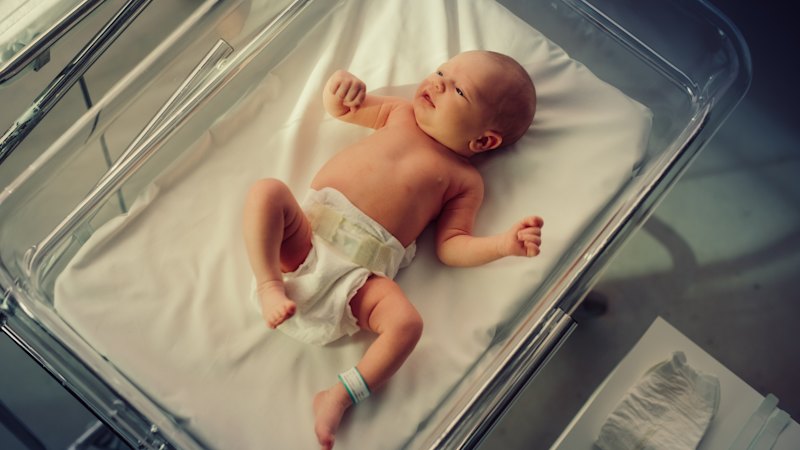
November 28, 2026 — 11:55amTens of thousands of Australians are being snared in a Tax Office push on private health insurance, and are forced to pay thousands in Medicare levy surcharge despite having private cover.The Australian Taxation Office is using data matching technology to enforce a poorly understood law on families’ private health insurance.Now, about 50,000 people are staring down hefty tax debts for not taking out private hospital cover for all family members, including dependent children and spouses, or buying the wrong kind of insurance.Forget to get private health insurance for your baby and you’ll have to pay a surcharge.GettyLisa Greig, a tax lecturer at the University of Melbourne, said the number of affected taxpayers was surprisingly large, and probably caused by a misunderstanding of how the laws apply or a lack of attention to detail in tax return disclosures, rather than tax avoidance.Some parents agree and have complained they were not informed – by their tax agent, insurer or the hospital where they gave birth – that they needed to add their child to their insurance to avoid a pricey surcharge.The ATO has not yet determined the total amount owed. It is also unclear what the average debt is, although people are reporting receiving bills in the thousands. In the 2024 financial year, 885,087 people paid the Medicare levy surcharge, at an average $1284 per person.The Australian Taxation Office is using data matching technology to enforce a poorly understood law on private health insurance.Louie DouvisIn July, the Tax Office flagged it would send “data matching letters” to well-paid people or families who did not have the required “appropriate level of private patient hospital insurance” to avoid the Medicare levy surcharge. “Appropriate” cover must have an excess of $750 or less for singles, while couples or families must have an excess of $1500 or less. General cover, known as extras, does not qualify.The surcharge is designed to encourage people on high incomes to take out private hospital cover and applies to singles earning at least $105,000, and couples and families earning at least $210,000 combined. It’s levied at between 1 per cent and 1.5 per cent of income, and kicks in if any family member – even dependent children, such newborns – does not have “an appropriate level of private patient hospital cover”. (The surcharge is in addition to the 2 per cent Medicare levy most taxpayers already pay.)This week, the ATO said it “expect[ed] to issue letters to approximately 50,000 taxpayers based on data related to the 2025-income year, following comparisons between information reported in taxpayers’ tax returns, private health insurance records and spouse tax return information”.“This population includes taxpayers not holding an appropriate level of cover for themselves and/or their family, [and] instances where information reported by private health insurers does not match information reported by the taxpayer,” it said.The ATO is asking parents whether their children have hospital insurance. Dom LorrimerThe ATO reminded taxpayers they were “responsible for ensuring the information reported in their tax return is accurate and reflects their personal and family circumstances”.Greig said: “Many people assume that holding their own hospital cover means they’re saved from the Medicare levy surcharge. But if you have a spouse or a dependent child, the test is whether everyone in the family is covered. Unfortunately, both spouses can get caught with paying, even the taxpayer with the cover.”Mark Chapman of H&R Block says health insurers can help prevent bill shock.An ATO spokesperson said taxpayers could avoid unexpected Medicare levy surcharge liabilities by reviewing their insurance statements, checking their cover includes all dependents and speaking to their tax agent. Insurance experts say the levy is more expensive than the hospital cover.The surcharge is not new, but its underpayment has become more apparent under data matching. “With the ATO matching insurer data against tax returns, mistakes are being picked up,” said Jenny Wong, the tax lead at accounting organisation CPA Australia.Wong advised people who have been contacted by the ATO to “check the schedule carefully against their own records, talk to their tax agent and respond before the due date if they disagree”.Mark Chapman, the director of tax communications at accounting firm H&R Block Australia, said the Medicare levy surcharge was not well-known, and it was unreasonable for the ATO to expect people to understand tax law without outside help.“There has to be an obligation on particularly the insurance companies to advise them of their obligations to make sure that everybody is actually covered under the policy,” Chapman said.“There’s a real weakness there in terms of the burden basically falling entirely on taxpayers to disclose this information.”But the Australian Health Funds Council, which represents private health insurance funds, said health funds “were very clear on the requirement”, and acknowledged people would seek advice about health insurance and the Medicare Levy surcharges. “We would hope and expect that brokers, financial advisers and others are giving accurate advice to customers,” a spokesperson for the council said.‘With the ATO matching insurer data against tax returns, mistakes are being picked up.’Jenny Wong, CPA Australia.They said that if people used their health insurance when starting or expanding a family, their fund “may invite” them to add their baby to the policy. But under Australian taxation law, they said, “the onus is on the individual to know about the Medicare levy surcharge and dependents”.The letters highlight an increasing reliance by the ATO on data provided by third parties, such as health insurers, banks, land agencies, crypto platforms, temporary accommodation providers and government departments, to ensure people are paying the right amount of tax.“The data’s just so rich now, so their data matching is getting better and better,” said Greig, who predicts more people will get ATO letters to review and amend their tax returns – for various reasons beyond health insurance – based on discrepancies found through data matching.The Business Briefing newsletter delivers major stories, exclusive coverage and expert opinion. Sign up to get it every weekday morning.Madeleine Heffernan is an Explainer reporter for The Age and The Sydney Morning Herald. She has also reported on education, city, business and consumer affairs for the publications.Connect via X or email.From our partners
Baby bill shock: Data matching whacks tens of thousands of taxpayers
Full Article
Original Source
Read the full article at Smh →KhanList aggregates and links to publicly available news content. We do not host full articles from third-party sources. Always verify important information with original sources.