
Muscat: The autumn equinox begins in the Sultanate of Oman on Wednesday, marking the astronomical onset of autumn in the Northern Hemisphere, coinciding with the receding influence of the monsoon winds and the decline of the climatic autumn “Khareef” locally known in Dhofar Governorate.On this phenomenon, Al Reem Hamad Al Malki, a member of Oman Astronomical and Space Society, said in a statement to Oman News Agency (ONA) that astronomical calculations indicate this year’s autumn equinox will occur tomorrow, Wednesday, at 4:05 a.m. Oman time. In Muscat Governorate, the sun will rise tomorrow at 5:55 a.m., reach its zenith at 11:59 a.m., and set at 6:03 p.m., giving a day length of approximately 12 hours and 7 minutes. She added that this additional length of daylight is due to the phenomenon of atmospheric refraction, which makes the sun appear above the horizon before its actual sunrise and after its actual sunset as a result of the bending of its rays as they pass through the atmosphere.She explained that the exact equality between night and day, known as the equilux, will occur in the Sultanate of Oman this year on Monday, 28 September 2026, when the sun will rise at 5:57 a.m. and set at 5:57 p.m., making the day length exactly 12 hours, in accordance with the Sultanate of Oman’s geographical position relative to the equator.Al Malki added that with the passage of the autumn equinox, daylight hours in the Northern Hemisphere begin to gradually decrease while nighttime hours increase, and this change continues until the winter solstice, which witnesses the shortest day and longest night of the year in most regions of the Northern Hemisphere.The opposite occurs in the Southern Hemisphere, where daylight hours begin to increase with the astronomical onset of spring. She explained that on the day of the autumn equinox, the sun apparently moves from the Northern Hemisphere to the Southern Hemisphere; autumn begins in the Northern Hemisphere, while spring begins in the Southern Hemisphere.With the onset of autumn, the angle of solar incidence in the Northern Hemisphere begins to gradually decrease, reducing the amount of solar energy received throughout the day.She indicated that the astronomical onset of autumn does not mean a direct or sudden drop in temperatures, as weather conditions do not change merely with the occurrence of the equinox.Temperatures on the Earth’s surface are affected by multiple climatic and atmospheric factors, including wind movement, air currents, air masses, heat and cold waves, and the geographical characteristics of each region; therefore, hot conditions may persist in some areas even after the astronomical onset of autumn.Al Malki added that during the autumn equinox, which usually occurs between 22 and 23 September, the sun rises from the east and sets from the west almost precisely, making it possible to determine directions, and shadows disappear at noon on the equator in a phenomenon known as the “zero-shadow day.”
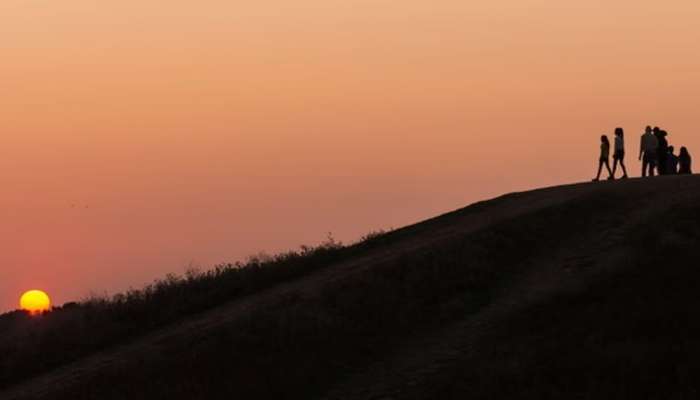
Autumn equinox in Oman begins tomorrow
Full Article
Original Source
Read the full article at Timesofoman →KhanList aggregates and links to publicly available news content. We do not host full articles from third-party sources. Always verify important information with original sources.