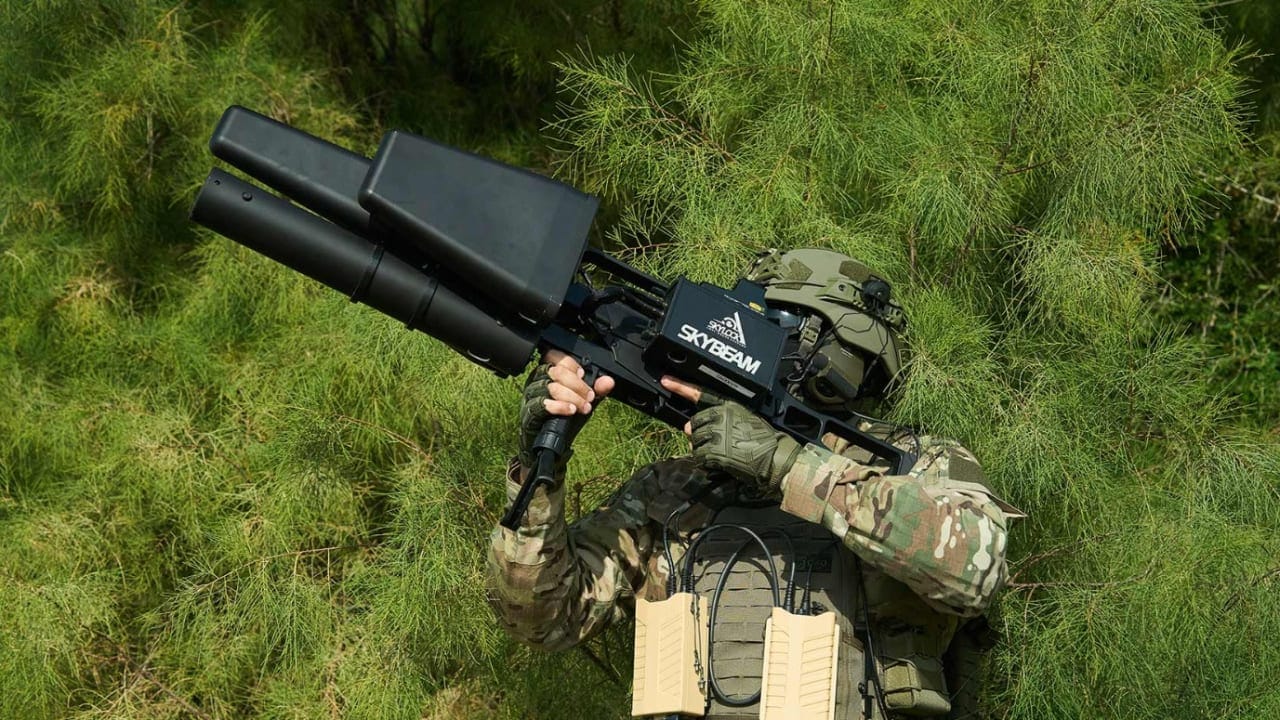
ByANNA AHRONHEIMJULY 28, 2026 10:42Autonomous Guard, an Israeli defense tech company that develops of counter‑drone and homeland‑security technologies, has secured a substantial follow‑up order from a security customer in Asia.While the company would not disclose the customer, Defense & Tech by The Jerusalem Post understands that the deal is for a regional police force in Asia.The new order, valued at approximately $400,000, comes only two months after the same customer purchased an initial batch of systems worth about $200,000, signaling a rapid strengthening of the commercial relationship.The deal includes detection, jamming, and interception systems called Skybeam, produced by Skylock Systems, Autonomous Guard’s wholly owned subsidiary. Delivery is scheduled for the fourth quarter of 2026.Skybeam is a compact, lightweight, and combat-portable system designed to disrupt and neutralize drone threats in real time. It enables an effective and immediate response for tactical forces in the field.A South Korean Army drone during a live fire military exercise at the Seungjin Fire Training Field in Pocheon, 30 kilometres south of the border with North Korea, May 21, 2026. (credit: Jung Yeon-je / AFP via Getty Images)Autonomous Guard operates through two primary subsidiaries: Skylock and BeeSense Sensor Systems. Skylock specializes in drone detection and neutralization, while BeeSense Sensor Systems handles border threat detection across land, air, and sea. Both companies serve military and homeland security customers globally.The timing of the order is a result of heightened concern over drone activity in Asia and around the world. Drones - from palm-sized quadcopters built for kamikaze strikes to unmanned fighter jets - have moved from the margins to center stage as military commanders, politicians, intelligence officers, and defense industry executives converged this week to assess which technologies might give them the edge in a future conflict in the Pacific.As geopolitical tensions intensify in areas such as the South China Sea, the Korean Peninsula, and the Taiwan Strait, the need for reliable detection and interception systems has become a central priority for defense ministries and internal security agencies. Many global companies, including large defense OEMs, are opening offices in Asia and trying to persuade regional militaries that their solutions can counter those types of threats.In several East Asian countries, militant groups are using small and commercial-sized drones for intelligence gathering and improvised explosive attacks, prompting homeland security agencies and security forces to accelerate investment in counter‑UAS capabilities.In February, several Israeli companies showcased their solutions at the Singapore Airshow, showing how many defense companies are beginning to pivot away from Europe.Though the shift is not absolute, with Europe still Israel’s main market, there are more Asian customers, more joint research and development (R&D), and more long‑term industrial partnerships, especially as traditional Western markets become more politically constrained after the Israel-Hamas War.In 2024, Israel’s defense exports surged to an unprecedented $14.8 billion, marking the fourth consecutive year of growth.During that year, European nations accounted for 54% of deals, up from 35% the previous year, with missiles, rockets, and air defense systems making up the largest tiers of defense exports. The Asia-Pacific region accounted for 23% of exports, with India remaining the largest customer alongside significant deals with Singapore, Philippines, and Vietnam. Like Europe, air defense systems, missiles, and drones were the most significant platforms exported.Roi Riftin, CEO of Autonomous Guard, said that East Asia is a key target market for the company and aims to continue to grow there.“We recently signed a memorandum of understanding to supply complex protection and surveillance systems, in a deal that also includes the sale of dedicated vehicles, to a large security customer for an expected consideration of $8 million, which could increase to $20 million,” he said.In February, Autonomous Guard signed a memorandum of understanding valued at approximately $1.9 million with an undisclosed Indian security client. The agreement, signed with an undisclosed Indian security client, covers the gradual supply of the Bee 3 advanced surveillance and threat‑detection systems developed by BeeSense Sensor Systems, Autonomous Guard’s wholly owned subsidiary, specializing in sensor‑based observation technologies.Reuters contributed to this reportFollow us on Google
Autonomous Guard expands Asian presence as regional drone threats accelerate
Full Article
Original Source
Read the full article at Jpost →KhanList aggregates and links to publicly available news content. We do not host full articles from third-party sources. Always verify important information with original sources.