
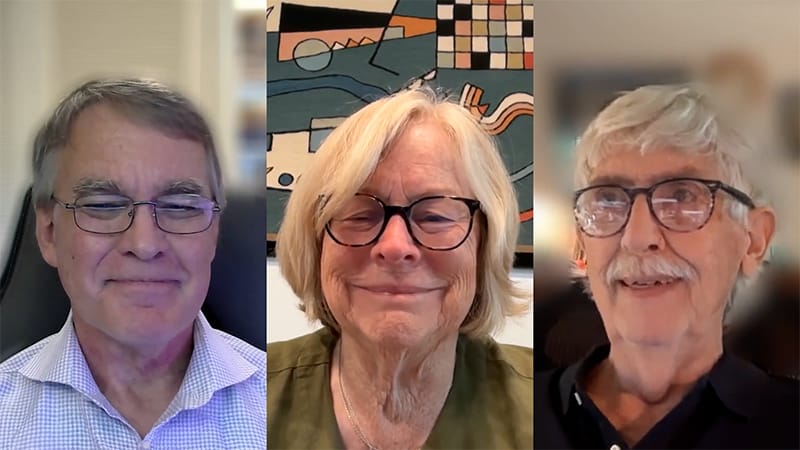
This transcript has been edited for clarity.Stephen M. Strakowski, MD: Hello, and thank you so much for tuning into our discussion today. I’m really pleased to have people I consider maybe the world’s experts in autism. We’re going to talk with them today about all the press around autism and what we think the future of the diagnosis is going to be.I’m Dr Strakowski. I’m a professor at Indiana University School of Medicine in Indianapolis. With me today, I’m thrilled to have first Dr Fred Volkmar who is the Irving B. Harris Professor Emeritus at the Child Study Center at Yale, and Dr Catherine Lord. Cathy is the Dr George Tarjan Distinguished Professor of Psychiatry and Education at the David Geffen School of Medicine at UCLA. Again, these are two very distinguished scientists and clinicians. Cathy and Fred, welcome. We’re glad to have you today.Catherine Lord, PhD: It’s nice to be here.Strakowski: How do we diagnose autism now? As clinicians, what should we be looking for? Lord: There is no medical test for autism right now. There’s a lot of belief that it is a neurobiological disorder, so it does come from something medical. But there isn’t a medical test. It really is dependent both on seeing how someone acts and usually hearing about them. In the case of a child, this would be from their parent or their teachers. In the case of an adult, this would be from them, and sometimes from other people.It’s very different from diagnosing an ear infection or a bacterial infection, or something where there’s a blood test, an MRI, or something that’s definitive that says yes or no.Strakowski: Fred, do you want to add to that on how we make the diagnosis and think about autism these days? Fred R. Volkmar, MD: If we could take a big step back, I know one of the questions you asked us to think about was, what is autism? In my retirement, I teach part-time. I teach special ed teachers at Southern Connecticut State University working for their master’s. One of the things I’ve discovered with teachers is the “A word” is somewhat off-putting. So, I talk to the teachers about learning difficulties, and I describe autism as a social learning disability. For me, that’s an easier package for teachers and sometimes for parents as well.Cathy is absolutely right. We don’t have a simple blood test. Newborn babies get a hearing test; they don’t have to cooperate at all. But we don’t have that, sadly, for autism. We have some screeners. There’s good news and bad news. The good news is the screeners pick up a lot. The bad news is they don’t just pick up autism, and for people who are high functioning, they don’t work well.There was a big study in Norway of 40,000 kids and the screeners, and they just bombed. Europeans don’t use screeners. We encourage pediatricians in this country to use a screener, and the data are not horribly strong on the screeners. So, it’s dependent on the clinicians having some knowledge, which is why things like this are very important for clinicians to understand: “How do you think about autism? How do you know?”I’ll meet somebody on the street and instantly know they have autism, but I’ve seen thousands of people. I’m sure Cathy’s the same way. You sometimes know it by how they talk, or by how they don’t look at you, or they’re doing calendar calculations, or whatever they do. It’s a very interesting business because if you spend a lot of time, you get very good at it.People who don’t spend a lot of time evaluating people for autism, it’s more of a challenge. Our challenge is how we help people, especially people out in practice who have never seen a case of autism. Maybe they don’t know anything about child development particularly; how do they understand, how do you diagnose? It’s a big problem and conundrum.Recognizing the Signs of Autism Strakowski: What would be the key symptoms? Say we have a screener and you’d say, “Okay, you should really follow up and ask about these three or four things.” What would you highlight?Volkmar: In that Norwegian study, as I recall, there was one question that predicted best: if the parents had any concerns about the child’s development at 1 year. That was the best predictor of autism at age 5, as confirmed by research instruments like Cathy’s Autism Diagnostic Observation Schedule.So, I think paying attention to parent concerns is key. I’ve had occasions where the grandparents were concerned. There’s a whole package of what you do in terms of evaluating a child, and Cathy and I have been doing it for a long time. As I say, the challenge is not for us to diagnose autism; that’s for the general practitioners.Lord: To build on what you said, Fred, in the Norwegian study, the other thing that they found was, “Has someone else ever asked you, ‘Are you worried about your child?’” As parents, you’re worried about everything under the sun. Or you have parents who don’t worry about anything. So that was really helpful — like the grandparents or a friend said, “Oh goodness, what’s going on?” I think the main things that probably Fred and I would use are very basic aspects of social behavior, like eye contact, facial expression, how someone holds their body, what kind of intonation they have.Volkmar: Emotional reciprocity.Lord: Yeah. But I think that the spectrum is so big, and also there are so many changes across time that you do see people who are adults who have learned to control those things more than when you see a 3-year-old or a 4-year-old.Volkmar: Last night, I was on the phone with a former patient of mine who I maybe saw when he was 10 or 12. He’s just finished his master’s at one of the eastern Ivy League colleges, and he’s trying to get into the PhD programs. We were talking about whether should he talk about his past history of a diagnosis. I told him I thought he would pass, that he does not need to do that unless he needs support.That’s again one of the interesting things. We have kids now, which is a major change from when Cathy and I first got into the business. The kids are going to college. They’re doing better. They’re getting married sometimes, which is all great news.Now, we still have a hardcore group of people who don’t do well even with what seems like good interventions. We’re going to talk about them. But we also have some people with interventions who take off like rockets. So, it’s a very interesting and very diverse field.Evidence-Based Interventions for Autism Strakowski: What are the more effective interventions these days? The two or three things you first recommend. I know you end up going through a menu of choices eventually.Lord: There are a lot of interventions. Many of the early interventions are quite similar to each other. There’s traditional behavioral intervention, or applied behavior analysis, but that has morphed into something much broader, which is often more natural. Not just sitting a kid in a chair and doing something 20 times over and over, but following their lead, doing something that’s fun.The early interventions have the best data, but they’re tiny changes. As Fred said, it’s a matter of taking off. If you have an early intervention, it can help a child who doesn’t know how to communicate and help a family who is struggling to communicate with their child figure out how to communicate with each other.If we can get that started, the interventions tend to be an adult working with a child around things that child can learn next — not things that are too hard and not things that are too easy, in a fun way.Volkmar: I would absolutely echo that. Some of the interventions are more behaviorally focused, others are more developmentally focused, and there’s some pivotal responses. One example of a kind of halfway in between methods, but they’re regarded as evidence based. They work in multiple places, they’ve been replicated, and that’s all for the good. Sometimes you get kids going and it’s great. Often the early focus, as I explain to my students in my teaching program, is learning to learn skills: Can you sit in a chair? Can you focus? Can you pay attention?Also, for the therapist’s side, is figuring out what motivates the kid. What turns the kid on? Is it M&Ms? Is it getting up and moving around? Is it a trampoline? Is it throwing a ball? Again, the kinds of things that you would think about: How can we engage with this child to make them more part of the natural world?Most kids come into the world, they’re focused on people, they’re learning from people. They learn from people watching the environment. Kids with autism who don’t have that learn from the environment as much as they can. They don’t learn from people. They’re very focused on contingencies and little stuff in the environment, which to the rest of us is mostly irrelevant. That’s what they’re focused on, and we need to help them revert to focusing on their parents and other people.The Role of Genetics in Autism Strakowski: Cathy, you alluded to this a little bit. We think of autism as neurodevelopmental. Is it a single thing, or I’m guessing it’s multiple etiologies and we’re still defining them? Can you help me with that a little bit?Lord: Fred can jump in. There’s clearly strong genetics, but the genetics works in different ways. There are rare genetic mutations that are generally not inherited from a parent. They’re just a fluke that occurs predominantly in kids who have autism and intellectual disability. Kids who are quite far behind, sometimes who have epilepsy. There are hundreds of those cases that have now been identified. They do have some common pathways, which I won’t try to talk about. So that’s one thing.Besides that, there’s also the fact that if you have one autistic child, even a bright autistic child, your chances of having another autistic child go way up. Not most of the time, but up to maybe 1 in 5 or 1 in 10, as opposed to 1 in 30 or whatever. That is not due to these very specific genetics. So, we think there’s some kind of polygenic or multiple genetic combination that puts people at risk for autism.Volkmar: The only thing I would add to that, which I absolutely agree with, is there is a tiny space for some environmental role, which remains elusive, I’ve got to say. People come up with animal models, which mostly are very devastated animals and autism is the least of their troubles. But it’s interesting that there’s a little role in that.If I could just give my very brief historical perspective on this. Autism was described back in 1943 by Leo Kanner. He talked about autism, living in your own world, and he talked about insistence on sameness, which is that kind of environmental focus. Over time, we’ve expanded on his original definition.Early on, people thought maybe parents caused autism. That was a horrible mistake. Parents were blamed and people like Bruno Bettelheim wrote books basically blaming the parents and trying to fix the kids through psychotherapy, which didn’t work.The 1970s was a very creative time for the field, which led to the real takeoff for it in the 1980s. In the 1970s, as kids were followed, we realized about 20% of them, classically autistic children, had seizures and epilepsy. It’s hard to imagine how your mom putting a whammy on you at 6 months causes you to develop seizures at age 16, which was not an uncommon time. Adolescents with autism often develop seizures, which is otherwise a very rare event. So, that was evidence for brain involvement. The first twin study was done in England by Susan Folstein and Mike Rutter. They found a very high rate in identical twins as opposed to fraternal twins. But even in the fraternal twins, it’s higher than you might expect. And the first studies were done showing that educational interventions were better than psychotherapy.In 1980, autism was officially recognized for the first time in the third edition of the Diagnostic and Statistical Manual of Mental Disorders (DSM). As a result of that, there was an explosion of work, thousands upon thousands of articles. Before that time, it was only hundreds of articles. That’s kind of the big division in terms of the history of the field.Strakowski: I’ve always thought of the schizophrenogenic mother as the low point in our history, but this one feels like the same thing. So, I’m sorry to hear there was another low point in the history of mental health, but I’m glad we’ve moved past that.Strakowski: Fred, you made the perfect transition for me. I want to look at a graph from a recent paper by Grosvenor and colleagues. That’s part of why we’re talking today. This has gotten a lot of negative public press and misinformation because the diagnostic rates have gone up. It’s led to all kinds of hypotheses that have been shown to be proven incorrect but keep coming back.This is the study from over a 10-year period ending around the pandemic, 2022. Part of it is showing that there is variability across regions of the United States, which I suspect is related to what’s available, who’s making diagnoses, and so forth. But then independent of that, everyone’s going up, with minor exceptions.How do we understand this increase? Is autism really more common, or is it being more recognized, or is it an expansion of criteria sets? What do we think is happening?Lord: I think we can’t rule out that maybe autism is increasing slightly. But what we can say is that greater awareness, greater access to services, and broader criteria all contributed to it going up. We can never say that nothing new is happening. Most of the change has to do with the fact that we now use the term “autism” much more broadly than we did 50 years ago.It used to be autism was like a death sentence. People really did not want that diagnosis. Now there are people who actually seek it out for a variety of reasons. It’s often associated with better services for children. For adults, it’s often associated with a community and a sense of, “Oh, there are other people like me, and this will be useful for me in understanding my own problems.” I think the combination of those things — and Fred, you can speak about this probably more than I can — is clearly a source of increase, in younger kids but also particularly in adults.Volkmar: I absolutely agree with that. When you get into this, it’s a very interesting and tricky business. I would first underscore what Cathy was saying. Autism in some funny way is the golden ticket in terms of getting services. You get occupational therapy, you get physical therapy, you get speech, you get behavioral intervention. Sometimes parents will want the ticket to get services. It’s like Willy Wonka and the golden ticket.That’s a problem, because not everybody who gets the label really has the disorder. Again, I don’t want to knock anybody’s adoption of the label, but that being said, there is this kind of incentive to get the label, which is a problem.So, you’ve got that going on, and then you’ve got a lot of issues around public awareness. As I recall — Cathy, you may remember this better than I do — there was a study some years ago that compared the rates in California. In Beverly Hills, rates were skyrocketing. In East LA, there was nothing. Those are a few miles apart. What is that all about?I can tell you what it’s about: People in Beverly Hills know about autism. They’ve seen Rain Man. They understand what the label is. The teachers understand. The school understands. They have the services. The poorer section of Los Angeles are so busy coping, that’s the least of their troubles. You have to keep in mind it’s a funny business.It also has do with where the autism diagnosis came from, which is something Cathy can talk about probably even better than I can. The original cases were not all boys, but mostly boys, with mostly borderline to mild intellectual difficulty. The early instruments and the criteria were the paradigm. As time has gone by and we’ve become aware of genetics and all the rest of it in autism, it’s gotten much more interesting and much more complicated.Disparities in Autism Diagnosis Volkmar: We have all kinds of interesting tensions around the diagnosis and underdiagnosis in certain populations: Hispanic persons, Black persons, children. We need to think about that. Then there’s overdiagnosis in other populations. How well do the criteria or the guidelines work for girls and women? Are we underdiagnosing? Is it the criteria used to diagnose? Are we doing a better job? It’s a very interesting tension.Then you’ve got the perpetual problem of lumping and splitting, which the DSM goes back and forth between. You’ve got to look at that as well. At the moment, we’re lumping; before, we were splitting. We’ll probably go back to splitting again, but who knows?Lord: I do think the one good thing about the increasing rates is that autism was much more likely to be diagnosed in White kids or upper middle class Asian American kids, and not in Latino populations and Black kids. That is getting better. So we are going to have increases because it’s those kids who were always there; autism was just getting called other things in them, and they weren’t getting services that would’ve helped them.That’s one of the problems with the latest CDC report: They deliberately added a site to have more severely handicapped, less wealthy kids in it, and up this rate went. But that’s good. Then there’s the other issue of later diagnosed people, who are generally more educated and more affluent, and are seeking diagnoses. It’s complicated.Volkmar: When you get into the epidemiology, it gets really tricky. I can remember as editor years ago of the Journal of Autism and Developmental Disorders, I got a paper. They had a national sample from 10,000 people, and they reported some very funny numbers about autism. Looking at the method, there was a phone interview, which is what they were using to do all this. There was one question, something like, “Has anybody ever used the word ‘autism’ with you around your child?” I thought, “Geez, this is a problem.” I ended up rejecting the paper. The authors were ready to kill me, and I said, “The trouble here is there’s no attempt to confirm the diagnosis. There’s no diagnosis even.” It was just, “Did anybody ever use the word?” Oh my gosh.Let’s take a step back and try to understand that the best data come from when you see the child and do an assessment, and then you can be sure of the diagnosis. The trouble with a lot of these data is that they’re just taking school Individualized Education Program records. They’re just taking school reports. As Cathy alludes to, you can manipulate these by looking at which schools, and it’s a bit of a mess.Strakowski: Those are very interesting and helpful comments. It’s clear the national conversation decided to be political rather than scientific, and it would be helpful to alter that. Part of my goal of having these kinds of conversations is to do exactly that.You brought up some good reminders around structure within mental healthcare delivery. It’s the same problem that’s less prevalent now with community mental health centers, where everyone was given a schizophrenia diagnosis just so they could get services? Part of this is us advocating as care providers for better ways in how we distribute care, and so I appreciate you raising that.Should the Approach to Autism Diagnosis Change? Strakowski: One of you mentioned this earlier, and my last area of conversation today is, with all these considerations in mind, how should DSM-6 look? I’m going to give you a Strakowski bias that you can completely ignore. I believe spectrums are used because we don’t know what to do. It reminds me of how all the arthritis diagnoses used to be one big lump until someone discovered antinuclear antibody markers, and now suddenly they are different. I had to deal with the same thing in what I do with bipolar disorder and psychotic disorders.What’s the best step forward?Volkmar: Let me put a heretical comment out, and I say this as a distinguished life fellow of the American Psychiatric Association (APA). First of all, a problem is that there is a motivation for the APA to revise its book sometimes because its book sales fall off and they need to revive their royalties. I think we need to face that as a problem, and we need to say that is not the way we should be making diagnoses. We should be making diagnostic changes when it’s sensible and when there are good data.These days we have a complicated government situation, but it shouldn’t be the APA’s job to come up with diagnostic criteria for autism, or I would say for any mental disorder. It should be somebody independent. The National Academy of Medicine, the National Academy of Sciences, or some independent entity. We could have a notebook that when we make changes, we change the notebook. But that’s going to be heresy, because the book is what funds the APA. It’s not a secret; it’s just that a lot of people won’t say it, and I said it.Lord: That’s a really good point, Fred. I think for DSM-IV, NIH actually funded little trials where we could test things out. And so there was some coordination outside of APA where people were trying to see how well things worked. It wasn’t perfect and it wasn’t enough money, but it was an attempt.Then with DSM-V, the National Institute of Mental Health (NIMH) said, “We want nothing to do with this because we’re not interested in diagnosis. We’re interested in biological mechanisms, which should be cross-disorder,” which is one perspective. But in the meantime, all of us in practice have to make diagnoses. You have to fill out your process notes and do bills.I totally agree with Fred that there should be a way to do this in a scientifically based fashion: When do we need it? What do we need? What should we be doing? But it’s so anathema right now to what’s going on in our scientific communities. It’s not impossible, Fred, but I think it’s so far from what NIMH or any of the institutes have done.Volkmar: That’s exactly right, and it’s also political on the other side, as Cathy well knows.I was talking to my former patient, who’s now a graduate student, last night about whether he should disclose or not disclose, and I was advising him to try to pass and not to disclose. There are people who say, “ I don’t have a disorder. I’m just different.”If you start talking, they will tell you, “ You can’t label a 4-year-old.” And you think, well, the 4-year-old needs services. The 4-year-old isn’t learning very well. As Cathy knows, you go to meetings, and you’ll say something, and there’ll be people standing up and yelling at you for having made some geopolitical mistake that autism’s not a disorder. It’s just a learning difference. But I do want kids to get services because it makes a difference, and we’ve seen it makes a big difference for many but not all kids. So, that’s the interesting tension around all this.Strakowski: Those are very important points. Fred, to support you, I’ve been publicly recorded saying more or less the same thing about the DSM. DSM-III was critical because we had to improve how we did things. It was not good before DSM-III. Since then, it’s been less clear if we’ve advanced, and so I think that’s a challenge.What you all are calling for is a less political, more scientific approach to helping people when they’re requesting help. To your point, Fred, if someone doesn’t want help and they say, “I’m not a label,” that’s absolutely fine. By definition, that’s not a disorder.If this conversation today helps any of our listeners think about that and think about how we, as advocates for people who struggle with these kinds of conditions, can help improve the way we approach them, I think then we’ve done a service today.I want to thank both of you, Fred and Cathy, for a very good conversation, and I want to thank everyone who’s taken the time to listen to this recording and read our transcript. With that, I’ll say goodbye.Stephen M. Strakowski, MD, is the professor and vice chair, Research of Psychiatry, at Indiana University School of Medicine, and a professor in the Department of Community and Global Health at the Richard M. Fairbanks School of Public Health at Indiana University in Indianapolis. He also serves as professor of psychiatry and associate vice president, Regional Mental Health, at Dell Medical School, University of Texas in Austin. In addition, Strakowski is editor-in-chief of the Journal of Mood & Anxiety Disorders.Catherine Lord, PhD, is the George Tarjan Distinguished Professor of Psychiatry and Education at the David Geffen School of Medicine at UCLA in Los Angeles. A clinical psychologist and autism researcher, her work focuses on autism and related disorders across the lifespan. She helped develop widely used autism diagnostic instruments, including the Autism Diagnostic Observation Schedule (ADOS), Autism Diagnostic Interview-Revised (ADI-R), and Social Communication Questionnaire (SCQ). Lord is a member of the National Academy of Medicine and the American Academy of Arts and Sciences and previously served on the DSM-5 Neurodevelopmental Disorders Work Group. Fred R. Volkmar, MD, is the Irving B. Harris Professor Emeritus in the Child Study Center at Yale University School of Medicine in New Haven, Connecticut. An internationally recognized expert in autism and related disorders, he was the primary author of the autism and pervasive developmental disorders section of the DSM-IV and helped coordinate its field trial for autism. Volkmar previously directed the autism clinic and autism research program at Yale and served as chair of the Child Study Center. His research has focused on the diagnosis, classification, and treatment of autism across the lifespan.
Autism Diagnoses Are Rising. What’s Driving the Increase?
Full Article
Original Source
Read the full article at Medscape →KhanList aggregates and links to publicly available news content. We do not host full articles from third-party sources. Always verify important information with original sources.