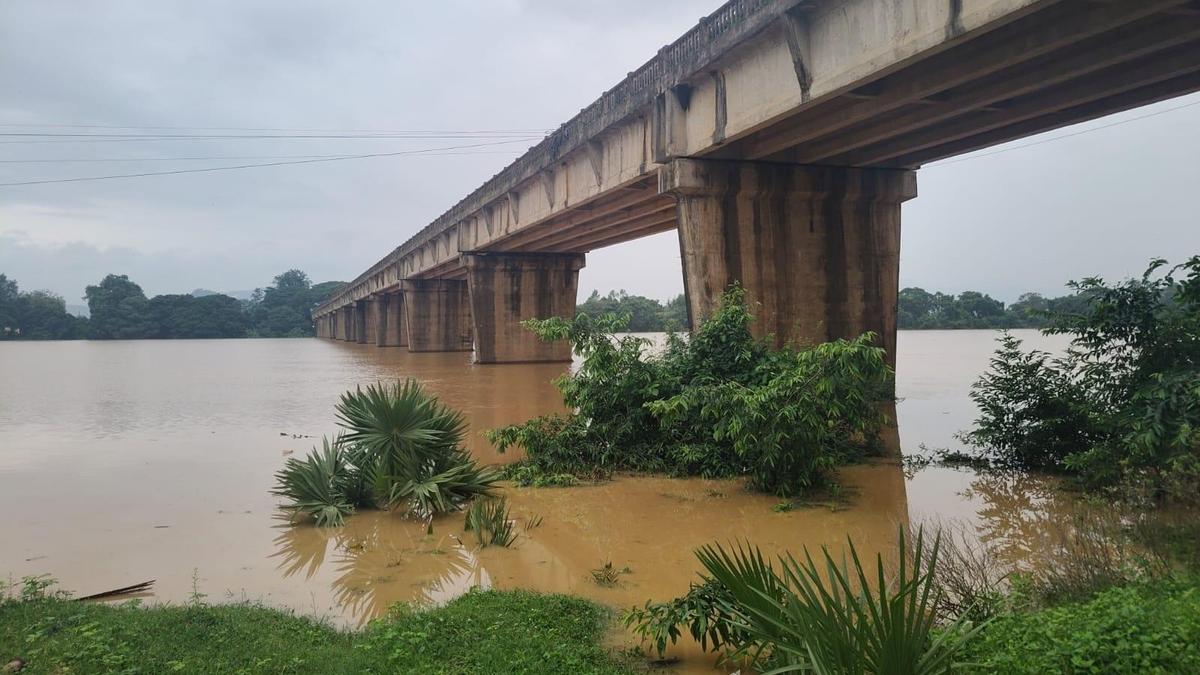
The Godavari continued to rise on Sunday, with the water level at the Dowleswaram Barrage touching 42.10 feet at 7 p.m, 0.90 feet below the first warning mark.The first warning level is fixed at 43 feet, when the water release from Bhadrachalam in Telangana reaches 9,32,288 cusecs. The second warning level is 48 feet, with a discharge of 11,44,645 cusecs, while the third warning level is 53 feet, when the river carries 14,26,684 cusecs of water.Authorities are closely monitoring the flood situation in the Godavari basin, particularly in the low-lying areas, as heavy inflows continue from the upstream regions.Historical records show that the highest flood level ever recorded at Bhadrachalam was 75.60 feet in 1986, when the river carried around 27.02 lakh cusecs of water. During the severe floods of 2022, the water level in the river reached 71.30 feet, with a discharge of 24.43 lakh cusecs, making it one of the highest flood levels recorded in recent decades.Officials have advised residents living in the vulnerable areas to remain alert and follow the instructions issued by the authorities as the situation continues to be monitored. The weekly shandy area under a sheet of floodwaters on the banks of the Sabari river in Polavaram district on Sunday. | Photo Credit: T. Appala Naidu Meanwhile, at least 971 houses in 72 habitations submerged, affecting more than 32,000 people due to floods in the Sabari and Godavari rivers in Polavaram district by Sunday. However, there were no casualties.More than 12,449 families were affected as floodwaters entered the habitations, from where about 2,100 families had been evacuated to the relief camps.“The relief operations and evacuation of the affected people are in full swing. Eighty-one boats have been deployed along the banks of the Sabari and the Godavari,” ITDA Project Officer Subham Nokwal told The Hindu. As many as 149 pregnant women admitted to government hospitals were under the care of the doctors, the official said.Located between the Sabari and Godavari rivers, the V.R. Puram Mandal was hit hard and cut-off from the mainland, both from the end of Chintoor and Bhadrachalam.With the floodwaters receding in both the rivers, authorities could take up relief operations in the affected villages.Following an assurance by the district officials on clearance of payment for services rendered during the previous Godavari and Sabari floods, the traditional boat operators undertook relief and evacuation operations on Sunday.On the Andhra Pradesh-Chhattisgarh border at Chatti, migrant workers from Chhattisgarh and Odisha were stuck as road connectivity was hit in the Chintoor Agency.Water for deltaIn the Godavari Delta, more than 14 lakh cusecs of floodwater was being released into the Bay of Bengal after releasing 8,400 cusecs into the delta system through canals.As per the Godavari Flood Report-2026, the inflows into the Godavari at the Sir Arthur Cotton Barrage, Dowleswaram, were falling. In Dr. B.R. Ambedkar Konaseema district, three islands had been affected.Meanwhile, the Eluru district administration has intensified the relief and restoration measures in the flood-affected villages of Velairpadu and Kukunoor mandals with the receding of the floodwaters. The officials have launched large-scale restoration work, focusing on electricity supply, sanitation and healthcare services in the affected areas.According to the officials, the Electricity Department personnel restored power supply to nine remote villages located in the hilly areas after carrying out repairs to power lines connected to the Koida 11-kV feeder. The personnel travelled by launches and boats across the Pedavagu stream near Koida to reach the affected locations and undertake repairs to damaged infrastructure.The district administration also stepped up sanitation measures in the flood-hit villages such as Ganapavaram, Amaravaram, Maredupaka, Kukunoor, Velairpadu, Sivakasipuram, Thotakuragommu, Bhoodevipeta, Dacharam, Gommugudem, Repakagommu and Rudrankota.Sanitation workers sprayed disinfectants and mosquito-control chemicals to prevent the outbreak of communicable diseases after floodwaters recede. Relief camps established at Dacharam and Sivakasipuram were providing food and other essential supplies to the displaced residents.Officials said that protected drinking water was being supplied to the affected villages through water tankers, while teams from the National Disaster Response Force (NDRF) and the State Disaster Response Force (SDRF) shifted residents from the inundated areas to safer locations.The Health Department also organised medical camps at the relief centres and flood-affected villages to monitor public health conditions and prevent the spread of water-borne diseases.
Authorities sound alert as Godavari continues to rise at Dowleswaram, nears first warning mark
Full Article
Original Source
Read the full article at Thehindu →KhanList aggregates and links to publicly available news content. We do not host full articles from third-party sources. Always verify important information with original sources.