
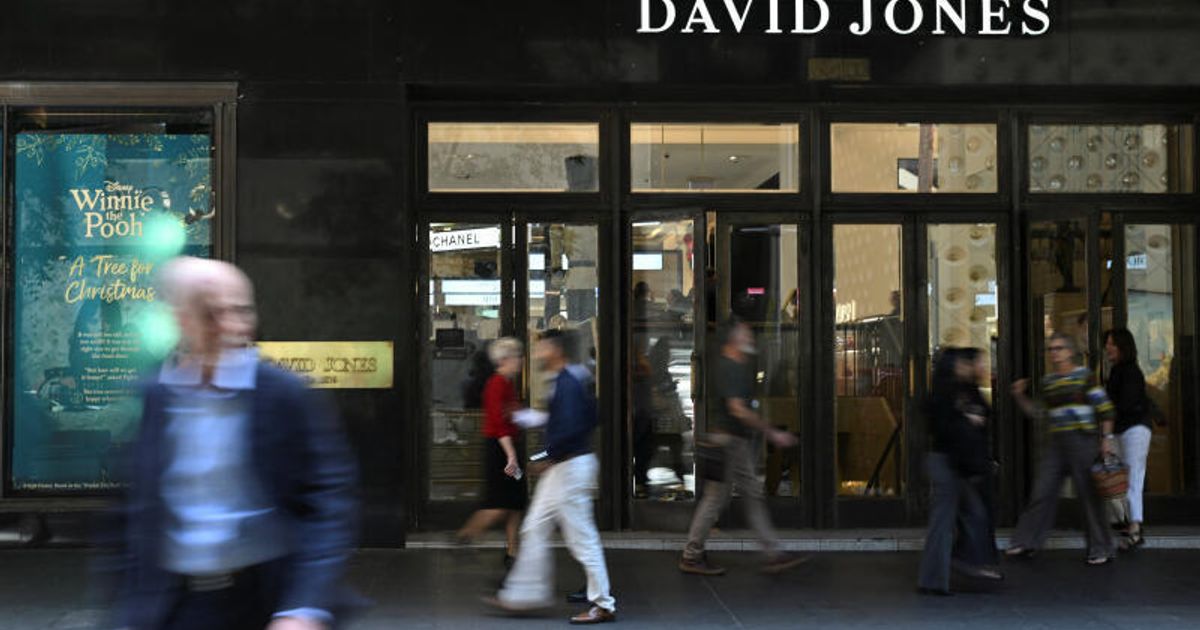
SYDNEY - At a shopping mall in Sydney’s east, Roberta Galleja, a 30-year-old student, bought herself an early Christmas present on Nov 20 from her favourite retailer, David Jones, the world’s oldest continuously operating department store.Clutching a David Jones paper bag containing her new T-shirt, Galleja, who was shopping at the store’s outlet in the suburb of Bondi Junction, said she was concerned about the chain’s uncertain future. The 188-year-old prestige department store chain collapsed into voluntary administration on Nov 5 after failing to pay its rent. The firm’s receiver FTI Consulting plans to close 19 of its 38 stores by the end of 2026.The company on Nov 20 informed 1,689 workers that their employment will end on Dec 30 as it prepared to close stores, including its only store in New Zealand, after the busy Christmas period.Galleja, who lives in the northern suburb of Hornsby, where the David Jones store is among those set to close, said she planned to visit other outlets that will remain open, such as those in Bondi Junction or the northern suburb of Chatswood. “I love David Jones,” she told The Straits Times. “I can always find something I like. It’s a shame that they (some outlets) are closing down.”The decline of David Jones, which echoes those of department store chains worldwide, including Singapore’s Metro, has dominated headlines in Australia, given the the chain’s status as a cultural icon. With the company weighed down by debt, observers are asking if the nation’s department stores still have a future and whether losing Australia’s premium department stores could make the country less appealing to visitors.David Jones’s administrator revealed on Nov 17 that the firm owes about $A460 million (S$395 million) to creditors, including 800,000 gift card-holders and 6,200 staff. The administrator blamed the collapse on cost-of-living pressures and competition from online retail.Experts said David Jones damaged the shopping experience for customers and its high-service branding in recent years by cutting staff and replacing full-time workers with casual workers to save on labour costs. The company’s demise has also been attributed to underperforming stores that were locked into expensive leases, as well as the competition from online shopping.Robert Crawford, an advertising expert at RMIT University who is writing a book on the history of Australia’s department stores, told ST that David Jones also faced growing competition from a retail institution which it helped develop: the suburban shopping mall. He said that department stores once anchored malls and held exclusive rights to boutique brands, until those brands opened their own stores, which often had a wider selection.“The suburban shopping mall is a department store on steroids,” he said.“David Jones used to have exclusive rights to major brands that you couldn’t get anywhere else in Australia. Once those brands started building stores and becoming competitors, David Jones could not offer the same range that a store like Gucci offered.”Australia’s other major department store chain, Myer, which opened its first store in 1900 and now has 56 stores, has also been struggling in recent years. The firm recorded a loss in the year to June 30, 2026 of A$276 million. It blamed its poor result on weak consumer sentiment due to the rising cost of living, though analysts say it may benefit from the closure of the 19 David Jones stores, including several which directly compete with Myer in the same shopping precincts.Tourism unlikely to be affectedThe decline of the nation’s department stores will come as a blow to the tourism sector in Australia, where shopping is a significant drawcard. But the collapse of prominent department stores is not expected to affect visitor numbers.Shopping is a popular activity among Asian visitors, according to Tourism Australia, the federal government’s tourism agency. Its international visitor survey, released in June 2026, found that 1.4 million of the 1.7 million holidaymakers from Asian markets took part in “shopping for pleasure”. Among “high yield” travellers from Asia – those who spend above-average amounts on accommodation, food, services and experiences – 17% associated Australia with “great shopping experiences”. Even so, shopping ranked behind wildlife, beaches and the natural environment as the drawcard for an Australian holiday.A spokesperson for Tourism Australia told ST that their research shows that shopping is not a major reason visitors choose Australia, but they do shop once they arrive.David Beirman, from the University of Technology Sydney whose areas of research include tourism risk and destination marketing, told ST that shopping was an important part of the tourism experience for Asian visitors, particularly those from China. But he said Asian visitors were unlikely to avoid travel due to the closure of stores like David Jones, especially as “most Asian countries have an incredible retail environment”.“Our shopping environment looks a bit paltry compared with Singapore and Hong Kong and even places like Hanoi and Ho Chi Minh City,” he said.“David Jones is a legendary department store. It would be part of the retail mix for international visitors. But I doubt whether tourists would come from Asia just to go to David Jones.”Crawford, from RMIT University, said David Jones could try to invest in restoring its brand and service but there was no guaranteed path to success for high-end chains such as David Jones and Myer. In contrast, he said, Kmart, a chain of low-cost department stores was booming in Australia.“Online shopping has been a revolutionary game changer,” he said. “I don’t see a simple solution.”He added: “Department stores do mean something to a lot of people in Australia in a nostalgic and emotional way. But if it meant so much, they would go there in large numbers. If people don’t go, it’s use it or lose it.”
Australians face uncertain shopping future as iconic department store collapses
Full Article
Original Source
Read the full article at Straitstimes →KhanList aggregates and links to publicly available news content. We do not host full articles from third-party sources. Always verify important information with original sources.